Showing posts with label 1982. Show all posts

Monday, October 3, 2016

The Entity / *** (1982)

The horror always arrives in rather dramatic waves. It is never predestined or planned, although isolation appears to be the catalyst for its shameless persistence. “The Entity” by Sidney J. Furie, one of a plethora of forgotten horror films from the early 80s, deals with this scenario on a narrative bedrock that defies mere convention: it tells the story of a woman – ordinary, single and straddled with three young children – who arrives home one evening and finds herself assaulted by an invisible presence in her bedroom. And it is no simple attack she undergoes, either: the nature of it is sexual, and the intensity of the incursion is such that she emerges from it shaken to the core, as shocked as she is violated. Others regard the incident with displaced uncertainty – how can anything happen if no one is in the room? – but here is a woman relatively sane by the measures of her peers, forcing added considerations. Maybe someone was in the room all along that simply waited in the shadows. Maybe the culprit rushed out of sight before witnesses could spot him. Maybe those strange incidents of doors slamming suggest a stalker is hard at work. Or maybe, just maybe, there is something transpiring in her world that defies mere convention, ultimately setting her up for the obligatory guffaws of friends and professionals who assume she is either making it up or acting out from some buried subconscious reasoning.

Monday, December 22, 2014

Lessons from Criterion:
"White Dog" by Samuel Fuller

The sudden entrance of a majestic white German Shephard in the first minutes of “White Dog” at first seems like a drastic respite in the life pattern of a simple but struggling movie actress. She leads the kind of detached existence ordinarily reserved in the movies for those boring office secretaries everyone always overlooks – complacent, dead-end and almost suffocating in the paralyzing grind of a day – but when this animal aimlessly wanders into the road and is hit by her car, a necessity rises within her heart to become his surrogate owner and protector. What for? Guilt is not the isolated emotion. Early observations emphasize traits of a loyal companion; he is attentive and eager, and in a perilous moment when a rapist breaks into her house on the hill and attacks her, the determined canine leaps into action as if her self-appointed protector. Though theirs is a connection roused from accidental circumstances, it is as true to the essence of the human/pet dynamic as any of our own positive experiences with our trusted four-legged friends. But then there is a moment where the image is shattered quite drastically, and the movie enlists a harmonic implication so sobering that it doubles as a very critical psychological revelation – for us, for the characters, and certainly for any viewer reckless enough to make a knee-jerk assumption that the material might deviate into the foray of Stephen King-style antics.

Wednesday, October 8, 2014

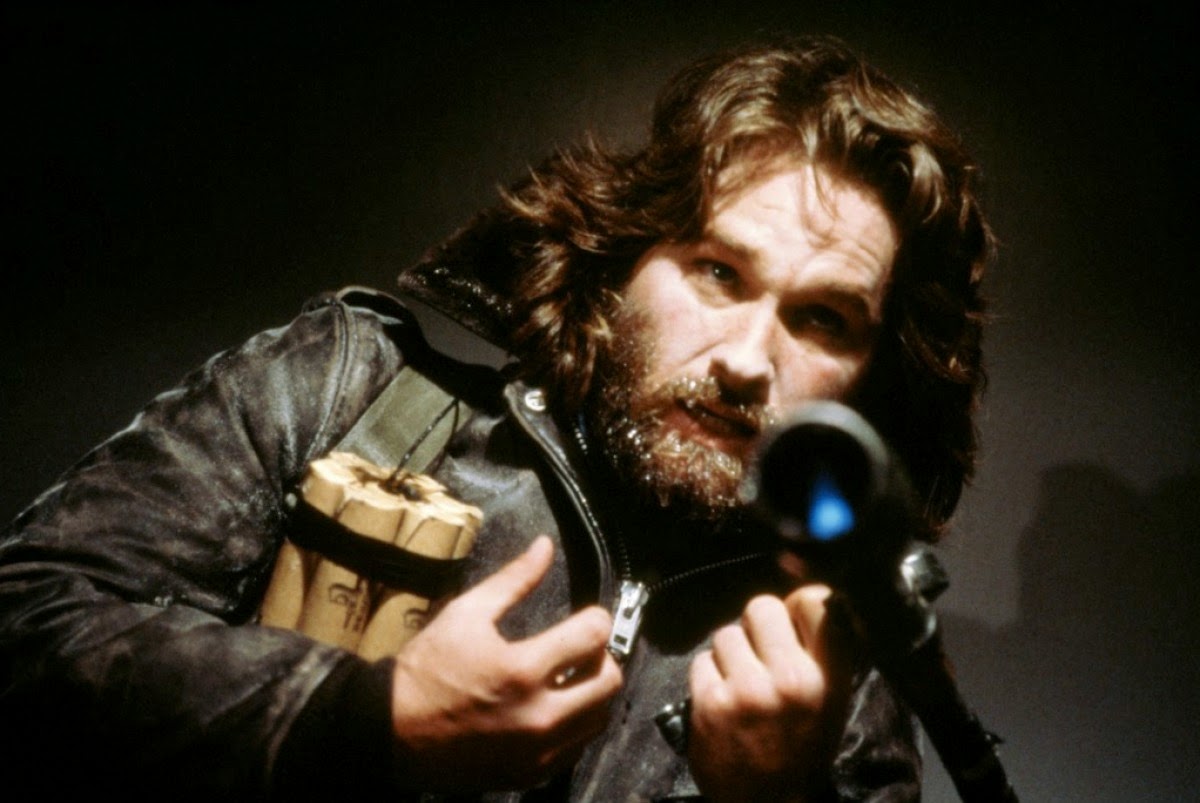
The Thing / *** (1982)

The story goes on and on through the reverb of the times: a trend dominates the output of the movies, and then along comes someone to louse the whole thing up. John Carpenter’s “The Thing,” about an alien life form wreaking havoc on a group of men trapped in a frigid landscape, is one of those beloved relics of the ‘80s that was considered the divisive game-changer for a genre in which premises like “Alien” had saturated the market with a relentless supply of bloodthirsty monsters jumping out from the shadows. Like a narrative sledgehammer, some would say it forever shattered the straightforward course of its cinematic family, and opened the sphere of possibilities up to much more horrific contemplations. Viewing the movie thirty years removed from that era, the ideas it presents are at least instantly distinctive; this is not a thriller in which ordinary beasts seek to destroy a gathering of unsuspecting victims, but one in which they take on the traits of Earthly organisms, absorb their DNA and walk among them as part of a convincing ruse to adapt to – and overtake – a new foreign environment. How unfortunate that the plot doesn’t know how to ride the wave as effectively as it should.

Saturday, March 20, 2010

Poltergeist - ***1/2 (1982)


The ghost story was a fairly straightforward endeavor shackled by underlying menace in Hollywood’s golden days, but “Poltergeist” was perhaps one of the first movies to sensationalize it, to turn the idea in on itself and expose its more elaborate potential. Before it, few even knew the difference between poltergeists and hauntings, or if there was even a purpose to differentiate them; in a day when the cinema was about the growing presence of slasher films, the idea of a horror movie dealing in any part with the afterlife was superfluous. To our benefit, Steven Spielberg saw differently, and a crucial ingredient in achieving that realization may have come from his choice of Tobe Hopper as the director, whose own experience making “The Texas Chainsaw Massacre” gave him perhaps the right tools as a showman to cause the stage surrounding this straightforward premise to erupt with lavish fanfare. And yet the movie is more than just a story of strange ghostly phenomenon that is upstaged by special effects or grandiose plot twists; it portrays the material realistically, uses both mind and heart in the delivery, and is played by actors who seem to have a more genuine stake in the outcome than studio execs eager to plan sequels.