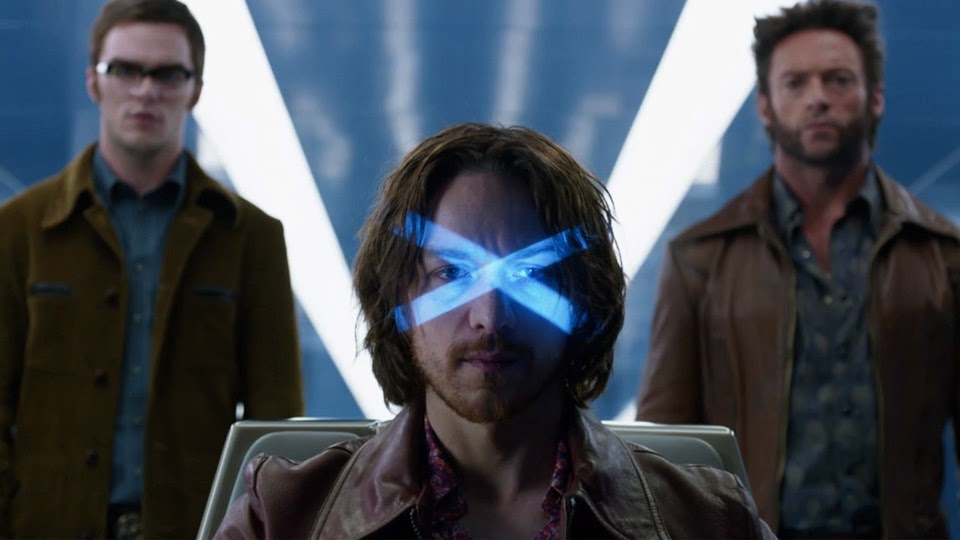
No amount of research can prepare the casual viewer for seeing a movie as narratively oblique as “X-Men: Days of Future Past.” Long past the point of establishing any firm continuity, this now-lengthy film franchise has come, gone and been rebooted under the supervision of countless filmmakers, each of whom have taken this material to the brink of possibility and then doubled back around with alternating perspectives until all narrative connections have either been tangled or severed beyond understanding. To see all those stories and characters come to a head in this, the seventh chapter of the “X-Men” saga, is to be caught in a web of maddening inconsistencies. What event triggered this crucial moment in time where all of the varying timelines are required to converge? What will the notion of time travel alter, for one ensemble as well as the other? Did the movies secretly fit together before now and we just didn’t know it? Or do all the preceding stories even retain their purpose, assuming that the climax of the newest entry negates many of the events that were seen in the earlier entries? This is the kind of movie that may endure as one of the great mysteries of the genre, even for comic book enthusiasts who are well versed in logical stretches and alternate timelines.
Wednesday, May 28, 2014
Monday, May 26, 2014
Godzilla / ** (2014)
One can almost imagine how the great architects would respond to seeing so many treasured landmarks being used as disposable set pieces in a movie like “Godzilla.” Not simply content anymore to lay waste to an isolated locale like Tokyo, the brains behind the most famous of overgrown movie reptiles make every endeavor to trace a destructive path through countless geographical spots in this most recent endeavor, including the Hawaiian islands and Las Vegas, a paradise of structural genius. For the famous builders, watching years of planning and construction demolished in just a few short seconds by visual effects wizards would probably strike a cynical chord; just as it takes discipline to create something so important and lasting, how sad it can be to see it all so easily undone through the audacity of filmmakers that have the means – and the budgets -- to cause ruin in an arena where history is always in the way of large monsters on a rampage. Halfway into the final act, in which Godzilla and two giant insects destroy the better part of San Francisco, I was less interested in who the winner would be and more concerned as to whether I would ever be able to drive down Lombard Street.
Sunday, May 18, 2014
Nebraska / **** (2013)

We first see him staggering down the lonely roads of Billings, Montana. His pace suggests aimless meandering but the mind has intentions, firm and unwavering. An envelope in the mail is the catalyst for his journey: in it, a notice from one of those clearing house sweepstakes mailing lists creates a false impression that a million dollars is waiting to be redeemed, but only if he makes the trip out to collect it. Two problems: 1) he doesn’t know any better than to trust the manipulative advertising, because he has dementia; and 2) the pickup site is in Nebraska, and relatives have no desire or patience to take him to his intended destination fully knowing there is disappointment at the end. So with stubborn persistence he sets out on foot each day, determined to collect his winnings even as family continues to undermine all those attempts. Foolish for him, perhaps, but is he really doing it for the money, or just for the ability to keep his mind and body occupied in a time of unending mental haze?
Tuesday, May 13, 2014
Elephant / **** (2003)
No greater witness exists in the events of “Elephant” than the focused, almost predatory movie camera. It begins by plodding rather aimlessly through school hallways, occasionally stalking lone figures whose movements are indicative of grinding routine. Their faces come into view during stationary pauses, but most of their dialogue, succinct and shallow, is often muffled behind an ominous soundtrack. Here there are the idle paces of teenagers with unknown agendas, and facial expressions that seem evaporated of enthusiasm: for all of them, this is apparently nothing more than a normal school day. But then a brewing storm of tragedy reveals itself almost accidentally, when one of the figures steps out of the building, catches sight of two teenage classmates dressed in camouflage and notices they are carrying duffle bags and snarls of resentment. “Get out and don’t come back,” one of them warns him. “Some heavy shit’s going down.” Their proclamation casts a shadow on everything we observe, and suddenly the camera is no longer just a device, but a powerless onlooker documenting a series of unrelated lives before they are all altered by something devastating and unforeseen.
Saturday, May 10, 2014
Nymphomaniac: Volume II / *** (2014)
There is a critical scene in “Nymphomaniac: Volume II” that is as close as one is likely to ever come in finding a central point for its damaged protagonist. It involves the character of Joe (Charlotte Gainsbourg) climbing a steep hillside and finding a wilted tree jutting out at the peak, its shape altered by many years of piercing winds that have swept over the ridges with unforgiving power. Immediately she identifies with this odd creation, a shell that has been molded by elements sweeping past its branches for its entire earthbound existence. “That tree is me,” she tells the intrigued Seligman, who for the past several hours has absorbed the details of her strange but adventurous life. Her projection is the result of an early lesson by her father, who believed all trees reflected the character of our human souls. Yes, but does a tree have the will to decide where it grows? Can it simply alter its existence if it does not find comfort in the harshness of the world around it? For this one woman, that metaphor casts a beam of insight into explaining why she has arrived at this one critical point of existence; for us, it suggests a mind oblivious to the chain reactions of fate, and the refusal to find (or even desire) change that may present less bleak circumstances.
Monday, May 5, 2014
The Amazing Spider-Man 2 / *** (2014)
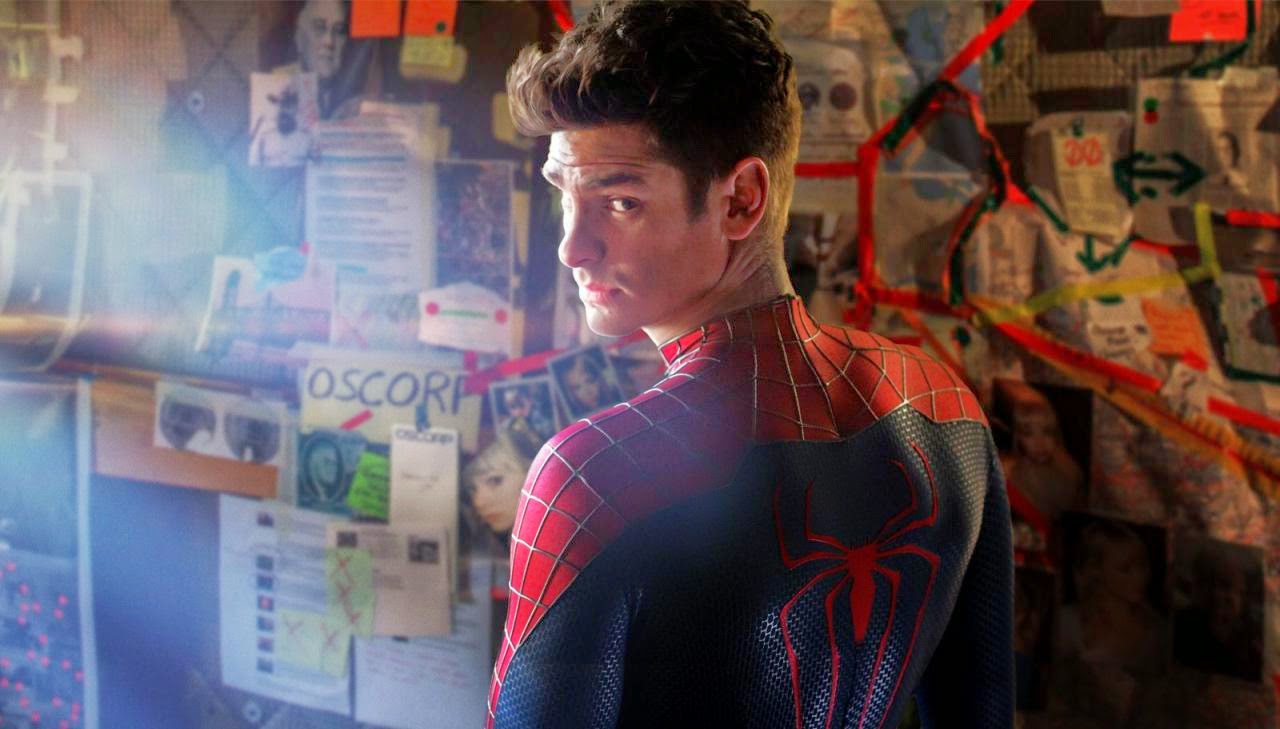
Here, thankfully, is where the superhero screen treatment finds the right sense of balance. “The Amazing Spider Man 2” is a surprisingly effective sequel that trickles to the surface with composure and foresight, dropping viewers into a world of sweeping depth without bombarding them with overzealous action sequences to a degree of utter desensitization. And that’s as much a surprise as it is a virtue, if you think about it; after the ante of this crowded genre was raised significantly thanks to the first “Avengers” picture – an admiral endeavor despite its damaging repercussions on the competitive edge of action filmmakers – Hollywood has unabashedly lost sight of the notion of restraint, and descended head-first into an era in which wall-to-wall visuals rob us of independent thought. Something about a kid being bitten about a radioactive spider, thankfully, is unmoved by that trend, and the newest movie about his adventures involves narrative legwork that is not only refreshingly focused, but in many ways very old fashioned in its sensibility. Once upon a time our greatest protectors stood for something in protest of cruel tormentors and crumbling societies, and here is a protagonist that actually finds the time to do something noteworthy in the foreground, all while seeking insight and interacting with others for the benefit of character development rather than just the setup of mindless movement.
Tuesday, April 29, 2014
Transcendence / *1/2 (2014)
At its basic core, “Transcendence” contemplates the same moral questions raised by Asimov about the threats of machines in the hands of ambitious men, but as a straight science fiction film, it’s maddening and indecisive, and often interested in creating impulsive twists for no sake other than to show off flashy special effects. Even its actors, many of whom look through eyes that suggest curious detachment, are relegated to reciting shallow dialogue; there is never a sense that they comprehend the material, no doubt because they recognized early on that there wasn’t much to get anyway. Those of us in the audience with basic comprehension of the idea, however, are not so easy to fool, and as facets of this convoluted story build, overlap and then ultimately reach frenzied epiphanies, bewilderment envelops all odds of basic entertainment because nothing ever adds up. Computer gurus, I suspect, will wince at the movie’s transparent attempt to throw things at the screen without reason.
Sunday, April 20, 2014
Remembering Columbine

Fifteen years ago today, I sat in stunned silence in the newspaper production room at Reynolds High School. The lights were out, but computer monitors illuminated the room. Three of us exchanged forlorn glances without a word. Two were putting the finishing touches on the last of the year’s monthly editions of The Reveille. I was compiling pieces for a Senior Edition of the paper, a special 4-page spread commemorating the graduation class – my graduating class, no less – that would be released a week before our commencement. It was an annual tradition in our facility, and time was of the essence: with only six weeks to go till our diplomas were handed over, the world as we knew it would change, evolve, and adapt to our oncoming influence. That day, the world changed much quicker than we expected it to.
Friday, April 18, 2014
Lessons from Criterion:
"The Lady Vanishes" by Alfred Hitchcock
Wednesday, April 16, 2014
Don Jon / *** (2013)
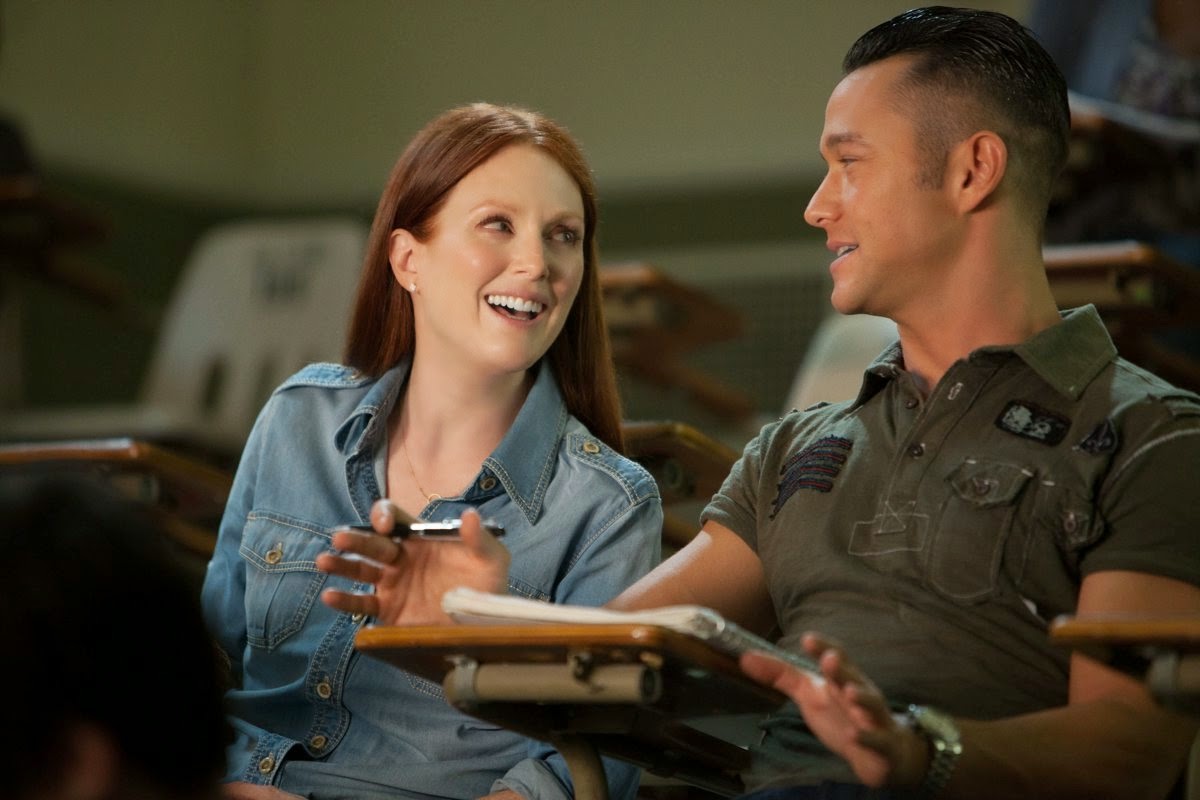
The key to a movie like this is the context. When images of vulgar objectification flash before us in an early montage showing beautiful women in compromising positions and various stages of undress, they seem tasteless and desperate – all until, that is, their primary observer clarifies their relevance in his relaxed existence. The guy’s name is Jon (referred to as the “Don” by close friends), and his life is structured like an audition for “The Jersey Shore”: there’s a thoroughly clean apartment, an obsession with going to the gym and looking good, an affinity for clubbing, hooking up with beautiful girls and never calling them again… and porn, especially porn. And while most would suppress certain obsessions in front of their friends, here is a guy who is shamelessly proud of this particular facet; it doesn’t so much own him as it intoxicates his mind with elaborate illusions that are impossible to match, even in the hands of a being so sexually charged.
Tuesday, April 15, 2014
August: Osage County / ***1/2 (2013)
A storm of suffering is about to drench the many lives of the Weston family, and several will respond with a maddening acceptance that is indicative of lifelong cruelty. From the first moment we peer into their lives, a sense of nihilism overwhelms us. Family matriarch Violet (Meryl Streep) is suffering from mouth cancer and doped beyond comprehension on prescription medication, and when her complacent husband Beverly (Sam Shepard) hires an in-care assistant and then quietly disappears with no trace, most of the immediate family is summoned back home in order to, hopefully, assist in the search. What provoked his disappearance? The opening scenes show a disconnected man that has developed silent contempt for his fate, drinking to avoid a cruel wife and occupying space in a house full of sickness and addiction. For him, the decision to flee seems like the final act of impulse in a life devoid of purpose, and for his relatives, the disappearance and subsequent tragedy is, alas, only the latest example of how this blood line envelops itself in an everlasting misery, because it is all any of them have ever really known.
Friday, April 11, 2014
Captain America: The Winter Soldier / ** (2014)
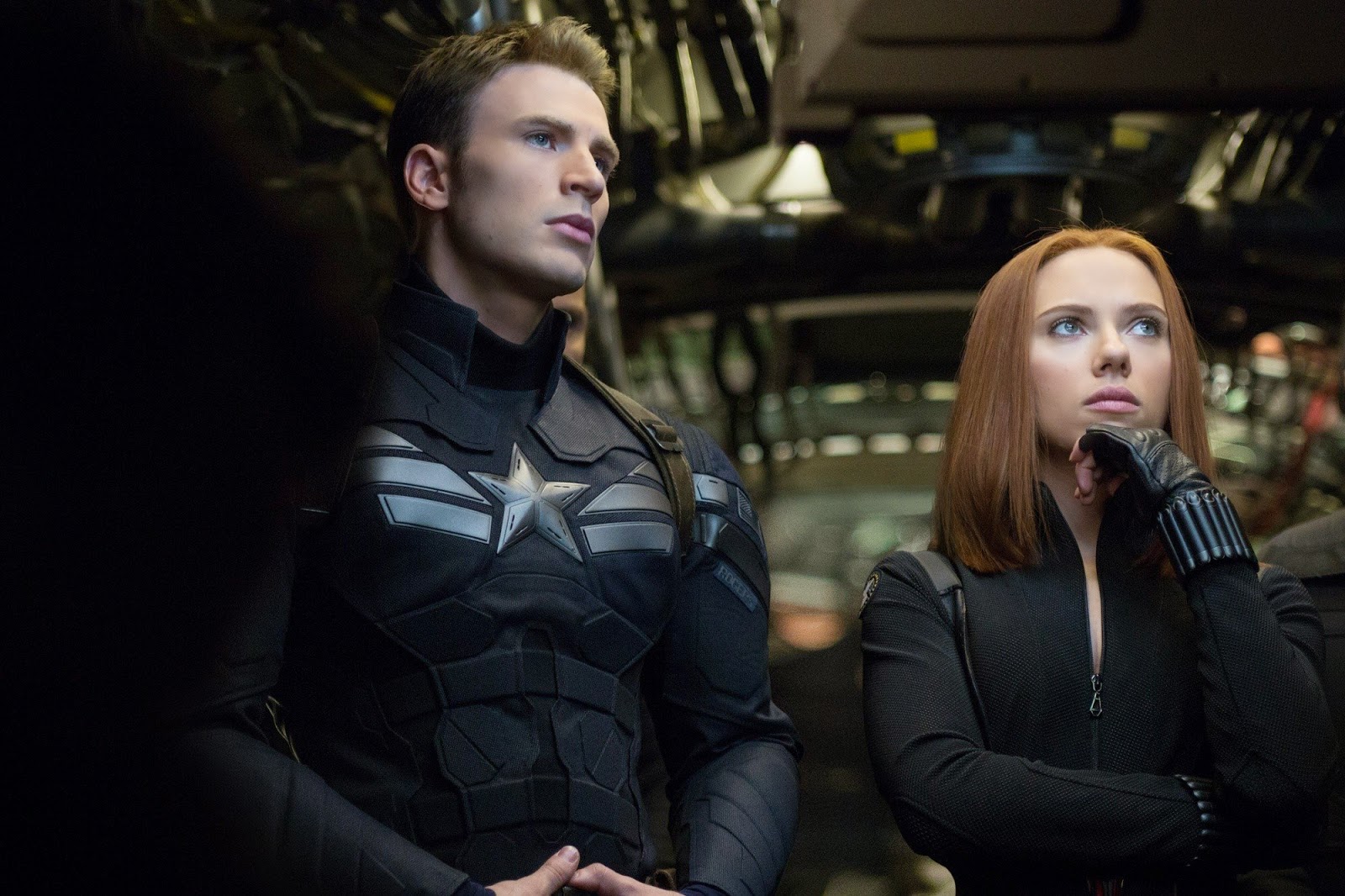
What happened to the heroism? The modesty? The integrity of a character and the preservation of his history? “Captain America: The Winter Soldier” is that loud and shapeless sequel about a noble man in a patriot costume that I feared would come to pass, a movie that spends two heavy hours propping up wall-to-wall actions in vein of the “Avengers” saga as opposed to just, you know, living in the world of a character who has got a lot to learn about the change of the times. From the first moment we join good old Steve Rogers at the opening of the story, events from the first film – as well as those of “The Avengers” – are long behind him, and a world full of culture shock is at his heels yearning to be uncovered. But there is no time in this screenplay to allow the big guy an opportunity to deal with his realities on any organic level, because Marvel law dictates that we must send such warriors right into the furnace of intrigue and zealous explosions and shootouts. Audiences will no doubt justify that course of action, but there is no arguing that the directors, Anthony and Joe Russo, have made the unfortunate mistake here of looking through their camera lens as businessmen instead of as filmmakers inspired by the conviction of their likable hero.
Sunday, April 6, 2014
"The Matrix" Revisited
“Here, I was not reviewing a film, but being sent on a fabulous journey into the depths of imagination. It's a journey that no one should take less than once.” – taken from the original Cinemaphile review of “The Matrix”
His face is ordinary and stony-eyed, yet muted utterances divulge a feeling of displacement. His life churns along in generic passages, all while an air of ambiguity casts a faint shadow over his presence. Nameless peers glide through his peripheral vision seemingly content with their fortune, but their faces mask similar underlying agitation. No one can clearly describe this sensation that overwhelms them, but there it is all the same, eating away at one’s peace of mind like a psychological parasite. And at the foundation of this reality lies a conflict of even deeper significance, one that alters the course of an uncertain future in one sweep of reveal. Within an elaborate illusion created by an artificial intelligence designed to restrain the free will of human existence, what will become of lives when there is a painful awareness that everyone lacks individual control? When they arrive at the forefront of that knowledge, is it the job of one to free us from bondage, or is it a shared destiny? What sacrifices would we make to be liberated from devices built to silence our nature? And how would machines, programmed without empathy or insight, respond when part of their system falls out of step with a systematic procedure?
Monday, March 31, 2014
Noah / *** (2014)
It’s just as well that the biblical legend of Noah, the man whom the great creator would task with building the Ark to save animals from Earth’s greatest flood, would arrive in the hands of Darren Aronofsky. Already a specialist at character studies revolved around people obsessed with nearly infeasible tasks, here is a filmmaker who takes less direct an approach than most of his contemporaries would with the material, and instead discovers a persona withered by a sense of deep inner turmoil. That it finds the time to descend into this prospect is astonishing given the urgency of the sweeping narrative, but it justifies the crusade with one notable takeaway: when we pit man against creation, is there anyone strong enough to thoroughly fulfill the will of a God whose silence can be harsh and mocking?
Friday, March 28, 2014
Beyond the Shadows
“I lost my way among empty streets.”
– Dr. Borg, Wild Strawberries
Let me tell you a little about yours truly in the years leading up to 2005. The writer, critic, movie enthusiast and person you see now, in many regards, is a much different man than what existed preceding that bracket of time. Much has been said about events that transpired over that period – perhaps the strangest and most traumatic of my adult years – but what would be the relevance of digging that all up now? I’ve never been one to wallow in victimization when it comes to looking back on how things transpired, because it is redundant to the decisions I make in the aftermath.
– Dr. Borg, Wild Strawberries
Let me tell you a little about yours truly in the years leading up to 2005. The writer, critic, movie enthusiast and person you see now, in many regards, is a much different man than what existed preceding that bracket of time. Much has been said about events that transpired over that period – perhaps the strangest and most traumatic of my adult years – but what would be the relevance of digging that all up now? I’ve never been one to wallow in victimization when it comes to looking back on how things transpired, because it is redundant to the decisions I make in the aftermath.
Subscribe to:
Posts (Atom)


