Showing posts with label 1999. Show all posts

Wednesday, February 27, 2019

"American Beauty" Revisited


Like the French Algerian Meursault and Holden Caufield after him, the character of Lester Burnham has soared above the peak of lively resentment and been canonized as one of the great antiheroes of modern pop culture. His presence in “American Beauty” plays to the ongoing call for the everyman’s rejection of procedure, which has been necessitated by the steady decline of the modern workforce in a culture that imprisons them in cubicles and conforms their thoughts to a script of faux courtesy. Traces of that distinction were first visible in the comedy “Office Space,” released in the same year, but this was the moment where the ideology found its most unflinching force: a man whose brutal honesty felt like a nudge towards obliterating the conventional wisdom. Consider how much of the film about him involves the silent bewilderment of supporting players, right down to a wife and daughter who can only look on, in stunned silence, while a pathetic shell of a man suddenly discovers his voice. Perhaps they are surprised to find he still has a spine. Perhaps they are mourning the inability to continue using him as a scapegoat. Or maybe it’s because they can no longer see beyond the ceiling of what he is gradually tearing down.

Sunday, April 6, 2014

"The Matrix" Revisited


“Here, I was not reviewing a film, but being sent on a fabulous journey into the depths of imagination. It's a journey that no one should take less than once.” – taken from the original Cinemaphile review of “The Matrix”

His face is ordinary and stony-eyed, yet muted utterances divulge a feeling of displacement. His life churns along in generic passages, all while an air of ambiguity casts a faint shadow over his presence. Nameless peers glide through his peripheral vision seemingly content with their fortune, but their faces mask similar underlying agitation. No one can clearly describe this sensation that overwhelms them, but there it is all the same, eating away at one’s peace of mind like a psychological parasite. And at the foundation of this reality lies a conflict of even deeper significance, one that alters the course of an uncertain future in one sweep of reveal. Within an elaborate illusion created by an artificial intelligence designed to restrain the free will of human existence, what will become of lives when there is a painful awareness that everyone lacks individual control? When they arrive at the forefront of that knowledge, is it the job of one to free us from bondage, or is it a shared destiny? What sacrifices would we make to be liberated from devices built to silence our nature? And how would machines, programmed without empathy or insight, respond when part of their system falls out of step with a systematic procedure?

Thursday, August 22, 2013

Magnolia / **** (1999)

In the haze of late 90s human dramas that observed characters through the cracked lens of pragmatism, fresh faces in the cinema found a playground of golden opportunities. From this threshold came the onslaught of a new generation of ambitious thinkers, paving the way for names like Neil Labute, Lars von Trier, Darren Aronofsky, Danny Boyle and Sam Mendes to show up on movie screens – men who worked within the shadows instead of stepping outside of them, each employing a voice relative to the times and finding tremendous inspiration in the turn-of-the-century paranoia that quietly wove its way through narratives. These were not necessarily cynical stories, but they underscored the vulnerability of their players in a way that removed the gloss and polish of previous decades, and brought them closer to our experiences. Some might say even dangerously close. Just imagine the faces of more optimistic movie artists like Capra or Brooks as they watched a picture like “Trainspotting” or “In the Company of Men”; no doubt their joy would be replaced by looks of shock and crashing feelings of despair.

Monday, March 20, 2000

Jakob the Liar / ** (1999)

To see "Jakob The Liar" in its entirety is to endure "Life Is Beautiful" with ice dripping down our necks. Sometimes there are subjects in movies that do not require second interpretations, especially if they have nothing new to add to the touchy subject. What we deal with here is a second round of the holocaust, but one that is so overly dramatized by its writers and characters that one is left feeling cold and detached. No one needs a second movie in two years involving this subject to start with; when it begins playing with our minds, attempting to pass off as deeply poignant drama, then the matter gets worse.

Friday, March 10, 2000

Snow Falling on Cedars / **1/2 (1999)

Scott Hicks' visionary "Snow Falling On Cedars" employs one of the most enticing styles of filmmaking that is, unfortunately, rarely seen from our other great movie directors. The approach is a standoff presentation, one that doesn't simply move in a straightforward manner but refers to past memories and flashbacks to garner its credible facts for the audience. The possibilities, both visually and narratively, have almost no limits--the glorious "Dolores Claiborne," for instance, manages to tell two stories both in present day and in the past tense, using only aging makeup and an ominous tone to separate the two. Hicks, who directed the emotionally-drenched "Shine," knows this style like the back of his hand, and presents it here using visual beauty to back up the promising premise. No story done in this manner, however, is always easily absorbed (in all fairness, the importance of present occurrences can get ignored for the past circumstances in these pictures).

Friday, February 25, 2000

The End of the Affair / ** (2000)

Isn't it funny how all the elaborate Hollywood romances are those in which characters find love through infidelity? The old movie love stories were never this daring or peculiar, as it was seen back then that romance was only found by those without foregoing relationships. Now it seems like every other one is breaking the sacred vows; sometimes characters who have been together for more than ten years suddenly decide that they are stuck in a rut, and their wandering eye takes them to new ventures. Studios still churn out the typical romances, but they have become so formulaic and orthodox that very little craftsmanship is found in them (just look at "Runaway Bride").

Monday, January 31, 2000

The Cider House Rules / ** (1999)

Lasse Hallström's "The Cider House Rules" is one of the most frustrating experiences I have had in the recent months at the cinema, something so underwhelming and vacant that it's impossible for many to understand what exactly the picture is trying to say. Based on a novel by John Irving, who also adapted his story for the screen, this is one of those films in which the script has obviously been labored by an egocentric impulse to leave out many of the details from the novel, assuming that the entire audience has already followed the book. Unfortunately, I'm not one of the many who has actually read the story; for those who have not done so, walking into the theater of a movie like this is like trying to launch a space shuttle without knowing where the correct gadgets are.

The Hurricane / ***1/2 (1999)

Sometimes the past is better left forgotten. Those of us who have looked back on yesterday seldom reminisce in the bright images that have been implanted in our memory banks; instead, it becomes easy to recall the most dreadful events that plague the mind, be they personal or historical. When one looks back at the 1940s, for example, they don't at first think of the joy of dancing to the Jitterbug, but of the immense differences between countries that inflicted World War II. Furthermore, those dreadful events tend to bring up others--the attack on Pearl Harbor, the Hiroshima bomb, and the Holocaust are just to name a few.

Princess Mononoke / ***1/2 (1999)

A universe bound by parallels and gravity could not have begun to comprehend the possibilities of animation when it was established as a new art form in the mid-1920s. The idea of thousands of drawings creating the image of a moving picture seemed, for the most part, like a false hope; yet the mind of Walt Disney, who essentially discovered the cartoon, proved differently. Suddenly, the world as we knew it was left behind--characters and their residing dimensions sprawled freely from the limits of reality, circumscribed exclusively by the constraints of the creators' imagination. Only massive budgets stood in the way of their innovation; this was a time, after all, when special effects and computer imagery could not help with the process, and individually hand-drawing and coloring the cells was rather expensive.

Monday, January 24, 2000

Summer of Sam / ***1/2 (1999)

New York's hot and humid summer of 1977 is one of the more unsettling time periods of modern American culture, and Spike Lee's eerie "Summer Of Sam" volunteers a solid, unorthodox portrayal of the dread that overshadowed massive bloodshed in a remote Italian-American neighborhood in the Bronx. This was, of course, the year that the infamous .44 caliber killer David Berkowitz was on the loose; more important, though, is how the society within his killing ground responded to the sporadic massacres. Hordes of filmmakers have tried to adapt this type of factual material, but they often get lost by focusing much of the time on the actual murderer (it's impossible to guess what a serial killer recollects in this situation because, alas, he really exists, and no one knows what he thinks). But Spike Lee is intent on other worries for his depiction of the summer of Sam; his story is not about killers or killings, but about paranoia and the need to single out someone as a suspect. In the sweltering summer of 1977, in which these events took place, there were more than a few hundred stories going on in the city; here was one in which those affected were not celebrities, but real, average people.

Friday, January 21, 2000

Being John Malkovich / ***1/2 (1999)

"Being John Malkovich" begins with the image of a saddened puppeteer putting on a performance at the streetcorner; as his talents go unrecognized and he struggles for work, his ugly duckling of a wife encourages him to accept a job as a file clerk at a Manhattan firm called LesterCorp, which specializes (not purposely) in employing individuals with a penchant for relishing in elements of the eccentric. The 7½ floor is the focus of this man's future, a 4-foot high office that forces its workers to crouch when navigating the corridors, and features workers that, if let loose in the free world, would be subjected to wearing straight jackets in asylums. Slowly but surely, he and his fellow comrades realize their personal imperfections, in what is one of the most extraordinarily inventive films of 1999.

Monday, January 17, 2000

Angela's Ashes / *** (1999)

The memoirs of Frank McCourt, which are the source for Alan Parker's production of "Angela's Ashes," may very well be some of the most descriptive and beautiful words ever written on paper--the kind of poetic memoirs that draw the reader into an intricate atmosphere, and allow them to experience, firsthand, at what the writer likely went through to relive the memories. Page after page, McCourt's details describe the desolation and poverty his family experienced during a torturous life that begun in the 1930s in Brooklyn, and continued for over a decade back in their home country, Ireland. Essentially, McCourt's work is a modern classic--the "A Tree Grows In Brooklyn" of literature, without even holding back the painful memories for a second.

Friday, January 7, 2000

The Best and Worst Movies of 1999

THE BEST MOVIES OF 1999:

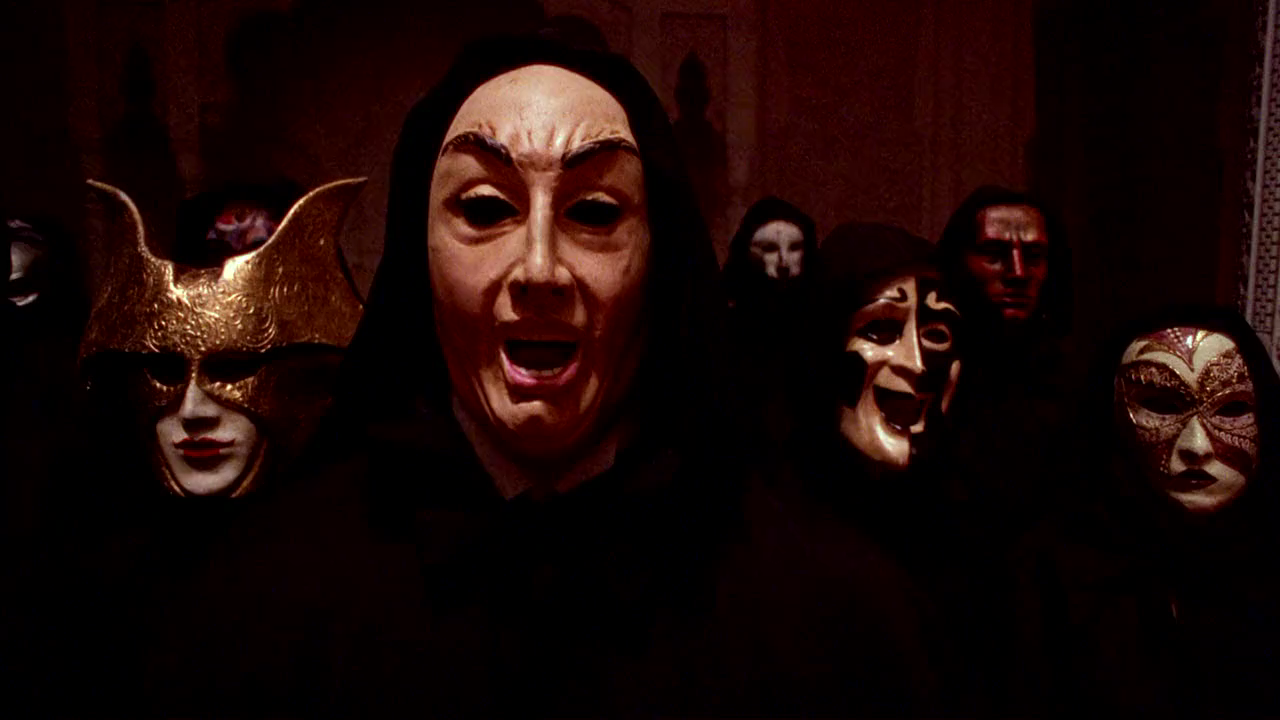
1 - Eyes Wide Shut
When I saw Stanley Kubrick's "Eyes Wide Shut" last summer, I knew I was witnessing not only the last film of a great director's career, but one of the greatest. Every year has its share of ups and downs cinematically, but one significant event that accommodates each is the arrival of a flawless, stirring, unique and haunting masterpiece. After the lights went up on this one, I knew instantly nothing in the remaining year could surpass it.

Kubrick was one of those directors who treated films like paintings, carefully crafting them so that any noticeable flaw could be immediately covered over. His death this early last spring was a sad time for the cinema--t signified the passing of not just a filmmaker, but of an era in moviemaking.

Friday, December 31, 1999

Ride With the Devil / ** (1999)

The advantage of war movies is that they tend to provide us with the brutal horror that textbooks cannot begin to comprehend. "Ride With The Devil," the new film from acclaimed director Ang Lee, is about Civil war guerillas who inflict their own personal horror in Missouri for reasons unknown on the surface level. It would painful for the audience trying to even guess what they stand for.

The movie is quite odd--possibly the first war film ever made that takes the perception of self-values and shuts the viewer completely out of their meanings. By this, I'm referring to what the characters stand for; each presents us with a personal (and sometimes psychological) dilemma, only to tear it away from us before we even have a chance to scratch the surface. We sit there is paralyzing frustration for over 130 minutes, hoping that one of the players will open up and let us in. Alas, like Terrence Malick's "The Thin Red Line," it just sits there and provokes a dreary series of plot developments that occur during the infamous Civil War (and yet most of them are told from a non-historical perspective).

Saturday, November 13, 1999

The Region Crisis

In the intricate field of film criticism, region is everything. Residing in locations that tend to receive the more big-budget flicks than lesser-known pictures poses much of a problem for aspiring film journalists, because it can limit their exposure to certain cinematic experiences (usually the ones that receive better consensus than some more widely known films). This may very well be why all the famous critics--Roger Ebert, Janet Maslin, Kenneth Turan, and Desson Howe, just to mention a few--are employed in places more widely populated and known; they aren't habitually cut off from non-mainstream products. Although some, such as myself, can persist as a movie reviewer even in some places less extensive than those like Chicago and Los Angeles, one cannot argue that we would be much better off in areas as large as those. Can one, for instance, be a Broadway star only if they live in New York? Not necessarily, but it helps.

Friday, October 29, 1999

American Beauty / ***1/2 (1999)

Like the river water as it moves down a cascade of sharp rocks, "American Beauty" sails with a stubborn and unrelenting distinction, only for it to arrive at a turbulent climactic moment that surprises even the characters. Here is a movie that deals with the dysfunction of the American dream, leaves us questioning our own family values, and looking closer for the "hidden beauty" of all things existing. In many ways, this it is reminiscnent of Ang Lee’s "The Ice Storm" – both have foregrounds as elegant as a Thomas Kinkade painting, while the interior lives are occupied by everlasting tribulations and selfish impulses.

Friday, September 3, 1999

The 13th Warrior / *1/2 (1999)

For one moment, let's just say you are Antonio Banderas' biggest fan –you've seen all his movies, read all magazine articles about him, memorized his dialogue and even wept when he was denied Oscar accolades for "Evita." Without a doubt, you love the guy. And why shouldn't you? This is someone who, behind all those mystifying good looks, can act his way out of a quicksand pit. With that in mind, ask yourself this question: are you the proper candidate to see his latest picture, "The 13th Warrior," and walk away from it confident of his decision making? I sincerely hope not.

Wednesday, March 24, 1999

"Love" Conquers All! "Shakespeare" wins 7 Academy Awards in 71st year of surprises and disappointments

The minute Whoopi Goldberg walked out onto the stage dressed as Queen Elizabeth, we were reminded that the Academy Awards are always unforgettable. Not one year has gone by in which we were not surprised, overjoyed, brought to tears, and even angered at some of the night’s honors. The 71st Academy Awards, the last of the millennium, was no exception to those feelings, although some of them were somewhat unexpected. In a year dominated by Elizabethan England and World War II, the Oscar was handed out to, for the most part, awkward winners. Everyone was almost sure that Spielberg’s "Saving Private Ryan" would win picture, but that honor went to the other front-runner, "Shakespeare In Love," which in total earned 7 of the 8 Elizabethan Oscars. The other went to "Elizabeth," for achievement in make-up (we’ll discuss that later).