Thursday, April 30, 2015

Willow Creek / **1/2 (2013)

There is one unbroken shot in the last hour of “Willow Creek” that is reason enough to applaud the chutzpah of filmmaker who finds inspiration among formula. Directed by Bobcat Goldthwait (yes, that guy!), the scene features two single figures sitting inside of a tent at night while the light from the camera fills the space with an ominous point of focus. They are awake because they hear noises – many of them slight and non-threatening, but so patterned that they begin to suggest the presence of some unseen threat tiptoeing beyond the shadows. What is the source? The lack of an answer has become a well-known cliché in this genre of found footage horror excursions, but that isn’t the point; it all comes down to the fact that any notions of excitement (or skepticism) are replaced by fear of uncertainty, and while most films would lose sight of the human faces in a nonsensical display of camera jumbles and swift chases in the dark, the frame remains on them for gradual reactions, and finds ones that would be effective in almost any context. Seeing them in yet another one of those genre excursions reveals an intention that one hopes could be utilized in something much grander in scope for future endeavors.

Monday, April 27, 2015

Foxcatcher / ***1/2 (2014)

A single question in the early moments of “Foxcatcher” serves to frame the impending experience of characters: “what do you hope to achieve?” For three men brought together by love of a competitive sport, their initiatives are stirred from emotional currents. Mark (Channing Tatum) is an Olympic gold medalist whose prestige from one of the “lesser” competitive events has not done much to curb his sense of isolation. His older brother, the more family-oriented David (Mark Ruffalo), keeps watchful eyes on his loner of a sibling all while observing his success with some sense of humility. In between them stands John du Pont (Steve Carell), heir to the du Pont fortune, whose love and dedication to the sport of wrestling has made him somewhat of a radical enthusiast – to what end, one wonders with cautious curiosity. Is it simply the love of it all (or the rigorous training that comes with it) that makes him such an avid champion of competitive training? And how much of that comes from an upbringing that reduced him to a background distraction on part of a mother who adored her riding horses more than doting on her own son? Each of these individuals is out to prove something to someone – to others, themselves, or to family members – and in almost all of those examples their obsessions only mask an insecurity that has the capacity to bring them to dangerous epilogues.

Monday, April 20, 2015

I Saw the Devil / ***1/2 (2010)

Many a motion picture has been made about the warped psychology of serial killers, and more often than not they are conceived within the safety of a framework that must accept them from a distance in order to avoid identifying with the subjects or their unfathomable deeds, however cogent. “I Saw the Devil,” one of the most graphic films ever made on the subject, removes that one decisive barrier with unrelenting vengeance. At its heart the movie is built on the principles of a certain morbid curiosity – as most are when it comes to this subject matter – but as a living and breathing piece of cinema it inhabits its beast in a manner that is arresting on the mind, and almost cringe-inducing to the eyes. As I sat there and watched it, I felt abused beyond mercy. This does not contradict the motives of its filmmaker Kim Jee-Woon, but the very idea that all of his assaulting visions come from a place of methodical precision (and technical craftsmanship) nearly blurs the line into something of a puzzle. A good student of film will reject visual repugnance if it stands outside of context and reveals senseless intentions, but can any film go this far and keep it all in some sort of perspective?

Sunday, April 12, 2015

Undocumented Executive / *** (2013)

“Undocumented Executive” is about an illegal immigrant from Mexico who wanders north of the border to visit his feisty sister, gets a job interview, is mistaken for an accounting applicant and winds up with a cushy job in one of the most convoluted idiot plots of recent memory. You know of the sort I refer to: the sort of premise in which all mysteries and misunderstandings can be corrected with simple explanations, if not for the fact that one key person in the mix is a complete boob. For a story like this, the instigator usually comes in the form of a supporting distraction – in this case, a secretary named Marlene (Candace Mabry), who spots a well-dressed Latin man in a hallway and somehow never picks up on any of the obvious cues. Does the suit provide her with a generic assumption that contradicts all other reservations? Does she not easily sense his limited English skills? What exactly would give her the idea that he is there to interview for an accounting job, especially after she is unable to find his resume or cover letter in the ensuing encounter? In more serious movies, intelligent characters would discuss her in long, sad monologues.

Tuesday, April 7, 2015

The Imitation Game / ***1/2 (2014)
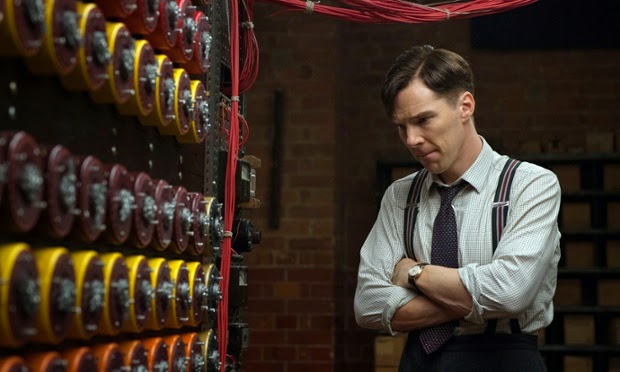
“Sometimes it is the people who no one imagines anything of who do the things that no one can imagine.”

When Alan Turing demands in an early voice-over that we “pay attention” to what we are about to see, it is less a plea to notate intricate details and more a statement on the behavior we come to witness. This is not a man marching to the beat of any traditional drummer. Much of that is clear from a key interaction with one of the first human faces he engages with; during a closed-door interview with a military commander seeking cryptologists for a classified mission, dialogue contrasts personalities working from two opposing engines. It is not as obvious to Denniston (Charles Dance) that Alan is communicating from within altering mental patterns, but of course it isn’t: human psychology seemed like a fantasy to the populace of the 1930s, and poor Mr. Turning’s brilliant mind could hardly conceal him from the baffling dismissals of more socially mainstream observers. But most significant history hardly rests on the laurels of the common either, because if it did there would be scarcely a reason to contemplate our own place in a world built on the successes of outcasts.

Saturday, April 4, 2015

Conspiracy / *** (2001)

A mere 90 minutes is all it took for a room full of Nazi officials to reach a decision that would obliterate an entire race of people, and even less of that time was spent contemplating the moral repercussions of their dubious impulse. Those are just two of the undisputable facts of the Wannsee Conference of January 20, 1942, a moment so vast in its evil ramifications that nearly all those involved did everything possible to wipe away knowledge of its existence. Unfortunately for them, one written account of that notorious day did in fact survive, and after the end of World War II it fell into the hands of those who would see its disturbing secrets shared with the world. Without it, the architects of the Nazi’s “Final Solution” might have even eluded the crosshairs of authority; several who were present during those minutes were not well-known or high ranking in the Reich to begin with, and their presence at the conference was, in some cases, the only contributions they would make on the history radar. But what does it matter now, especially considering how prevalent the images of millions of slaughtered civilians are in our scarred vision? The root of rejecting evil begins with understanding it, which is almost harder to do when you get right down to the source.

Thursday, April 2, 2015

Earth to Echo / **1/2 (2014)
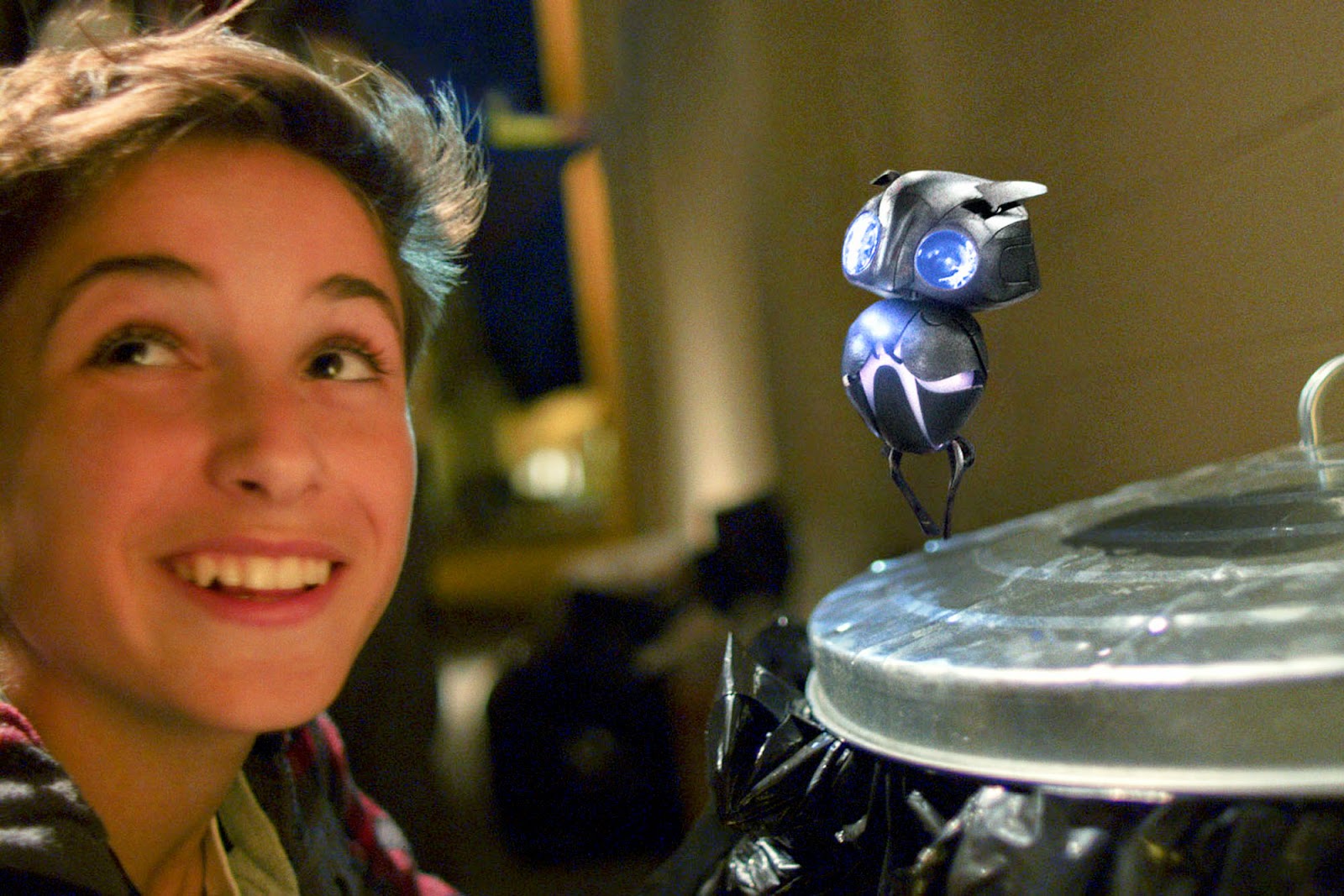
When three friends wander away from home after receiving cryptic clues of some unknown disturbance in the desert, they invite us into one of the oldest known premises in the movie handbook: the dangerous suburban adventure that alters the lives of youngsters in a world of menacing adults. If a handful of endeavors scattered across the recent past don’t serve as reminders on how popular the concept remains in the scheme of moviemaking, the consider the base implications; a young mind is often starved for a story in which they can affect the outcome of something ambitious and forbidden, especially in the presence of aged superiors that seem to exist for the sake of squandering their passions. Generally speaking, that thought process has yielded some of the unforgettable fantasies of our time – including Steven Spielberg’s “E.T” and Richard Donner’s “The Goonies” – and now, with the advent of new technologies at the disposal of those sorts of unlikely heroes, the potential to expand on the sentiment continues to persevere in the presence of our modern awareness. It’s just too bad that the ambition is seldom matched with stories equally as compelling.

Tuesday, March 31, 2015

Love Actually / 1/2* (2003)
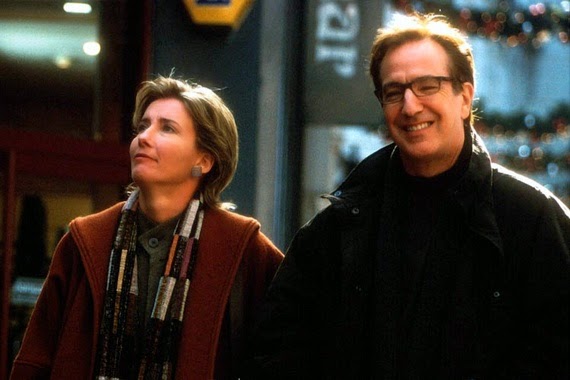
The cheapest ploy a romance comedy can pull is to suggest opposing emotions in plot scenarios that do not support them, and in the horrendous travesty that is “Love Actually” we fall victim to that offense on no less than a dozen occasions. To notate that reality ought to suggest that we are dealing with an endeavor of ambitious awfulness, but that proclamation gives the movie too much credit; it never possesses that kind of attention span to earn such a distinction. What it is, instead, is a one-note melting pot of fragmented stories that wear the mask of endearing sentiment, and what ties them together is a thin thread of logic that requires the audience to believe that so much mischief, goodwill and clichéd plot situations can occur in the same place, at the same time, and in the shadow of the same impending holiday that is meant to cast them all in some kind of resonating emotional umbrella. Watching it all meander around on screen, I began to wonder if Darwin’s theory of evolution might be working in reverse.

Wednesday, March 25, 2015

The Unlikely Master of Widsom
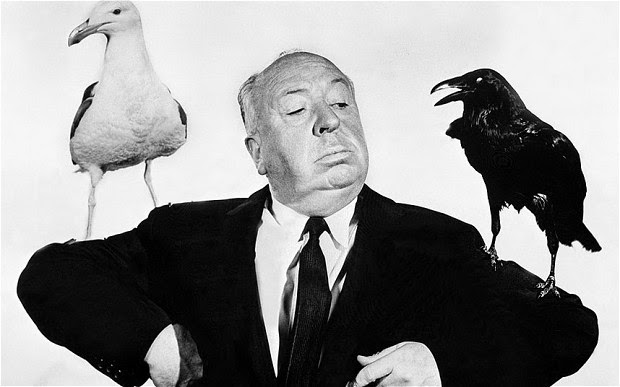
By some inexplicable measure of fate, the identity of Alfred Hitchcock eluded my awareness for much of my youth. A few of his movies had become staples at late night gatherings where family dinners were held in front of an old television set – namely, “The Birds” and “Psycho” – but somehow his notoriety as the most influential filmmaker of his generation simply did not register beyond the acknowledgment of a mere name on a credits list. And as those years progressed and the movies became more of a guiding force of interest, my enthusiasm was caught up in too many modern indulgences (animated films and blockbusters, namely) to be willing to understand the source of cinematic language he helped to craft.

Tuesday, March 24, 2015

Shadow of a Doubt / **** (1943)
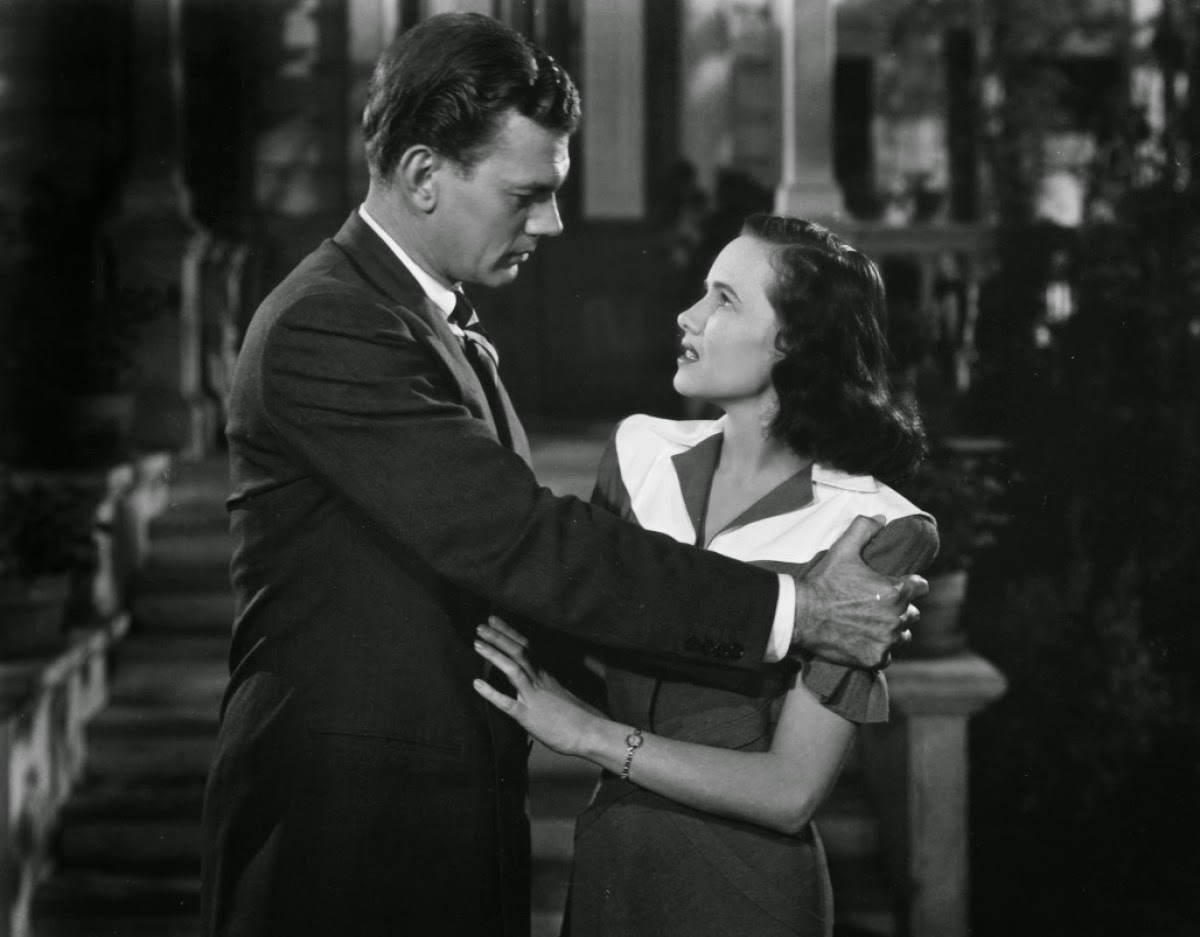
The silence of uncertainty is the most prevalent among emotions experienced between Uncle Charlie and his lovely niece, but not before their connection is established by a display of very affectionate exchanges. He comes back in her life after what we suspect is a lengthy absence; bored and passive about the grind of routine – especially in a house with aloof parents and two outspoken younger siblings – she longs for his company just as a telegram arrives announcing his return home. The moment almost seems to occur as an exchange of psychic rapport, and they reunite in a display of admiration that implies years of loyal commonality. Did they grow this close because they were so alike, or do they share histories that have strengthened the attachment? The answer isn’t so important when the context of his mysterious visit begins to fill her mind with questions, and just as his secretive nature eludes even the closest of his relatives, there is young and observant Charlie staring back at him with a sharp brow, quietly indicating that there is no deception great enough to keep hidden from her all-seeing eyes.

Friday, March 20, 2015

The Birds / ***1/2 (1963)
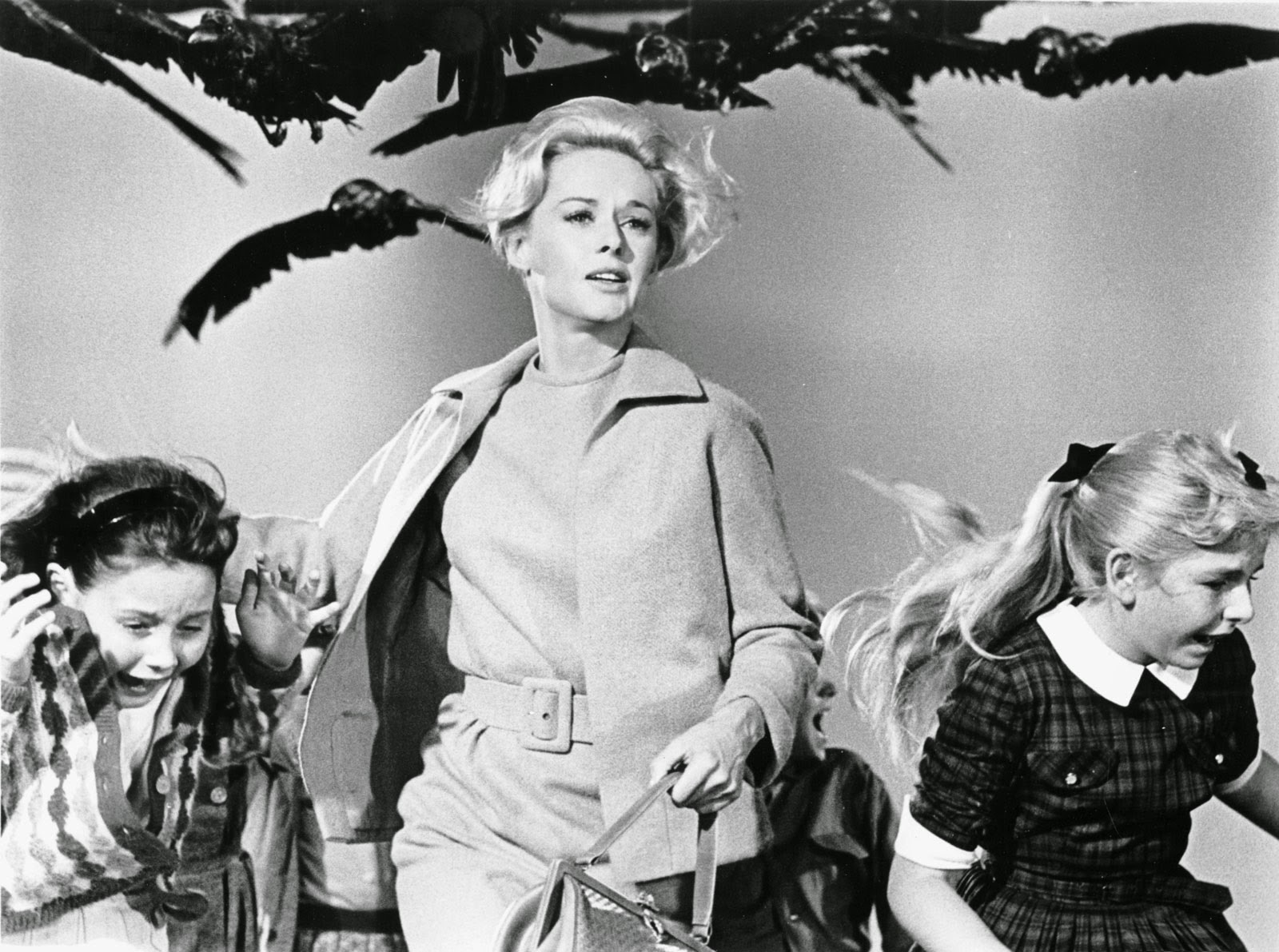
It all begins just as any of the traditional horror movie scenarios do: with the arrival of an ordinary observer in everyday life. Her name is Melanie Daniels, and beyond the comforts of her hyperactive San Francisco social existence is the longing of some untapped desire, a drive in her to pursue romantic interest through the thrilling nature of masquerade. When she encounters the fetching Mitch Brenner (Rod Taylor) at a pet store in the early scenes of “The Birds,” the idea of simplified flirtation is a foreign concept; she engages him in conversation while pretending to be an employee helping him purchase love birds, as if hopeful that prolonged interactions will reveal mutual attraction. She is intoxicated by the chase – so much so, alas, that when Mitch reveals his true identity (and knowledge of her game), there is a moment where she lashes out in protest, not necessarily because she is caught in her web but because a mere man has seen through her scheme. And yet she does not take the discovery as any sort of enlightening reflection; it simply fuels her pursuit in other respects, culminating with her arrival in a small town where she hopes to deliver two love birds at his doorstep and ultimately acquire his affections with calculated precision. Even good deeds, they say, can be masks for shameless ulterior motives.

Tuesday, March 17, 2015

Lambada / ** (1990)
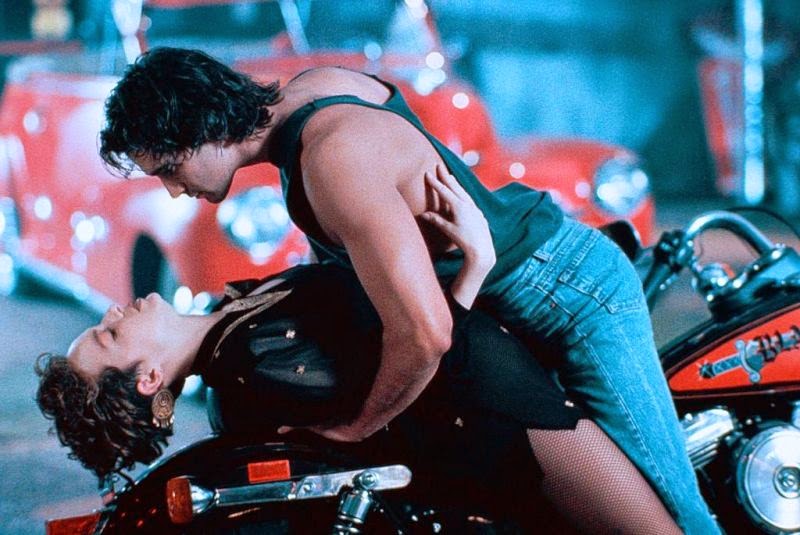
The obscure Lambada craze was never as big as its creators probably would have desired, but imagine telling that to the impulsive minds of Hollywood. In the early months of 1990 and amid impending wonder of what new trend would sweep pop culture, movie studios greenlit not one but two films about said dance – a combination of salsa and dirty dancing that depended on hips swinging seductively to Latin-fueled rhythms – and eagerly awaited their opportunistic conviction to pan out into something of a financial success. Their gamble, much like the notion of Lambada itself, puttered out too quickly to garner much notice, and both pictures were rush-released on the exact same weekend in order to avoid prolonged post-production losses. Thirty years later, their footnote of an existence is notable in the sense that they are among some of the most dumbfounding bad movies of their time, often held up as the most absurd examples of how knee-jerk the movie system can be when it comes to anticipating trends. Seeing them so many years after they barely registered a blip on theatrical radar, one marvels that our cinema is so capable of housing just as many silly agendas as they do the thoughtful sensibilities of more talented artists.

Friday, March 13, 2015

My Stepmother is an Alien / *** (1988)

One of the unspoken pleasures of seeing very ambitious bad movies is watching actors with some level of integrity hammering home their performances with unrestricted enthusiasm, and that is exactly what Kim Basinger does for nearly every minute she is chained to the mess that is “My Stepmother is an Alien.” Any acknowledgment of this obscure and often maligned 80s comedy is not without some level of wonder; initially pitched to the studio as a more dark and sinister parable on child abuse, it underwent countless revisions – and a slew of writers – before being formulated into a lightweight romp with screwball values. By then, the damage was done long before a moment of footage wound up in the editing room; without any visible narrative inkling to suggest laughs or basic comic timing, it was one of those movies destined for colossal failure, and found it. And yet somehow, someway, neither she nor her co-star, Dan Akroyd, subscribe to the internal discord; they plunk it home so ambitiously on screen that one can surmise ulterior motives on part of actors who find silver linings in the most tragic of scenarios. They know they are caught in a catastrophe, and take almost masochistic delight in playing through it like enthusiastic players making the most of a bad situation.

Friday, March 6, 2015

Chappie / ** (2015)

Those in the audience of Neill Blomkamp’s “Chappie” initially unaware of the director’s presence will quickly discover underlying parallels with the structure of “District 9,” the film that initially announced his bold arrival. Both movies begin with news footage that has become a staple of his urgent style, documenting a reality saturated in political strife where the introduction of some new facet threatens to undermine an already imbalanced class system. For the earlier picture, that detail came in the form of the arrival of an alien race with ambiguous motivation; for this newer endeavor, it comes in the configuration of a robotics police force issued by a technical contractor, which effectively cuts crime rates down by making law enforcement immune to the destructive power of enemy bullets. At the helm of this invention are the wide and eager eyes of computer scientist who suspects that his creations are just the first step in mastering the possibilities of artificial intelligence, but he is under the watchful eye of others with suspicious agendas. Then one day, after an endless pursuit through sweat and sleepless nights, his endeavors yield a formidable achievement: the discovery of a computer consciousness that can learn, adapt and reason in the context of human experience. In other words, he creates the same sort of reality that is prevalent in the most threatening of science fiction thrillers.

Tuesday, March 3, 2015

Kingsman: The Secret Service / *** (2015)

“True nobility is being superior to your former self.”

I walked into a dark theater one late afternoon that was showing “Kingsman: The Secret Service,” and emerged two hours later with eyes glossed over by the shock of the experience. What had I just seen? What had my peers in that dark crowded room felt as I was preoccupied with my own dropped jaw and confounded stares? If one of the risks of going to the movies is walking away feeling like our minds have been contorted by the whim of inexplicable ideas, then here is the poster child for the most bizarre of theatrical experiences. Promotional materials suggest that the film is actually “based on a comic book,” and perhaps that says something rather progressive for the medium since I was last a collector. It takes more than just imagination to so thoroughly engage characters in a world this maddening: it requires, I suspect, some level of warped humor as well, and the idea that it is all so thoroughly realized within that subtext gives it a kind of perverse quality, like the artistic delusions of the criminally insane.