Tuesday, March 3, 2015

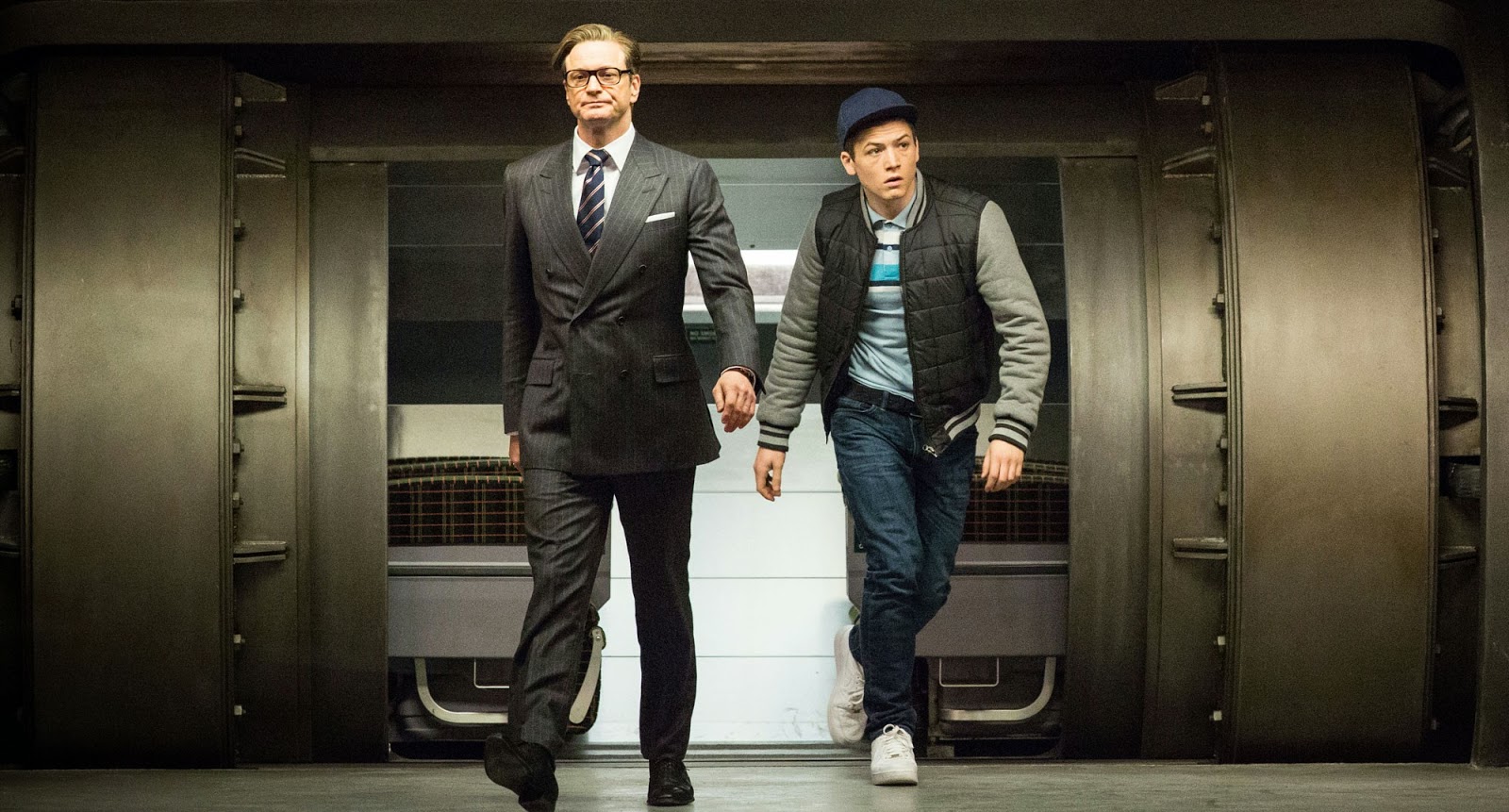
Kingsman: The Secret Service / *** (2015)

“True nobility is being superior to your former self.”

I walked into a dark theater one late afternoon that was showing “Kingsman: The Secret Service,” and emerged two hours later with eyes glossed over by the shock of the experience. What had I just seen? What had my peers in that dark crowded room felt as I was preoccupied with my own dropped jaw and confounded stares? If one of the risks of going to the movies is walking away feeling like our minds have been contorted by the whim of inexplicable ideas, then here is the poster child for the most bizarre of theatrical experiences. Promotional materials suggest that the film is actually “based on a comic book,” and perhaps that says something rather progressive for the medium since I was last a collector. It takes more than just imagination to so thoroughly engage characters in a world this maddening: it requires, I suspect, some level of warped humor as well, and the idea that it is all so thoroughly realized within that subtext gives it a kind of perverse quality, like the artistic delusions of the criminally insane.

Saturday, February 28, 2015

The Lazarus Effect / * (2015)

“The Lazarus Effect” doesn’t register so much as a film as it does a filmed exercise, and somewhere within that framework are the bits and pieces of an idea that would theoretically inspire something interesting on a base level of observation. As an experiment in that sentiment, alas, it is both incompetent and lazy, and during a moment when one of the characters demands that another to explain what is actually going on, we mirror his frustration and uncertainty. That is not to suggest that the movie is intricate to any degree of tangible insight, or at least smart enough to have a grasp on its material. A lot of the people on screen spend a good duration of time using big words to explain their scientific reasoning – and inevitably set up the chaos of the conflict – but the screenplay is not perceptive enough to supply them with focal points; they merely convey their thoughts like political figures spouting clichés and technical terms to create the illusion they really know what they are talking about, even as the actors themselves look like they are wincing under their clenched jowls.

Monday, February 23, 2015

The 87th Academy Awards: A Muted Celebration


It all began with a bang of nostalgic fanfare – a brief and curiously overpowering one. Host Neil Patrick Harris emerged from a stage decorated in floating lights and Oscar statuettes that seemed borrowed right from one of his treasured musicals, and broke into the kind of song and dance routine we have come to expect of such a vivacious showman: the sort that was equal parts energetic and colorful while still holding its own within context of the night’s purpose, which was to celebrate another year’s worth of moving pictures. As he danced in unison with silhouetted projections on a backdrop that emphasized the famous moments of “Singing in the Rain” and “North by Northwest,” he (along with supporting vocalists Anna Kendrick and Jack Black) brought a sense of much-needed unity to a room where political ideologies and cutthroat voting campaigns often reduce onlookers to feigning cordial platitudes. Yes, Harris was going to make everyone in this auditorium beam with the same sense of joy that good movies are supposed to leave us with, and it was clear from that brilliant opening note that he wouldn’t have it any other way.

Friday, February 20, 2015

Boys, Birds and Budapest Hotels – 2015 Oscar Predictions


As enthusiasts of the movies, there are certain rituals we partake in that are equal parts amusing and infuriating. The annual ceremony of the Academy Awards is the most definitive of those traditions. Each year they seem to creep up on us without warning or rhythm, and in nearly all instances our enthusiasm is evenly matched by a sense of exhausted de ja vu, as if to imply not enough time has gone by to warrant yet another exercise in public popularity contests. Yet we watch on without reservation like spectators at a game of chance, knowing full well that the outcome is always the same even as the selections of movies evolve creatively and artistically through the pass of time.

Saturday, February 14, 2015

Whiplash / **** (2014)

A talent that lacks management is a talent easily led astray, but he who is consumed by it will pursue perfection to the zenith of psychological collapse. The young hero in Damien Chazelle’s “Whiplash” teeters on this tightrope with silent contemplation, pushed there not because he really cares all that much about being great, but because he has something to prove to all those within his sphere of awareness. His problem is that the one standing at the focal point of observation also happens to be the most toxic. His name is Terence Fletcher (J.K. Simmons), and he walks with almost predatory authority through the halls of the Shaffer Conservatory of Music. All those within sight of his piercing gaze dare not stare back or instigate conversation; they are clearly all spare parts in his toolbox of supplies, to be used at whim if he ever deems it necessary. Young Andrew (Miles Teller) does not wonder where such a man managed to acquire such commanding influence over so many subjects, and the results speak for themselves: he is a champion competitor with a long line of achievements cementing his power, and all who play jazz in the lower echelons foolishly wait for the day when he will wander into their midst and offer a nod of acceptance.

Sunday, February 8, 2015

Concerning Beginnings

The movie critic in me came to fruition in the fall of 1997, during a moment that now seems like the seed of a pivotal destiny. At the time, the industry was in the middle of a thriving creative thrust; scarcely a week was going by when something original was not opening at the local multiplex, and the influence of art-house cinema was just beginning to infiltrate the consciousness of casual moviegoers as local chains began adding them to the line-up of major first-run releases. Knowing this reality, and armed with it in a class of eager high school reporters waiting for assignments, my voice shot over in a room when the Editor asked: “who wants to write the movie review?” Writing was as natural to me as breathing well before the demands of school turned it into a prerequisite, but now it was more than just that: it would provide me a voice for opinions over storytelling, and the impulse inspired just as much fear as it did enthusiasm.

Saturday, January 31, 2015

A Most Violent Year / ***1/2 (2014)

“I woke up this morning feeling very good about this.”

Feelings play an integral part in the framework of “A Most Violent Year,” not in the sense that they open up proverbial emotional states or expose mental wounds – although we suspect they do trickle beneath the surface – but more directly in regards to how they rouse the heart of a man who refuses to stray from a personal philosophy. In an integral moment of dialogue, his words strip him of all illusion and façade: “When it feels scary to jump, that is exactly when you jump, otherwise you end up staying in the same place your whole life.” A man who does not feel things does not abide by such conviction, otherwise he wouldn’t be so deadpan in living that mantra even as the eroding social realities of life could disrupt that prospect. It is because his heart and spirit are stalwart that he is able to reach this point in his destiny without a tarnished perspective. Some would refer to the outlook as idealistic, others still foolish. But it is a road so few travel that there is a deep-seeded fascination we have in how such ideals could endure against unstoppable forces. It’s a lonely world for any man at the wrong end of a crime spree, and certainly it must say something for one’s own feelings to stare back at the barrel of a gun without compromising against the fear.

Sunday, January 25, 2015

Blind Spot: Hitler's Secretary (2002)

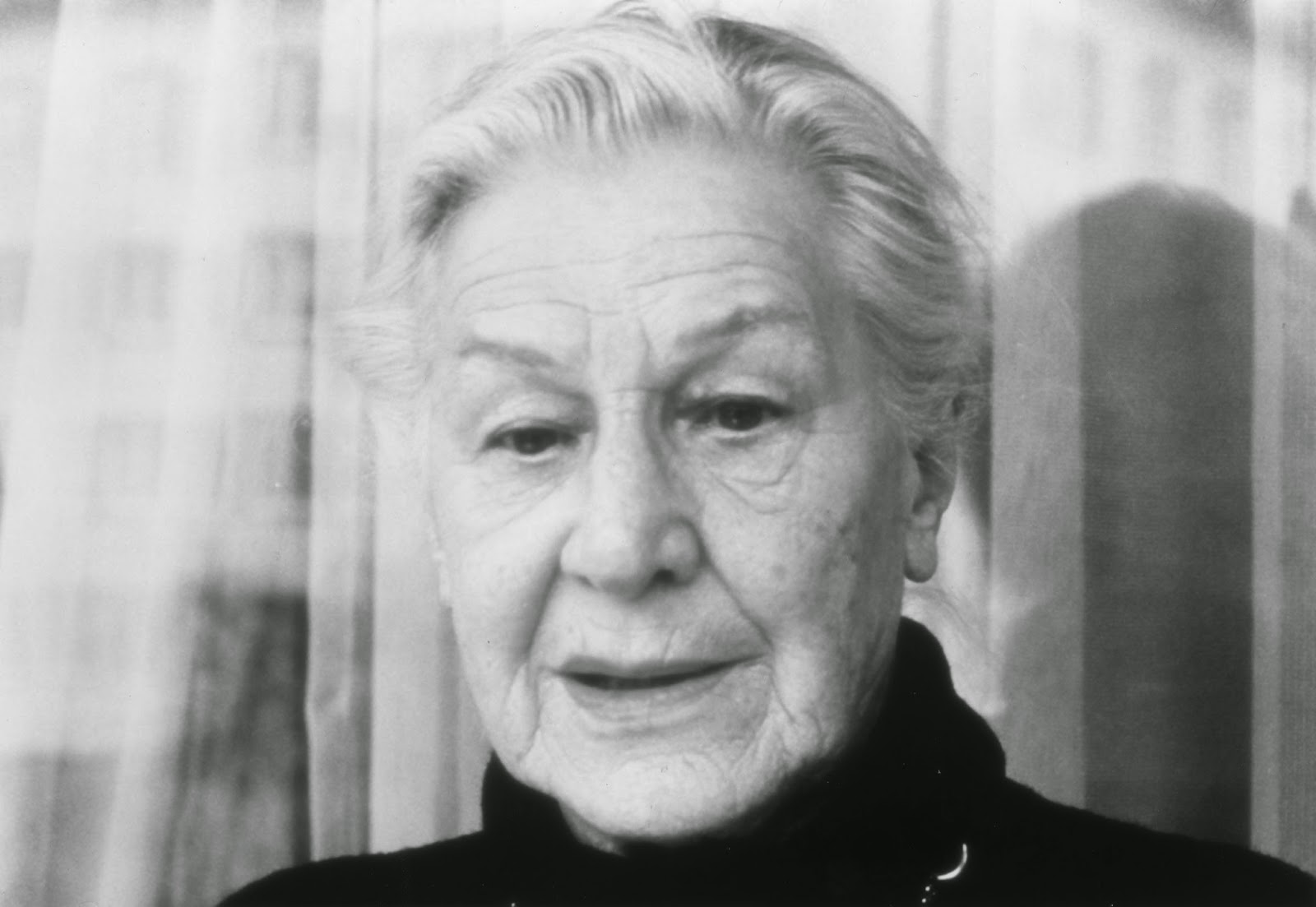
In the winter of 1942, a young impressionable face came into the inner sphere of Adolf Hitler with simple aspirations of steady employment. Her name was Traudl Junge, and at age 22 all her worldly concerns came down to basic security, especially as Germany came under the rule of a regime that sought to, from an inside perspective, enhance the national workforce. A co-worker at the Chancellery had heard that the Fuhrer was seeking a private secretary and suggested that she apply for the position, and after excelling at a typing test she was whisked away into the wilderness along with a small cluster of other female applicants, where Hitler was privately obsessing over military orders in one of his many bunkers. She had never seen the dictator outside of political rallies or propaganda news reels, but at the center of her line of sight she discovered a courteous and mannered personality – far from the fiery oratorical genius that the public saw so regularly. In many ways, that was just as dangerous as it was disarming; Junge was the oldest child in a family without a male parental figure, and to her his almost fatherly sense of delicacy with the applicants was a refreshing quality, an aspect that seemed to fill a quiet void in her to be coddled like an affectionate child. It never dawned on her through the course of her employment that her boss led a life of dubious distinction, nor did she come to realize the depth of the atrocities he committed until long after the flames of war had dissipated.

Thursday, January 22, 2015

W.E. / **1/2 (2011)

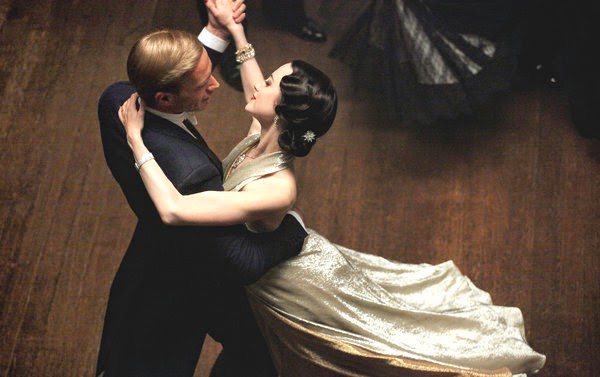
Across a broad pool of time are the figures of two women worn down by inconsolable desires. On one end is the face of Wallis Simpson, a divorcee who would forever be outcast from British nobility because of her damaging association with King Edward VIII; on the other is Wally Winthrop, a brooding socialite in a modern world too busy to notice her internal unrest. Both are troubled beings who have gone long past the point of seeing their lives from a point of eternal optimism, and no wonder: for each, they have discovered – and lived – in the warm embrace of the ever-so-treasured fable that romance often lulls them into, only to discover that all of those storybook tribulations are elaborate ruses to mask devastating scars. For one, the love story endures beyond the limits of immense personal sacrifice, and that prospect is what drives the compulsive behaviors of the other, a woman whose own crumbling marriage becomes the catalyst in which the most important question must be confronted head-on: is it really possible to find a love so deep that one would be willing to give up everything for the sake of preserving it?

Saturday, January 17, 2015

Boyhood / ***1/2 (2014)

The gulf of time is frequently condensed into a passing reference when we reflect back on the journeys of the past, but how much of it all will resonate beyond the echo of feeling? Richard Linklater’s incredibly ambitious “Boyhood” is about the effects of such moments. At its worst, here is a very straightforward chronicle of how a growing kid can be shaped by the decisions of others during the most formative years of personal evolution, and at its best it is a film fully enamored by the organic desire to observe the pure uncultivated stretches of youthful perspective without the need to bog it all down by plot or movie formula. For the viewer, the experience of seeing this all – in a very ambitious endeavor that was filmed over the course of 12 years, no less – comes as naturally as watching one of your own children age before your eyes, and as it grinds through years of solitary experiences, our unending fascination with observation is equaled only by our acknowledgment of the remarkable commitment made of these dedicated actors and filmmakers. Francois Truffaut’s “The 400 Blows” was the benchmark of coming-of-age dramas regarding boys on the rough road to becoming men, and here at last is the most perceptive film of that nature since, a picture that wastes no time in creating sensationalized accounts of personal histories and instead seeks to just, you know, tell it all like it is in the world of the average kid on the cusp of discovering who he really is.

Sunday, January 11, 2015

A Night at the Globes

Tonight is the night when the final act of the award season begins, the night when the Golden Globes – the first precursor to the Academy Awards push – are handed out and the biggest movie contests of the year reach the last pitch of competitiveness. From this moment on, few people in the movie business will be able to breathe in comfort. Two days is all that separates these awards from the announcement of the Oscar nominations, for instance, and beyond this moment the industry also must contend with the onslaught of Guild awards, which effectively narrow the margin of primary contenders in Hollywood’s last dash for prestige. One may continue to wonder what a ceremony like the Globes can possibly offer in that context considering the Foreign Press’ distant association, but the specifics have never really been the point. If anything, the awards are the perfect benchmark for establishing the tone of the next two months, especially as the drama and hysteria of competitions range from friendly contests to the outright cynical campaigning we come to expect of some powerful studio heads.

Friday, January 9, 2015

Percy Jackson & The Olympians: The Lightning Thief / ** (2010)

The big figures of Greek mythology usually emerge in our awareness as part of a mandated education curriculum that reduces them to footnotes, but if there’s one thing certain in most of those lessons, it’s that their individual flaws serve as ironic reflections on the evolution of our own personas. To know them inside and out is a daunting skill given the twisty nature of their interactions, but to recognize their limits is to find comfort in knowing that no one – least of all those powerful and immortal figures – is immune to individual weakness. A man who may be hung up on good looks, as an example, might find a resonating moral in the legend of Narcissus; someone driven by ego and power, meanwhile, would probably see Zeus as an apt consideration. The fact that they are all-knowing deities certainly adds relevance to that acknowledgment, and the very idea that just as many have risen to power in spite of their inadequacies as those that have suffered from them offers their existence some level of duel meaning. Given the nature of their collective predicaments, is it any wonder that the ancient Greeks perfected the notion of theatrical tragedy?

Thursday, January 8, 2015

The Purge / *** (2013)

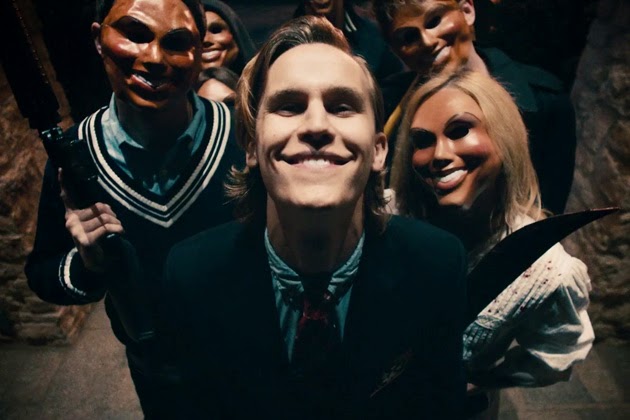
The scene is set in upper suburban America in the year 2022. Crime and unemployment are virtually nonexistent. The economy is flourishing in unprecedented fashion. And everywhere you turn, ordinary faces are masked by an almost sadistic grin that is portrayed as cheerful contentment. What do those factors say about the United States of the very near future? Under the rule of an entity enigmatically referred to as the “New Founding Fathers,” an alarming new legal trend has emerged: once a year for 12 straight hours, the citizens of the states unite in an event referred to as the “Purge,” and are allowed to partake in an entire night of unrestricted bloodshed on each other. What could possibly warrant this annual legalization of such heinous possibilities? The nation’s prosperity, they say, speaks for itself. And underneath that logic is a chord of very cynical psychology, to boot: if man is indeed destined to be violent and monstrous, then it stands to reason – at least in the eyes of those high up – that giving them one free pass a year to “unleash the beast” will inevitably make them much more civilized people to deal with for the other 364 days of the year.

Saturday, January 3, 2015

The Interview / *1/2 (2014)

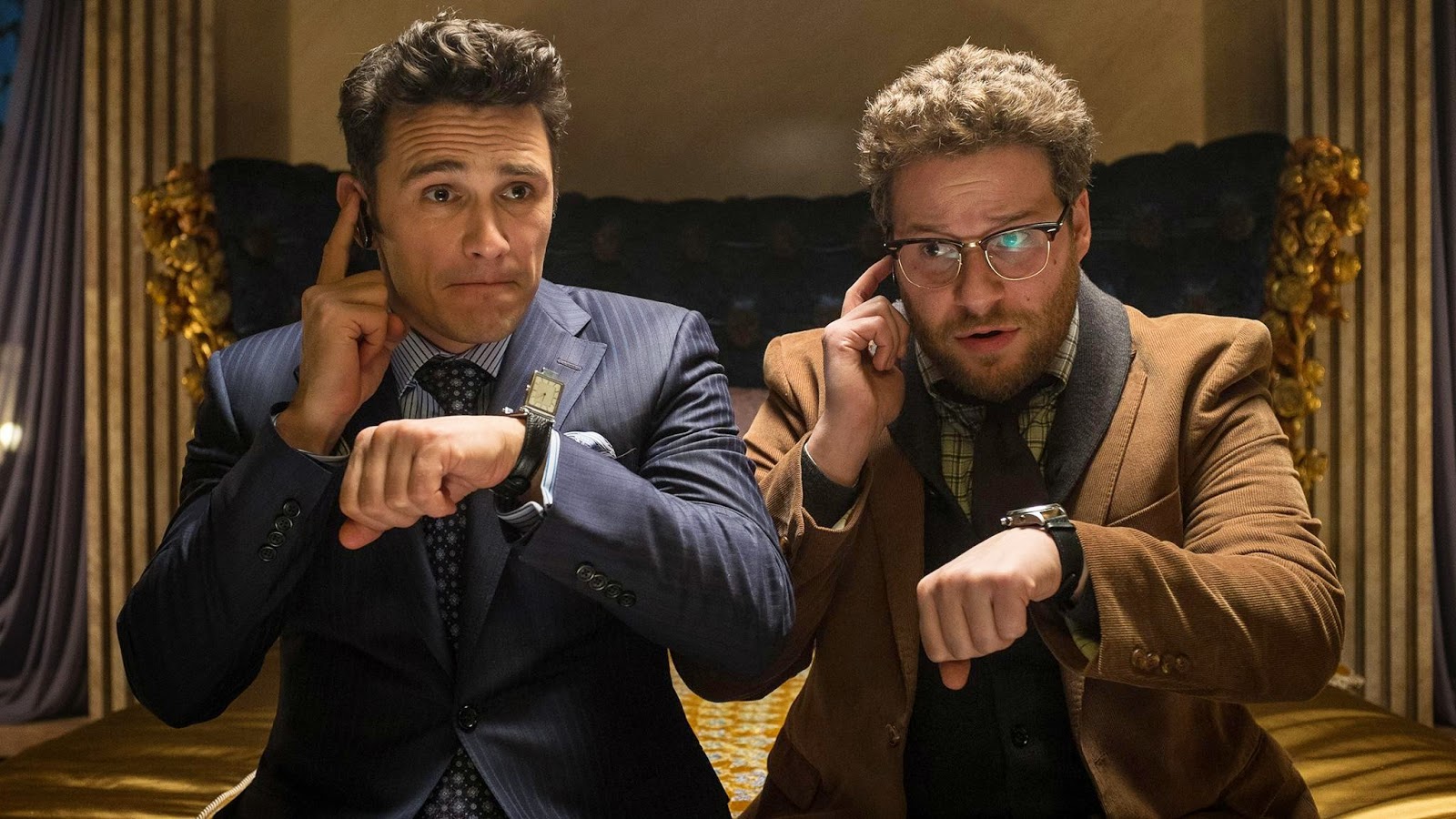
What is it about the pairing of James Franco and Seth Rogen that inspires such screwy exploits? Isolated, here are actors with plausible conviction in a diverse array of material, but together they bring about a level of bizarre physical abnormality, like friends in a college frat-house who get off by making everyone around them believe they have suffered brain injuries. That is perhaps less amusing than it sounds, but try telling that to either of them; their synergy and enthusiasm is so beyond persistent that it’s almost infectious, even when it is directed towards trivial fluff or disposable internet shtick (case in point: the endless supply of YouTube videos they have put together over the past year). They are definitive occupants of that dreaded “bromance” moniker, but it’s impossible to dislike the good-natured purity of their shared antics, and there are moments when we smirk at their mutual audacity for whatever obstacles they are up against. It’s just a shame that their robust friendship has to play out in the frames of very bad comedies.

Thursday, January 1, 2015

Into the Woods / **1/2 (2014)

Personality goes a long way in driving the engine of movie musicals, and in Rob Marshall’s new adaptation of “Into the Woods” the screen is inhabited by no less than four unforgettable ones. Any endeavor of this flamboyant nature is already destined to contain magnetism when a talent like Meryl Streep shows up to the party; once you throw in Johnny Depp, Tracey Ullman and Emily Blunt into the mix as well, you have established an ensemble that is saturated in all sorts of devious possibilities. That each of them are competent as emotive singers of the material certainly strengthens the assuredness of their casting, and when they engage in the endless array of quirks mandated by the whacky narrative scope, their charisma acts as a convincing lure in earning our undying interest. At the heart of their mischievous scene-chewing is a story that is probably much less interesting in the absence of dominating figures, but of course it is; those old youthful fables are a little blasé in the context of adult-driven cynicism, which almost necessitates the need for some kind of flashy demeanor standing in between the material and pessimistic viewers to mediate their connection.