Showing posts with label FILM NOIR. Show all posts

Saturday, September 9, 2017

The Black Dahlia / 1/2* (2006)

In the murky fringes of old Hollywood glamour are the faint whispers of the forgotten and exploited, of ambitious young faces who came to find their calling amongst a generation of would-be entertainers and instead discovered a world designed to devour them. Though some lived to tell the sad tales of their experiences, others were less fortunate (although their names were usually buried in the annals of historical footnotes, a consequence of knowing more than they could keep to themselves). The hardest of pills to swallow was perhaps necessary to endure: the fact that heads of studios and their most prestigious stars rubbed elbows with dangerous mobsters, whose money influenced as many of the early industry trends as the expectations of eager moviegoers. And somewhere in the chasm created by the cognizant and the naïve is the mysterious legend of the Black Dahlia, a woman whose enigmatic presence looms like a painful reminder of the cruelty of the hills, where big dreams often suffered the irony of nightmarish deceit.

Sunday, May 29, 2016

The Wrong Man / ***1/2 (1956)

During a recent viewing of the astounding “12 Angry Men,” my mind was persistently drawn to another picture from the same era – Alfred Hitchcock’s “The Wrong Man,” also starring Henry Fonda, about a middle-class individual who is accused of a series of burglaries he did not commit. Filmed and released within a year of one another, both movies were parables of a legal system that created vacuums for error, and while the innocence of the plaintiff in Sidney Lumet’s film was up to speculation, the certainty in Hitchcock’s was not; here was in a man who simply was in the wrong place at the wrong time, and bore a striking resemblance to a crook responsible for hundreds of lost dollars at the end of a loaded gun. Their common themes, one might say, reflected an attitude of the times that both filmmakers found strikingly relevant; no greater threat could undermine the security of people than a flawed justice system, especially one that had not yet adopted the values of surveillance or forensic advancement. Yet to consider both movies now in this time of artifice is to marvel at the unwavering power of truth, a tool often weakened in the face of investigative limitations. Was it also diminished by prejudice? Misconceptions? Or was one’s faith in the system simply misplaced? When the director briefly appears in the prologue to announce to the camera that his “true” story is perhaps stranger than most of his own fiction, one is inclined to sense there is equal parts resignation and befuddlement in his voice.

Monday, August 24, 2015

Lessons from Criterion:
"The Killing" by Stanley Kubrick

Stanley Kubrick was a mere 27 years old when he undertook directing responsibilities for “The Killing,” but his overwhelming sense of perspective was indicative of a natural-born talent reaching the frenzied thrust of possibility. Seldom (at least up to that point) had a relatively new face in the world of film so audaciously risen to the demand of such ambitious challenges; with a small budget and an even tighter shooting schedule (not to mention no personal salary), his endeavors yielded a picture of reputable prowess that declared his impending importance over the coming years. For a time as volatile as the late 50s, that was more profound than it was revelatory. Because Hollywood was fairly impenetrable in the days of dominant personalities like Cecil B. DeMille and Billy Wilder standing behind the camera, how far could a lowly aspiring photographer from New York realistically go? Against all odds and a plethora of obstacles that would have instigated mental collapse in a host of others, here was a man who possessed distinct vision, controlled every element of his composition and orchestrated an end result that was as sharp as it was methodical. In its gorgeous frames rests one of the greatest prophecies of modern cinema: the coming of the most important filmmaker of his generation.

Tuesday, September 2, 2014

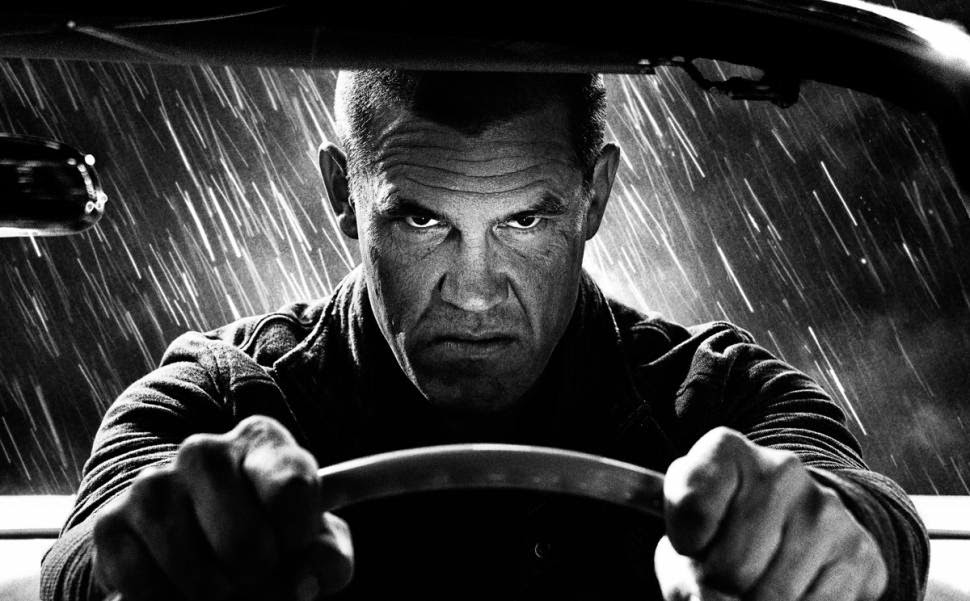
Sin City: A Dame to Kill For / *** (2014)

In the weeks leading up to the release of “Sin City: A Dame to Kill For,” Frank Miller’s nourishing cityscape of shadows and corruption weighed heavily in my thoughts. Over nine years had passed since Robert Rodriguez took us through our first outing of Basin City, and yet the visual – and narrative – impulses seemed as fresh in the current moment as they had been all that time ago, when they might have still been seen as distinctive. What gave them that edge was more than just a breathtaking sense of space and dreaminess in the images; they were compelled by an undercurrent, a chutzpah, to use the camera frame as a prison for an ensemble of characters driven beyond the limits of acceptable human behavior. The notion that their seedy antics were executed in a movie with astounding artistic sensibilities was little more than a bonus, and over the years many of us have revisited those damp streets and violent characters in unending awe of the material: marveled by the film’s evocative look and endlessly fascinated by the faces of those who dwell within them. They are, at the core, complex madmen who are only beginning to divulge their dangerous riddles.