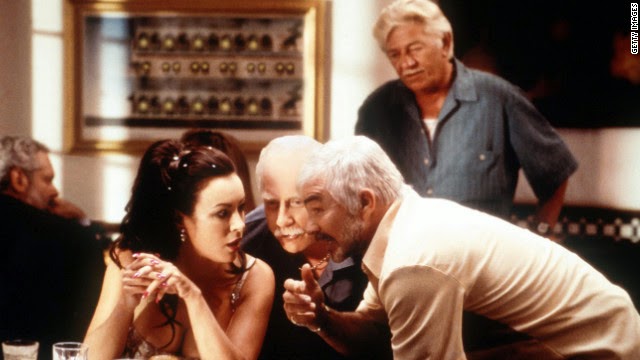
“Bedazzled” is a comedy about an ordinary single working male whose life is turned into a three-ring circus when he is given the opportunity to make seven—not three, but seven!—of his wishes come true. The catch? His soul will belong to the devil for an eternity as a result. In this case, the Prince of Darkness is given a new twist as a tall and luminous brunette, whose all-red wardrobe is seductive and chic, but isn’t nearly enough to convince an entire movie audience (much less the main character) the extent of her potential. Yet in a movie where diverse comedic exploits are executed so well and so vividly, does it matter that the villain lacks personality and comes off as a stale imitation of something much greater? Not really, and we can thank the off-the-wall, energetic protagonist because of this.
Friday, November 3, 2000
Book of Shadows: Blair Witch 2 / *** (2000)
The phenomenon that is “The Blair Witch Project” may have scared the pants of countless viewers when it hit theaters last year, but few people realize that it also opened up a floodgate on the grounds of the film’s base setting—a small community in Maryland that the filmmakers had designated “Burkittsville”—where avid fans of the movie flock in droves year-round to, optimistically, catch a glimpse of something that gave the innovative horror flick its profound atmosphere. Now comes “Book Of Shadows: Blair Witch 2,” which makes a descent into the lives of five such individuals who were spurred by the popularity of the first film, and are now on a journey through the fictitious Burkittsville woods to see all the famous locations where the mockumentary was initially shot (all while the masses argue over the authenticity of the legend, too). Their trek is built on the same innocence and naivety that the three student filmmakers took with them when they went in search of the Blair Witch, but now with different results. In the first movie, our protagonists disappeared without a trace; this time around, the fate of curious eyes is more visible, but perhaps more tormenting as well.
Lost Souls / *1/2 (2000)
There is a background history attached to “Lost Souls” that may be long and involved, but is certainly more entertaining to hear about than watching the movie itself. Because religious thrillers have been showing up in theaters over the past year quite frequently, the movie’s makers chose to postpone the intended release date—late 1999—until the calendar was cleared of anything similar. Only one problem, though: trailers had already surfaced on new releases late last summer, and with the eminent delay, moviegoers could have easily grown tired of the wait and forgot about the picture altogether. Now that it has finally arrived in theaters, hopefully audiences will do just that.
Nurse Betty / **** (2000)
Neil LaBute’s “Nurse Betty” is one of the most audacious, bizarre and effectively conducted motion picture’s I’ve seen since “Pulp Fiction,” an over-the-map lampoon so well grounded on so many different levels, you gawk at it with a sense of sublime (but curious) appreciation. It tells the tale of a quirky housewife named Betty, who witnesses the brutal murder of her husband, and then drowns out her sorrows by absorbing the substance of several episodes from her favorite television soap opera. Daytime shows are generally used as innocent tools for escapism from some of our very own warped, complex lives, but Betty’s trauma has been so great, so extreme and hard-edged, she slips into a realm that mingles fantasy with reality, and actually begins to believe that she is linked to one of the show’s own characters. This inspires an intricate, offbeat storyline that operates on a consolidation of black comedy, satire, drama, romance, and at some points, even wild adventure.
Friday, October 27, 2000
Collectors / **** (2000)

The essence of the serial killer has been a perpetual fascination to society as far back as history is written, when warriors were immortalized for slaughtering thousands of people in bloody battles and outlaws like Jesse James were placed on pedestals every time their bullets pierced another innocent bystander. Little has changed with the passing of time; in fact, thanks to the unremitting involvement of our mass media, their accessibility is almost as extensive as that of someone like a super-model or a politician. Think I’m exaggerating? Then consider this for a moment: how come some television viewers of the late 60s/early 70s have admitted that, at the time, they could barely tell the difference between Jim Morisson and Charles Manson?
Friday, September 29, 2000
Fall 2000: A Preview of Things to Come
As the fall season begins to swing into gear at the cinema, moviegoers who reflect on the seasons that have already passed will undoubtedly be left in complete dismay. In the early months of the year, the theater screen was bombarded with a seemingly endless supply of half-baked material (unfunny comedies, pretentious thrillers, etc.), unleashed at a steady pace and laying the foundation for what could be the single worst year for movies in well over a decade. As those pictures subsided, we began seeing a touch of inspiration sprout out from the motion picture crop by early April (with pictures like “American Psycho”), and for a brief period of time, felt that the industry was heading in the right direction. But hopes were painfully dashed, alas, with the arrival of summer: a disappointing three-month journey through loud, obnoxious and even ridiculous blockbusters that trashed much hope for a worthwhile experience at the local multiplex. The period had its share of great successes, yes, but in all fairness, could not live up to most of its hype both critically and commercially. In fact, the highest grossing picture of the season—“Mission: Impossible 2”—made just a little over $200 million at the domestic box office, down from the $400+ million earned by last year's biggest summer flick, “Star Wars Episode 1—The Phantom Menace.”
"A" is for absurd
Why a proposed new MPAA film rating would be a waste of time
As the movie rating system is quarreled over by the masses for its productiveness as a model to arbitrate material viewed by young eyes, voices in the movie industry have proposed the implication of a new assessment into the Motion Picture Association of America’s rating system. This “A” rating, which would stand for “Adults Only,” is proposed to sit in between the “R” (Restricted) and the “NC-17” (No children 17 and under), essentially to relieve the pressure put on the R without drifting into the whereabouts of an NC-17, which suffers limited distribution because the public associates it with hard-core pornography. Such a suggestion, though, seems rather pointless in today’s rating system when the NC-17 shared similar proposal in the early 90s for exactly the same reason. The NC-17 and the A essentially mean the same thing: no children allowed. And if an A rating were ever passed, who’s to say it would not simply share the same fate as the infamous NC-17 did?
Friday, September 22, 2000
The Watcher / 1/2* (2000)
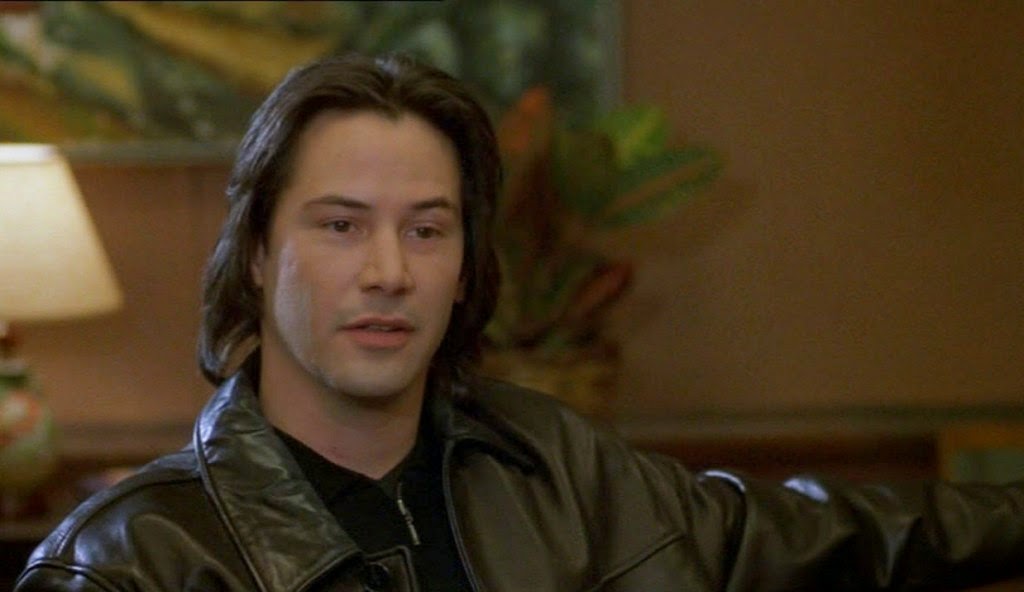
The recent influence of music videos in movies is slowly proving to be a nuisance to filmmakers looking to establish a distinctive style, but with “The Watcher,” its impact is so heavy that the film practically shoots off the scales and heads straight for overkill. What’s most sad is that the movie starts to tell an interesting story, but is then caught behind a shade of blotchy imagery and indistinctive camerawork too often to ever develop any sense of realism or excitement. By the time the fractious style actually lets up, it’s too late to save anything, for the plot has lost its desire and decides that a retread through serial killer formulas and off-the-wall logic is better than nothing.
Whipped / * (2000)
Filmmakers have had no problem in the recent past pushing the envelope for tastelessness, and perhaps no other genre defines that attribute better than the infamous sex comedy. Traditionally directed at personas who relish in exertions that a more mature society might consider perverse or unspeakable, these often outrageous romps, being the pinnacle of all cinematic bad tastes, are also some of the most amusing and hilarious pictures in production today. The recent success of “American Pie” and “There’s Something About Mary,” for instance, may offer insight into why the moviegoers are now so attracted to pictures pushing buttons: each challenges the restrictions, yes, but are performed at a level of initiative where surprise, embarrassment, satire and cheerfulness (traditional qualities of any solid comedy) erupt from the mix. But “Whipped,” a new endeavor of similar approach, is none of those things; its childish, detached take on the consequences of womanizing is an unpleasant experience to sit through, not just because it fails to match the sexual extremities with a sense of humor, but because it’s just plain dumb.
The Art of War / ** (2000)
“The Art Of War” is a heavily detailed descent into the world of international espionage, lit up by a barbecue of savory visual imagery, built on a solid premise, then linked by a reliable ensemble cast where each player is used significantly in the story. It’s a shame that the plot unravels long before the actual conspiracy does. The moviegoer who still has a thirst for some summer movie thrills might not mind in this situation, as the picture is simply loaded with well choreographed stunts and concise editing, but for those who are withdrawing from the season of thrills and avidly looking towards the fall release schedule, like me, visual excitement becomes secondary to a deep and compelling story. Such a quality is what this movie, like its nearest cousins—the Bond pictures and “Mission: Impossible 2”—fails to generate successfully.
The Crew / zero stars (2000)
“The Crew” is a childish, muggy and revolting mobster caper that is splintered by endless idiotic complexity, then sent off the deep end by the jaw-dropping participation from some of cinema’s most revered screen actors. Most moviegoers will likely compare it to the recent “Space Cowboys,” which made a similar outing by taking aging stars and splicing them into a story that required the kind of skill usually seen in the younger crowd of thespians. The basic difference? The premise of the first picture—old astronauts being launched into orbit—is at least constructed with genuine interest. How is it possible to show enthusiasm at a movie that matches its old codgers with a screenplay pasted together from various soap opera clichés?
Duets / *1/2 (2000)
When six spiritually unhappy individuals pair up in rather unrelated situations, they all find themselves on route to the same destination: a $5000 prize at an Omaha, Nebraska karaoke contest. One pair are newly-acquainted father and daughter, who bond throughout the movie on various ventures into karaoke competitions in local bars. The second pair consists of a business man who is overwrought with anxiety because his family ignores him, and an escaped convict with a voice that would captivate saints. The third is, rather pointlessly, a cab driver with the breakup blues, who agrees to take an ambitious waitress across the country to this contest just as long as she continues to perform sexual favors. For any person even slightly interested in seeing “Duets,” which is a road movie without any sense of direction or stability, perhaps these descriptions alone will help shape your final decision.
peter. / *** (2000)
If the term “less is more” still carries any significance with the average moviegoing crowd, than a simple little picture like “peter,” which is stripped down to the very rawest of human drama, could easily melt the hearts of viewers in ways that few films this year have. Maybe those audiences will have better luck in than me in getting past the drawbacks. The third feature film from ambitious director John Swon is easily one of the most smooth, appeasing independent pictures I have seen in recent memory, and yet one that doesn’t do its material complete justice. There’s nothing wrong with keeping things at a bare minimum, but shouldn’t it at least be a given to include a few side details so that we actually know what we are dealing with?
Friday, August 25, 2000
What Lies Beneath / *1/2 (2000)
There is an agonizing sense of déja vu that kicks in shortly after “What Lies Beneath” opens on the screen, as if all of the images, the twists, the outcomes, have been seen not so long ago. Anyone, of course, who has been tuned in to the film’s recent overexposure on television and in theaters knows why this feeling is induced: because every important moment in the movie itself has been in one way or another been used as promotion for the theatrical run, draining the product of its element of surprise. You know how it is when some big loud mouth tells you the entire plot to a film you have yet to see? “What Lies Beneath”s advertising campaign operates on those impulses.
Nutty Professor II: The Klumps / *1/2 (2000)
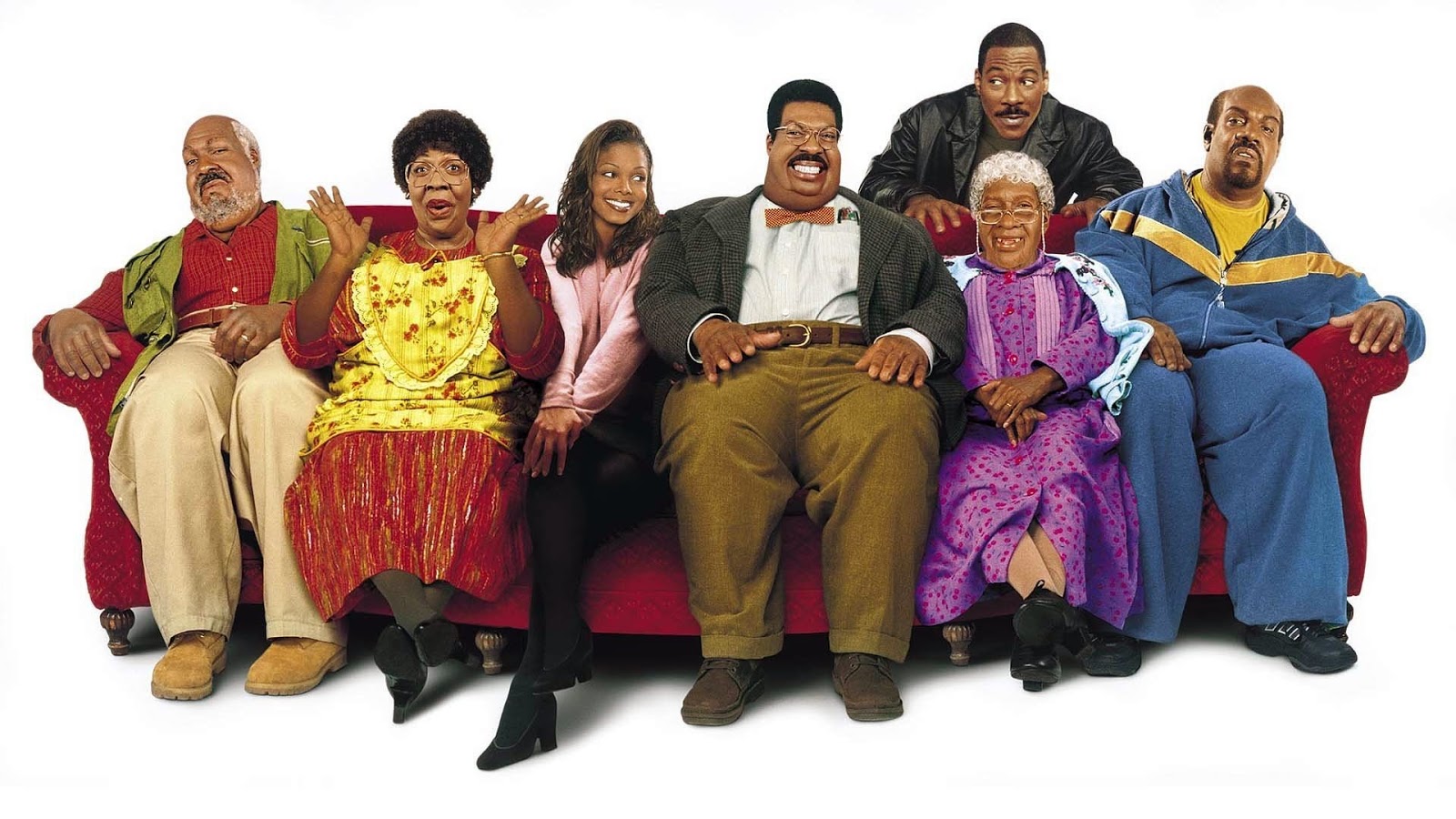
The utilization of bathroom humor is so relentlessly exercised in “Nutty Professor II: The Klumps” that it’s a wonder the movie doesn’t just flush itself down the toilet. Not that it would be missed or anything; with bad taste at a crest in the mainstream market (refer to “Scary Movie” for the latest), one can easily look somewhere else for a more satisfying use of gross-out comedy and usually come out ahead. Something like “Road Trip,” for instance, matches its repugnance with a sense of humor, while films like this assume that the inclusion of bad taste alone immediately equates with genuine laughs. Audiences will undoubtedly stare at this Eddie Murphy misfire with dismay and anger in their eyes; it is one of the most tone-deaf, sloppy excuses for comedy seen so far this year.
Subscribe to:
Posts (Atom)