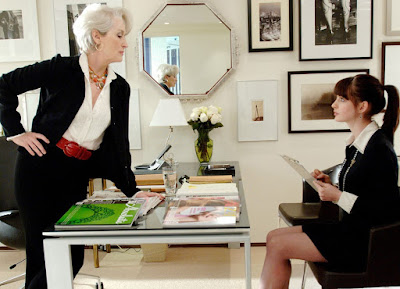
In the conventional sense “The Devil Wears Prada” is about a woman who finds herself at the mercy of a demanding boss and does everything possible to earn her approval. In a more conscious perspective, it takes on added meaning – namely as a metaphor for our work-obsessed culture and the growing divides between professional and personal value systems. The heroine at the heart of the matter is the embodiment of that example, and certainly there are moments where her struggles are exploited for the shallow exercises of a standard comedy plot, but why doesn’t it end there? Why does her situation persist so glaringly after the jokes fade and the characterizations erode? Because her life reverbs with the same struggles and contradictions that affect most in the American work force, where it has become a perfunctory routine to abandon personal space and mental safety nets. More serious or satirical contemplations would have burrowed down to the root cause of that irony, but this movie is far less concerned with reasons than it is with the ramifications. And that’s ok, you might say, because the surface of the matter is potent enough to engage our emotional investment, and the characters identifiable enough to sell this pitch with some level of relatability.


