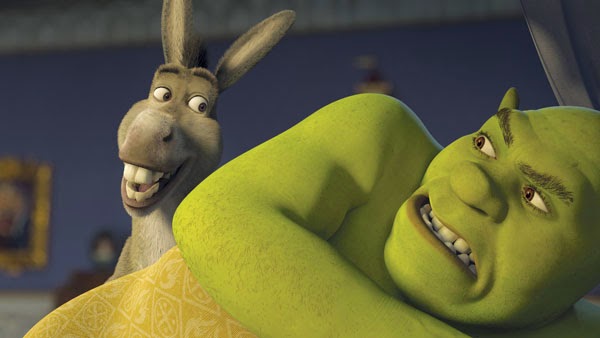
Hollywood’s newfound ability to create movies completely through computers has given birth to one of the most unlikely and diverse movie genres we have ever seen, a form of expression mainly aimed at catching the eye of technology fans, yet also responsible for garnering a young audience for its likeness to standard animation. Whether that resemblance was an intentional move on the parts of studios who first jumped at the technique is something we will never know for sure. For years prior to the evolution of cinematic technology, it had been a heavily-discussed topic regarding the future of the moviemaking process, essentially founded on the notion that the eventual benefits of it would allow studios to create films that seemed so close to standard live action, there would no longer be a need for actors and, thus, large movie budgets. But those claims appear to be founded on naive idealism; the computer is as powerful as we never imagined, and it is still too early to successfully replicate the realism of living, breathing actors. That doesn’t mean it can’t eventually be done, but it leaves many wondering what studios can do in the meantime.
Saturday, September 29, 2001
Wednesday, September 26, 2001
Fall 2001: Things to Come
Stepping out of the summer for most vacationers is like leaving behind an endless party, but for many of the moviegoers of the 2001 summer releases, walking away from a train wreck would be a more appropriate comparison. Not that the last three months were a total waste, mind you: the variety of things to see at the local multiplex was extremely diverse, ranging from big special effects extravaganzas (“Pearl Harbor”) to hilarious comedies (“American Pie 2”) to ambitious sequels (“Jurassic Park III”) and even to digitally-rendered epics (“Final Fantasy: The Spirits Within”). Unfortunately, the many selections did not always produce glowing results, and at some points even the most avid moviegoers couldn’t help but scratch their heads in disbelief at what big studios had to offer during the busiest time of the year at the movies. Is this a normal reaction? Sometimes. But even just plain badness can exceed the limits, and unlike recent years, summer 2001 saw its fair share of cinematic garbage.
Tuesday, July 24, 2001
A.I. - Artificial Intelligence / ***1/2 (2001)
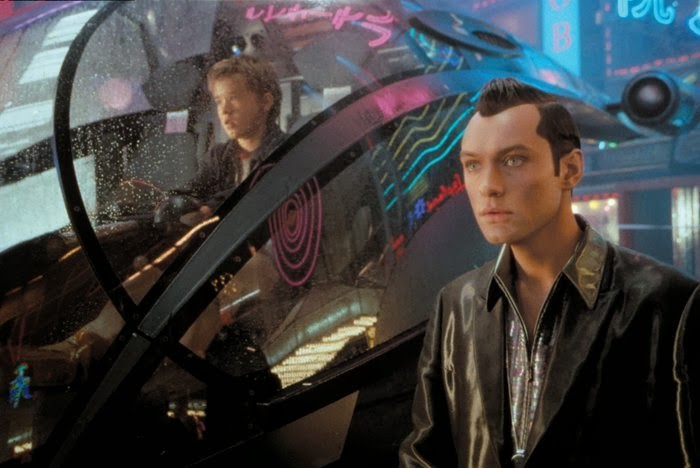
A rare few movies will require repeat viewings to gain the full perspective of things, and Steven Spielberg's "A.I. - Artificial Intelligence" falls into that category without hesitation. As an immediate experience it is an extraordinary visual spectacle, filled with images that defy explanation. But the story dwells somewhere between challenging and conflicted, and added viewings have become a necessary channel to arrive at a well-mounted response. While that outcome will be different depending on the approach you offer, my eyes
find a meaning that is rich in intellectual speculation.
Atlantis: The Lost Empire / *** (2001)

It’s always hard to assume anything when it comes to Disney animation, but the department’s latest feature, “Atlantis: The Lost Empire,” takes such a tremendous departure from the studio’s routine method of storytelling, not even those who knew of its existence could have foreseen it. Stretching the fabric to a rim only reached once before by “The Black Cauldron,” the movie is an intense risk of subject matter, challenging and fresh, with little to no focus on cutesy characters and catchy songs and more of a direct concern with narrative intricacies and human drama. Children could be easily turned off by hearing a description about the Disney film, but this really isn’t solely intended for little tykes, anyway. The elusive “PG” rating attatched to the film, only the second time a Disney cartoon has ever received one, might even turn parents on to an increasingly popular theory: no one, not even the mouse house, can ignore animations’ new-found maturity.
Final Fantasy: The Spirits Within / ***1/2 (2001)
The future of our cinema rides on an endless debate that flesh and blood human actors may one day may not be necessary in filmmaking--that they will be ultimately replaced by the evolution of computers and digital effects, and that movie budgets will be reduced dramatically because CGI thespians don't require the meaty paychecks that real ones do. That argument, however, has left a dry taste in the mouth of many because there has so far been no distinct evidence supporting or denouncing the concept. Technology, after all, may have advanced greatly in the recent past, but not enough to match the natural detail of ordinary human beings.
The Homeboy / *** (2001)
It is said that fame is like a drug, addictive from the very beginning and coveted by those under its influence, but those who say so tend to overlook one very significant factor behind the statement: like some substances, it can also bring you down just as fast as it lifted you up. The situation is no more apparent than in the music business, a venue in which any aspiring person can release a catchy tune, acquire a massive following, get showered in awards and praise, and then quickly fade out after a deafening commercial collapse.
Jurassic Park III / ***1/2 (2001)
He who said that third times are a charm sure said a mouthful. That, at least, would excuse the reason why I found myself completely enthralled by "Jurassic Park III," the latest installment in an obligatory franchise about genetically engineered prehistoric giants. Much less science-driven narrative and more of a brainless action adventure than either of its two predecessors, the film has classic symptoms of B-movie status, something that, frankly, the series could have used from the very beginning. Though the original endeavors--both "Jurassic Park" and "The Lost World"--effectively used special effects to generate creatures that had died out millions of years before man, the writers failed to realize the full potential of their stories, thus ending up in mediocre payoffs. Here, they've finally gotten things right--the dinosaurs are as realistic as ever, the characters are intelligent, and the story is such nonstop silly entertainment that, by the end, the only complaint we have is that it all ends too soon.
Friday, June 8, 2001
Summer 2001: An In-Depth Preview of Things to Come
Though the summer movie season is widely considered to be a three-month excursion into blockbuster territory starting in June, it actually just recently began kicking off in early May, when Hollywood studios began to see how major motion picture releases during the month were quickly becoming major hits. For the past decade, major revenue began generating off of the Memorial Holiday weekend, and just two years ago, both “The Mummy” and “Star Wars Episode 1—The Phantom Menace” proved beyond a shadow of a doubt just how eager moviegoers were starting to get for their favorite movie season. Now it seems everyone wants a piece of the action; last year, Academy Award winner “Gladiator” was May’s hot ticket, and just these past two weeks, the highly anticipated “Pearl Harbor” ate up a good percentage of weekly box office receipts.
Friday, June 1, 2001
Summer 2001: Where Have All The Ideas Gone?

It’s becoming increasingly apparent that many of today’s filmmakers are losing their inspiration.
Those who share a similar opinion about Hollywood’s latest offerings need not to look any further then the schedule of summer movie releases that have been laid before us. Of the more than two dozen major releases being planned for the June-to-August calendar, around half of them are either sequels, remakes, or adaptations of existing source material. While familiarity isn’t necessarily a bad thing, too much of it can easily lead to a feeling of repetition that can quickly turn off many viewers. Now, with so many releases on the horizon devoted to revisiting far-too-familiar territory, many can’t help but wonder: where have all the fresh ideas gone, and are moviegoers even interested in all the retreads being offered at the movie house this year?
Bridget Jones' Diary / ***1/2 (2001)
We’ve always been told that it’s impolite to read someone else’s diary, but what if someone’s deep and personal secrets were unknowingly brought out into the open for a whole audience to see? That’s the essential situation utilized in Sharon Maguire’s “Bridget Jones’ Diary,” in which a British singleton in her thirties decides to lose weight, stop smoking and dive into the pool known as romance. After being dismissed by an attractive man at a Christmas party, the quirky and tempered sexpot vows to reshape the structure of her dead-end life, and one of the tasks on her “to-do” list is to keep a diary of all of her experiences under this new umbrella of reasoning.
A Knight's Tale / ** (2001)
"A Knight's Tale" tries very hard to be one of the year's most carefree good times, but its lapse in logic creates a deafening interference for the moviegoer to deal with. Few people have probably not heard by now about how the movie uses a classic rock soundtrack against a medieval setting, but even fewer might not realize just what kind of intense distraction this has on us, not just as sensible viewers but as moviegoers in the spirit of silly summer thrills. It's great to have fun, but even the most mindless occasions call for a little plausibility, and this is the kind of movie that has no interest whatsoever in at least operating inside respectable boundaries.
The Mummy Returns / ***1/2 (2001)
Stephen Sommers’ “The Mummy” is chiefly thought of as a lightweight and brainless action adventure, but that’s probably exactly why it became one of the biggest hits of the 1999 summer movie season. Filled with endless plot absurdities and cheesy CGI effects, the highly successful action adventure starring Brendan Fraser as an adventuresome grave-robber impeccably captured the proper essence of the conventional summer release: the movie where a plot doesn’t matter and characters are secondary to an incessant ride of surprises and thrills. Critics faulted it for being “silly” and “unbelievable,” but think about this for one moment: compared to the “Indiana Jones” franchise, just exactly how silly and unbelievable would you call it?
Pearl Harbor / * (2001)
The Randall Wallace screenplay that offers a romance-driven rendition of the infamous World War II disaster at Pearl Harbor serves as the newest in a long line of excuses for director Michael Bay and producer Jerry Bruckheimer to waste ambition, talent, money and time on a production built around loud noises, gigantic explosions, and not much else. Perhaps we would not be so willing to cave into advanced negative perception, though, had either of them actually done something halfway respectable somewhere in the duration of their incessant careers. The fact is that their adrenaline-pumped endeavors care about little of anything other than numbing the senses, and judging by the latest offering in their endless cycle of big-budgeted drivel, neither has any interest in taking one simple subject seriously either, never mind the fact that they aren’t just tinkering with emotions and special effects this time around, but history itself as well.
Wednesday, April 25, 2001
Along Came a Spider / *1/2 (2001)
The villain referred to in the title of Lee Tamahori's "Along Came A Spider" is not the innocuous arachnid who "frightened Miss Muffet away" in nursery rhymes, but instead a viscous and manipulative psychopath who creeps between the cracks of the plot without fear of being discovered by someone who just might unravel his web of deception. He also doesn't seem to mind much that he's wandering around without a sense of what he's doing, or what the point exactly is of his endless mind games. And that's an even bigger problem with the movie than you might first suspect, because the protagonist of the picture, a forensics detective named Alex Cross (the always-admirable Morgan Freeman), is so smart and alert in his police investigations that even more cautious criminals would not likely slip through his fingers. Watching him wade through this incoherent mess is like seeing a good baseball pitcher benched for the season; he has the talent and the ambition, but the situation he's in just doesn't give him the opportunity to show off the way he deserves to.
Appleseed / *** (1988)
The hidden power of Japanese animation is not always about the quirky artistic style, but more about the deep level of story and metaphor the movies contain. Think of the mind-numbing and twisted thrills of “Akira,” or the compelling fantasy of “Princess Mononoke.” Feature cartoons don’t have to be visually superior to those of the mainstream in order to be better. Nor, for that matter, do they have to restrain themselves to material that would only attract the eyes of a child. Until moviegoers are willing to understand those possibilities, mainstream cartoons will always carry a stigma that narrows them to the youth market, made up of elaborate imagery but stories with limited appeal.
Subscribe to:
Posts (Atom)