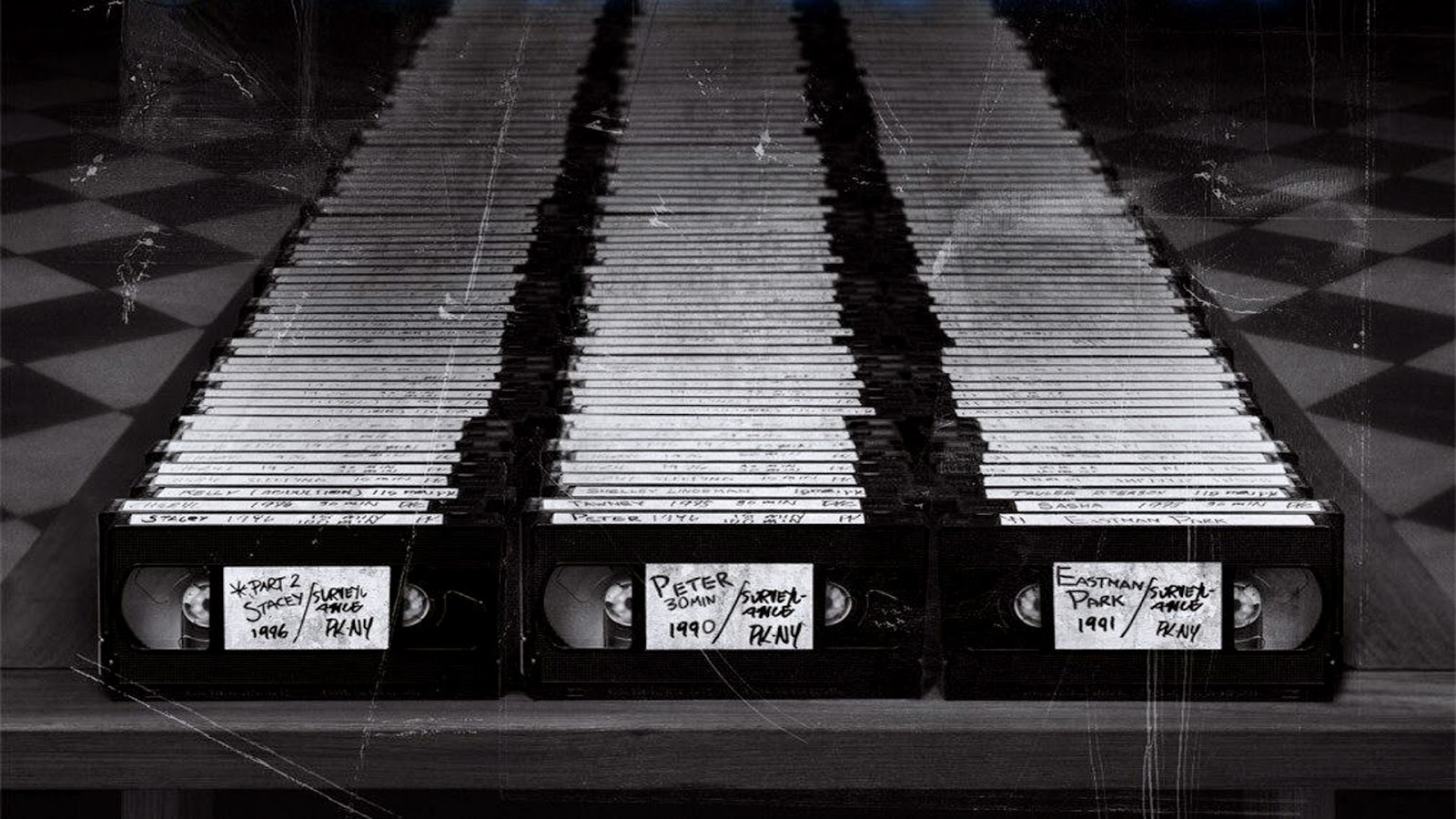
Moviegoers who spend any length of time with “The Poughkeepsie Tapes” are not acting as mere viewers – they are eyewitness to the inner workings of a very loathsome madman. His identity remains a mystery to all those who have followed his trail for the better part of a decade, but their endless search for answers have yielded one of the most haunting discoveries in the history of criminal forensics: hundreds of video tapes in which the actual killer, acting as director, documents his spree of horrific mayhem. When the movie opens, this critical finding also comes equipped with an extensive arsenal of unanswered questions: how did a single human being brutally massacre so many people in upstate New York for such a lengthy period of time without getting caught? Who was he, and what drove his incessant pursuit for blood? And most importantly, what does his depravity reveal now in hindsight after hundreds of hours of footage reveal the nature of his insanity – a horrific portrait of a single person, or our collective ignorance in being able to stop his reign of terror? Just as the camera once served as a window into his menacing tendencies, now it is a confessional for legal authorities and relatives who must bargain with it in some unwavering hope to fathom – and even find peace with – the fallout.
Monday, October 13, 2014
Sunday, October 12, 2014
Burnt Offerings / ** (1976)
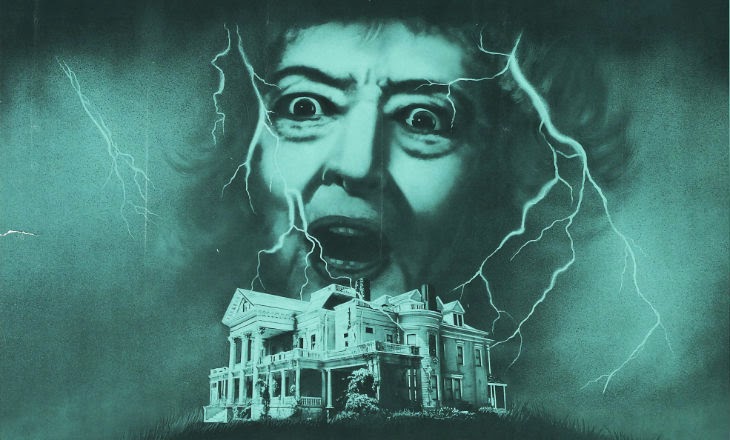
“Burnt Offerings” is one of those all-too-familiar movie detours through the doldrums of horror mediocrity, a film about a family of would-be caretakers who decide to leave behind the bright lights of the big city and spend the remains of their summer in the comforts of a charming countryside mansion that is being rented to them by, we gather, rather suspicious owners. Because they proceed to live in said property without the slightest awareness in the conventions of basic movie composition, that presents immediate disconnect in creating a relatable experience. What people in their right minds would so eagerly agree to submit themselves to such a shady arrangement given the nature of the scenario, which involves two elderly – and rather creepy – homeowners who insist on leaving their mother behind in an upstairs bedroom for the caretakers to look after? Did it not strike a mental chord in any of them that a cheap price tag for such a stunning mansion might involve rather ominous drawbacks? Even little kids would howl with pessimism at this kind of nearsighted narrative entrapment.
Wednesday, October 8, 2014
The Thing / *** (1982)
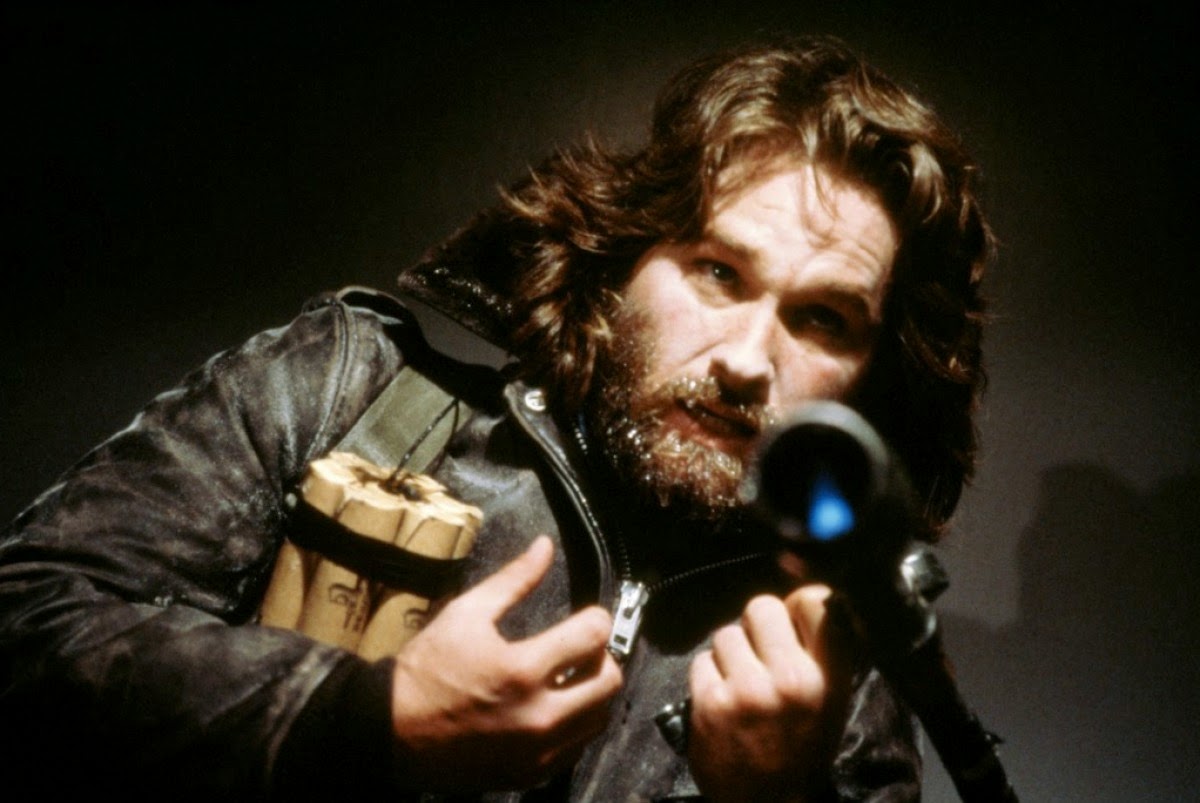
The story goes on and on through the reverb of the times: a trend dominates the output of the movies, and then along comes someone to louse the whole thing up. John Carpenter’s “The Thing,” about an alien life form wreaking havoc on a group of men trapped in a frigid landscape, is one of those beloved relics of the ‘80s that was considered the divisive game-changer for a genre in which premises like “Alien” had saturated the market with a relentless supply of bloodthirsty monsters jumping out from the shadows. Like a narrative sledgehammer, some would say it forever shattered the straightforward course of its cinematic family, and opened the sphere of possibilities up to much more horrific contemplations. Viewing the movie thirty years removed from that era, the ideas it presents are at least instantly distinctive; this is not a thriller in which ordinary beasts seek to destroy a gathering of unsuspecting victims, but one in which they take on the traits of Earthly organisms, absorb their DNA and walk among them as part of a convincing ruse to adapt to – and overtake – a new foreign environment. How unfortunate that the plot doesn’t know how to ride the wave as effectively as it should.
Tuesday, October 7, 2014
Devil / ***1/2 (2010)
The psychology of “Devil” offers such insightful and probing observations into the nature of evil that there is, at first, a desire to pause in cynical observation: what business does it all have being in a genre with such sensationalized standards? When it comes to the ever-so-exaggerated thrust of the satanic thriller formula, possibilities are usually reduced to over-the-top twaddle or flat-out silliness; there is seldom an inkling in anyone behind a movie camera to approach the subject with sensible faith, much less probing insights. Early narration in this movie is pitched like an audacious antithesis: because a critical observer in the ensuing events believes, wholeheartedly, in the old stories from childhood about the Devil’s looming influence in the world, it informs not only his perspective, but also ours. A good many questionable and horrific things occur to a selection of characters in isolation in just a short span of 80 minutes here – some of it mystifying, some of it disquieting – but none of it treads the line of implausible overkill, and the narrative deals with its horrors as conceivable facets that emerge from the grind of everyday life. And it’s also clever enough to stage the material so that all those involved share a deep-rooted commonality that unites them in their anguish. In one of many important scenes, as a police detective attempts to reason with the events while viewing them through security footage, he is offered prophetic words that seem to contrast his need for logical explanations: “there is a reason we are the audience.”
Monday, October 6, 2014
The Hills Have Eyes / ** (2006)
The geographical features referenced in the title of “The Hills Have Eyes” are a barren and desolate entity, scarred by fierce desert winds and intense sunlight that stretches miles upon miles in all directions. A truck carrying a trailer clobbers across the rugged terrain, carrying with it a family of California-bound passengers, who have little to no curiosity in the stories that these hills may or may not have to tell. Never does it dawn on them that the New Mexico landscape has been wounded by nuclear experiments and top-secret government tests; nor, for that matter, does anyone in the foreground get the sense that such tests have left behind rather menacing remains. Those hills tower over them like giant blankets of serenity, but the eyes of those ducking behind them are of a different kind, a different breed, a different intention. Had the protagonists known about these prospects before venturing into the area, no doubt they would have been eager to find themselves in an entirely different movie.
Sunday, October 5, 2014
A Nightmare on Elm Street / * (2010)

Maybe it is because I am so familiar with Wes Craven’s original “A Nightmare on Elm Street” – and all the ins and outs of its enduring legacy – that the modern remake of said film is at such an immediate disadvantage. Maybe the psychology of this idea was so potent that it carried on with vivid implications in the mind even now, negating the need to do a modern retelling. Or maybe, just maybe, opportunities to have an open mind are thwarted by the vulgar excess that permeates from the end result. Whatever rationale you take in with you, the new “Nightmare” film is definitely one of the more curious excursions through the excessive sensibilities of 21st-century horror movies. Produced by Michael Bay and directed by Samuel Bayer (the first feature film on his resume, no less), it replaces the fascinating context of Freddie Krueger’s existence with a seemingly endless exercise in violence and unrelenting pain. The fact that it does something so discouraging while still delivering effective production values goes to emphasize how misguided the genre’s architects have become in understanding what truly resonates in the eyes of their audiences.
Saturday, October 4, 2014
"A Nightmare on Elm Street" Revisited
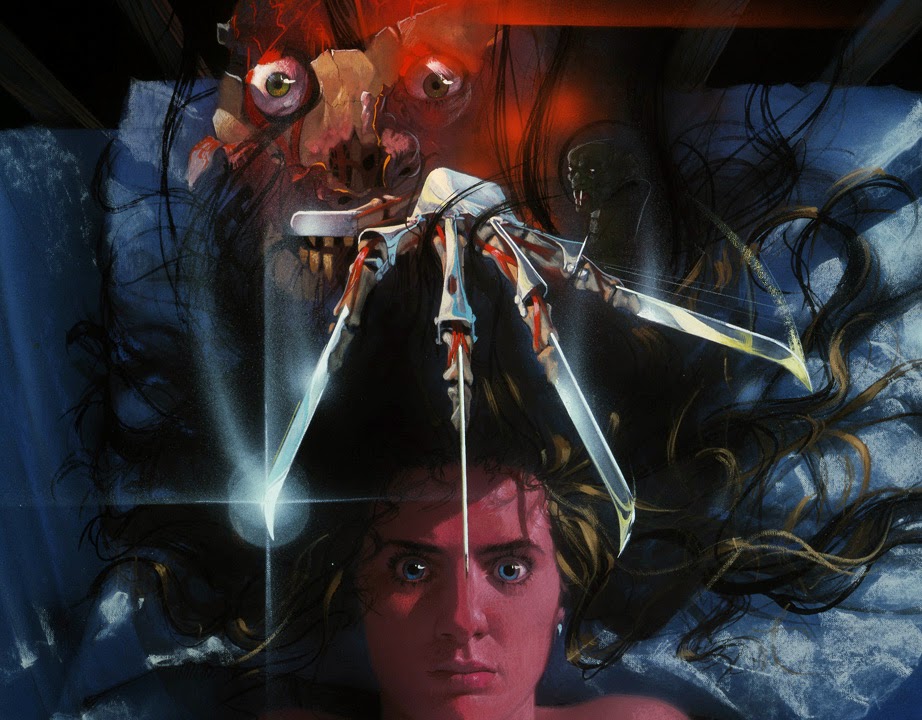
“Here is a film that compares to some of the greats of the genre: a film that can be no closer to reality; a film that matches us against our true fears. No, there has never been a movie like it, and there never will be.” – taken from the original Cinemaphile review of “A Nightmare on Elm Street”
The transcending nature of “A Nightmare on Elm Street” is not in how it establishes a unique premise or even an important villain, but in how its actors buy into the material with such vivid implications. When Wes Craven first made his daring and graphic foray into the nightmarish visions of weary teenagers, how was he to know that it would provide more than just a momentary thrill for audiences of that generation? What were the odds that it would be cited so many decades later as a critical benchmark in the evolution of mainstream horror films? Could he have predicted that Freddie Krueger, such a vicious and unrelenting S.O.B., would also persist in the memory bank of notable movie villains? It is because his cast of relative unknowns believed in what they were submitting to with such unwavering conviction that the tragedy of their existence throbs on so effectively in our modern awareness, often informing the movies that continue to emerge from its shadows. Absorbing it now, thirty years from the first moment it shattered the dead teenager genre’s proverbial glass ceiling, is like reliving a primitive (but powerful) attempt at understanding a dangerous world of evil. It forces us to inherit these nightmares as if extensions of our own.
Tuesday, September 30, 2014
The Maze Runner / *1/2 (2014)
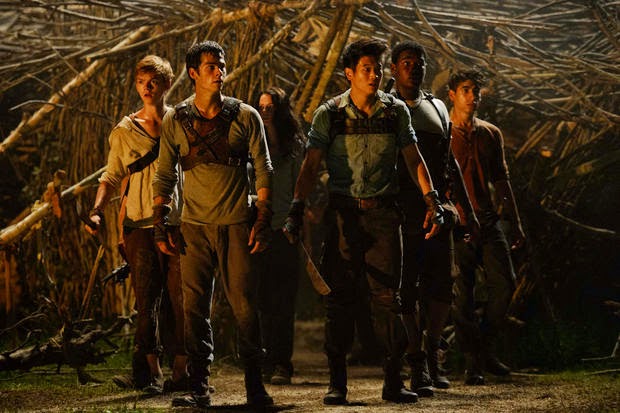
A mechanical cage transporting a frightened teenager penetrates the surface of a grassy field, and the figure inside is immediately swarmed by curious onlookers. He has arrived in “the Glade” just like all those before him have done: with amnesia and anxiety, lacking awareness of the reality and yet alarmed by the rhythmic familiarity it seems to instigate in others. It is a routine that has followed the residents of this isolated civilization of young boys for well over three years: every 30 days, someone new arrives, and always it is a young man who remembers little beyond his given name (“It’s the only thing they let us keep”). Their witless imprisonment is contrasted by what surrounds their enclosed reality: a giant maze with walls as high as the sky, which looms as if beckoning would-be adventurers while inspiring a fear of great depths. Each day, a gate opens and offers them entry; every night it closes, and those caught inside are devoured by creatures referred to as the “Grievers.” It is a pattern that that has followed them for as long as they remember, and they no longer question or resist it. But things will change for them with the arrival of this particular individual. They have to, otherwise there wouldn't have been reason to make him the focus of an entire movie.
Sunday, September 28, 2014
Star Trek / *** (2009)
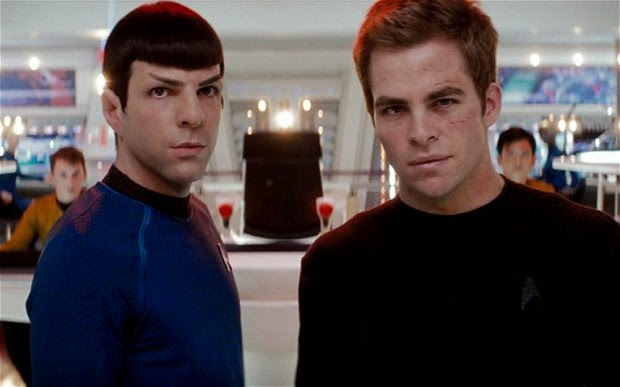
The ongoing saga of the Starship Enterprise has never been in synch with my science fiction tastes. For well over six decades, Gene Roddenberry’s “Star Trek” imprint has persisted in the mind as the watershed serial of televised space operas, amassing a following of adventurers that makes even the most faithful of fan bases – including that of “Star Wars” – look like miniscule social gatherings. But what was it about a bunch of middle-aged men with monotone distinctions and bland uniforms sitting passively at the control panel of a spacecraft that stimulated television audiences in the 60s? Were they so absorbed by the uniqueness of the situation that they mistook novelty for depth? Something that has escaped my notice clicked with the collective psyche of a generation of new thinkers, but their devotion nonetheless paved the way for the plethora of endeavors that have followed this universe, ranging from several series spin-offs to toy lines and, inevitably, to movie adaptations. Seeing these kinds of characters on the big screen, alas, is a lot like watching a foreign film without subtitles: sure, there’s clearly something going on in through a succession of images, but I’d be damned if I knew exactly what (or worse yet, cared).
Saturday, September 20, 2014
Dirty Dancing / * (1987)

“That was the summer of 1963,” a voice chimes in during the opening moments of “Dirty Dancing.” It belongs to one Frances Houseman (Jennifer Grey), the youngest of a posh east coast family, who is nicknamed “Baby” by everyone around her from the moment she wanders into an upscale resort for summer vacation. What brings her (and her relatives) to this getaway spot involves little more than privileged indulgence, but for her, the occurrence eventually seems to take on a deeper meaning. In the days before the world knew who the Beatles were, Baby’s thoughts are all about two things: joining the Peace Corps to study economics in third world countries, and wondering if she’ll ever “find a guy as great as my dad.” The first sign that we are dealing with a girl of questionable insight lies in that particular observation; because her father, played by Jerry Orbach, doesn’t have a very engaging demeanor outside of always looking morosely detached, one wonders what any kind of daughter could find so attractive about such a personality. But hey, cut a girl some slack: her frame of reference may be handicapped far too early for any screenplay to do much with it.
Saturday, September 13, 2014
Blood Glacier / *1/2 (2013)
Had “Blood Glacier” been made from within the big studio system, audiences would likely be hailing it as the worst film ever made; but in the hands of an amateur B-movie director who operates from a place of calculated silliness, it at least inspires uproarious howls of delight – especially if you are a viewer that has any kind of background in science. In some twisted way, it all comes down to intention. So many rules about human and animal biology are broken in this zany creature feature that it calls into question the sanity of the writer, Benjamin Hessler. Was he under the influence of illegal substances when he concocted this absurd premise? His audacity becomes our pained amusement, and for 98 jaw-dropping minutes we watch on – sometimes with horror, other times with laughable shock – as a story about hybrid mutants slithers around on screen as if in the final throws of dramatic suffering. This is one of those endeavors that will no doubt endure the test of time on viewing lists of very ambitious bad movies.
Thursday, September 11, 2014
The Hunger Games / ** (2012)
Of all the young new heroes that populate modern literature, I can’t imagine many readers wanting to step into the shoes of Katniss Everdeen. To imagine how long it must have taken her to develop such a resigned outward demeanor in a universe as bleak as “The Hunger Games” is discouraging; stoic and deadpan in her own circumscribed existence, she creates an identity of unspeakable wounds, and becomes the hopeful face of a generation of oppressed prisoners not out of coincidence, but from an act of sacrifice that is taken (at least in the poverty class) as a reawakening of human will. To live in a world as wildly fascist as that of hers is to see the unrestrained influence of a far-reaching dictatorship, and when Suzanne Collins wrote the novel that this movie is based on, it was clear that her influences included, among other things, the German occupation of Europe during the second World War (where the concept of ghettos and concentration camps essentially found definition). Her points may very well be sound education for their intended audiences; to see them visualized in a very ambitious movie, and in the skin of a youthful fantasy entertainment, it wobbles on a divisive tightrope that left me with an alarming sense of unease.
Monday, September 8, 2014
Teenage Mutant Ninja Turtles / * (2014)
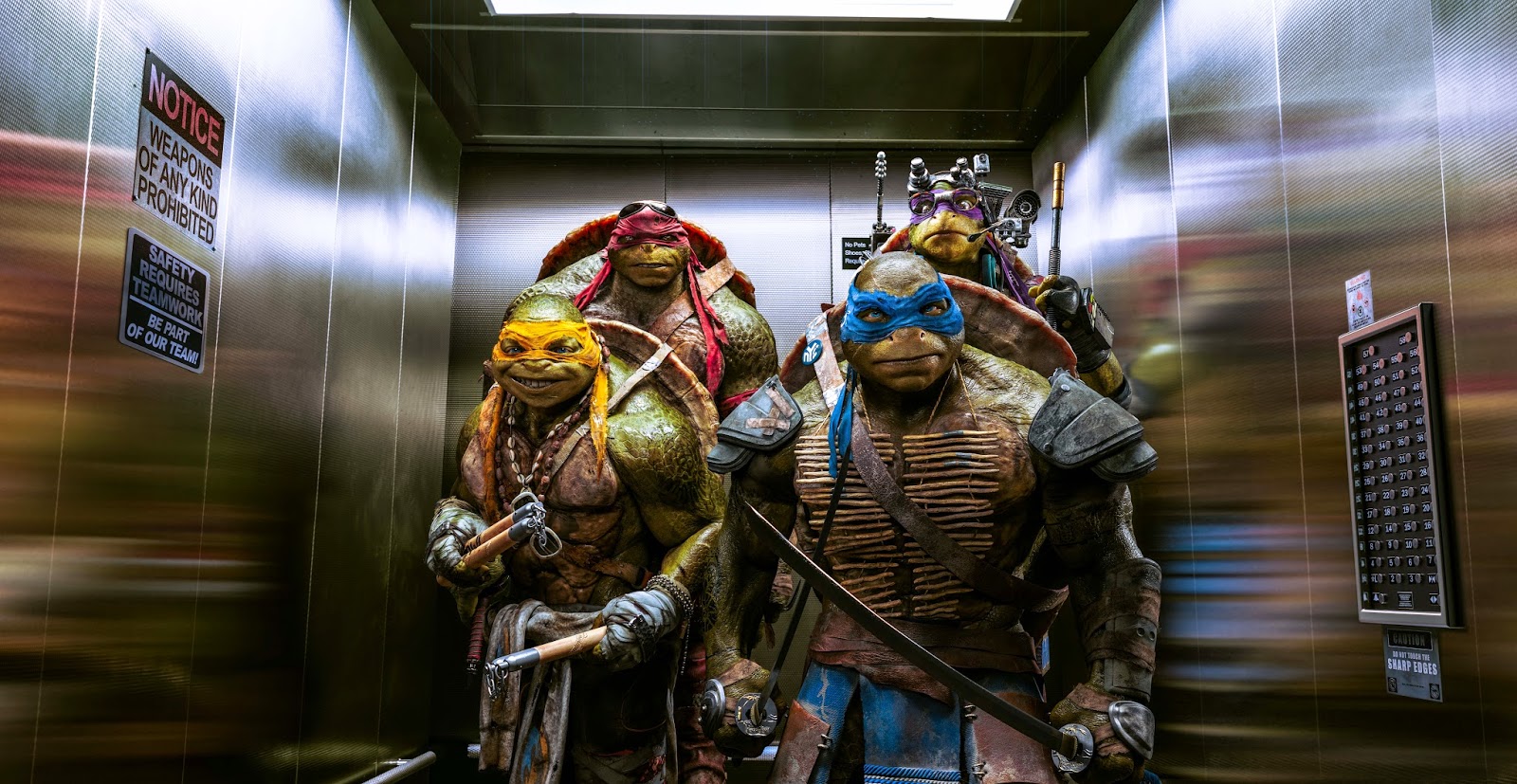
Something about a reptile in a ninja mask makes my heart sink. “Teenage Mutant Ninja Turtles” marks the fifth attempt at bringing four wisecracking, mutated kung-fu enthusiasts to the big screen, and the outcome goes beyond all preceding endeavors and plays like the disintegration of an entire industry standard. What inspires filmmakers, usually ambitious ones, to find amusement in this kind of material? How do they justify an idea so clearly intended for Saturday morning cartoons being worth a consistent greenlight at the movie studio? The notion that their decisions are driven by ambitious production values and over-inflated budgets certainly adds clarity to the argument; from the very first over-produced frame, it is clear that not a single moment was spent developing characters with personalities here, much less a story that could offer some sort of challenge beyond keeping names straight. Whatever the final point was, I dunno, but eventually it becomes lost in a laundry pile of inane action and dialogue that often inspires groans of depression rather than enthusiastic joy. Any endorsement of this film would be like admitting defeat against the declining standard of summer entertainment that I have been so vocal against.
Friday, September 5, 2014
Joan Rivers, 1933 - 2014

“If you laugh at it, you can deal with it.”
What a troubling month this has been for the world of comedy. In a short span of a few days that also saw the untimely death of Robin Williams, the loss of Joan Rivers inspires contrasting reflections. In one respect, both of these gargantuan comedic figures were distinctly different – one was a showman with an unending zest for cheerfulness, and the other was honest and sometimes intensely scathing. Both also went through immense inner turmoil that quietly drove them to use stand-up as a treatment regimen, especially in their later years; for Robin, unfortunately, such factors could not cure him of emotional unrest. What takes Joan away at the ripe age of 81 is unfortunate considering how active she was right until the end of her lengthy career, but her death brings with it the acknowledgment of the great (and sometimes unending) power of laughter: that in many cases, it creates an opportunity for us to neutralize the things that so frequently destroy our peace of mind. That she remained a steadfast champion of that belief until her last waking moment goes to emphasize her status as the most disciplined comedian of our time.
Tuesday, September 2, 2014
Sin City: A Dame to Kill For / *** (2014)
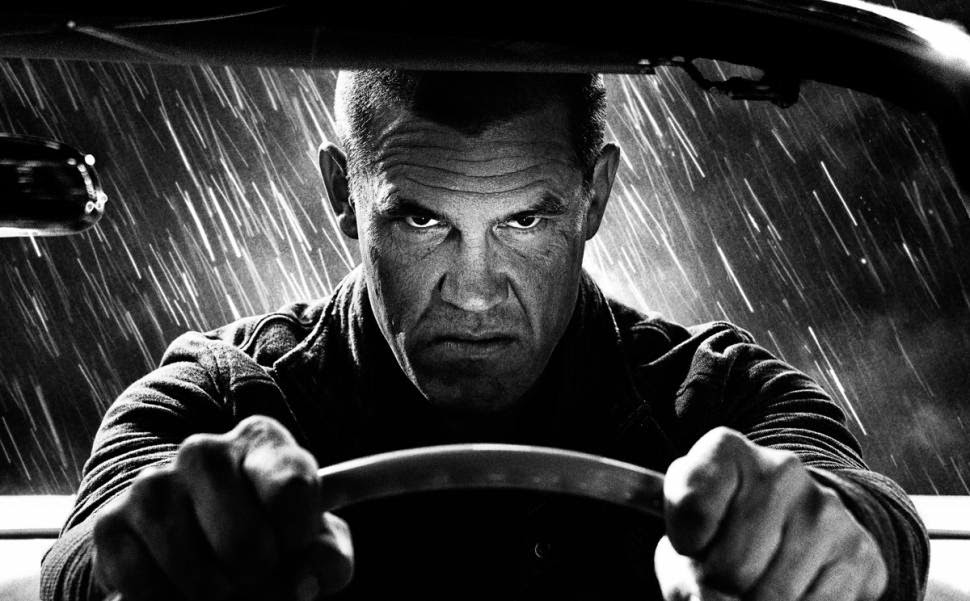
In the weeks leading up to the release of “Sin City: A Dame to Kill For,” Frank Miller’s nourishing cityscape of shadows and corruption weighed heavily in my thoughts. Over nine years had passed since Robert Rodriguez took us through our first outing of Basin City, and yet the visual – and narrative – impulses seemed as fresh in the current moment as they had been all that time ago, when they might have still been seen as distinctive. What gave them that edge was more than just a breathtaking sense of space and dreaminess in the images; they were compelled by an undercurrent, a chutzpah, to use the camera frame as a prison for an ensemble of characters driven beyond the limits of acceptable human behavior. The notion that their seedy antics were executed in a movie with astounding artistic sensibilities was little more than a bonus, and over the years many of us have revisited those damp streets and violent characters in unending awe of the material: marveled by the film’s evocative look and endlessly fascinated by the faces of those who dwell within them. They are, at the core, complex madmen who are only beginning to divulge their dangerous riddles.
Subscribe to:
Posts (Atom)


