Showing posts with label 2012. Show all posts

Thursday, August 23, 2018

Rock of Ages / * (2012)

Sometimes the great tradition of rock musicals comes down not to whether songs are staged with gusto, but whether they have been conducted with hands that understand the rebellious culture underlining them. Many of the key anthems of the 80s reflect a stranger possibility: they were written in that very narrow window of hair band trends, where the angry political motivations were temporarily subdued by sex, booze, and the harmless pomp of radio accessibility. No one complained all that much because a great spirit continued to move through the guitar riffs, and the bands were a testament to the versatile power of the genre. Those who were active listeners in those years, when the likes of Def Leppard and Bon Jovi were at the height of their popularity, often recall them with fondness. But what would they think of the attitude now, so many years later, when films like “Rock of Ages” paint a much more simplistic portrait of the times? Would they be comfortable with the fact that a handful of well-known songs have essentially been grinded through a karaoke jukebox? Or that the attitudes behind them have been reduced to one-note farce? Or that people who were alive (and even active) in those years have allowed themselves to be associated with the vulgar thinning of the standard?

Friday, July 28, 2017

Piranha 3DD / 1/2* (2012)

“Piranha 3DD” is a textbook case of low-aimers confusing camp with cornball excess, in which an audience expecting silly thrills is subjected to nonsensical ramblings that bear no weight towards humor or amusement. If only there was some sense of irony to underline that prospect, but no such luck; those standing behind the camera are looking on here with deadpan conviction, perfectly content in the realization that they are in this, more or less, for financial benefit. I despise the very idea of that motive – it is an abuse of the medium, a counter-culture impulse in the guise of innocent entertainment at a time when the Hollywood machine needs less cattle and more instigators. We could at least have a good time, however disposable, at a film that ebbs low if it aims there, or at least contains some sample of wry awareness. Think of “Snakes on a Plane” as an example. But a movie this shameless, this grotesque in its assessment, only permeates the desperation of the mindless grab. Earlier incarnations of the “Piranha” franchise – including a remake that precedes this one – knew they were about the stupid possibilities of the genre and enjoyed reveling in the exercise. Here is a follow-up that could not be any more clueless if it had been conceived in a void.

Saturday, July 8, 2017

The Devil Inside / * (2012)

What an ordeal it must be when you’re among the ill-fated bystanders of a handheld horror film. As targets of influences that disobey the most fundamental laws of survival, they slog their way through a plot’s devious conventions with little time to react against the stampede of conundrums they encounter, as if their suffering is merely at the service of confusion. That’s because their hands possess cameras that facilitate the need for wall-to-wall uncertainty, most of which is driven by the conceit of filmmakers intoxicated by the endlessness of a scenario rather than the choreography of them. In most normal films we can at least expect the potential victims – however deep or shallow – to experience some reprieve from the terror long enough to deliberate their fates, or at least react in a way that opens narrow possibilities of endurance. But those endeavors of the “found footage” genre have usually abandoned those possibilities in favor of visual nihilism, no doubt because their characters are predestined to die out rapidly in a universe where the only survivor needs to be the lens of a cameraman.

Monday, July 13, 2015

Beasts of the Southern Wild / **** (2012)

The earliest of many discoveries occurs during the first set of establishing shots, which utilize handheld camerawork and are coarse, soiled and un-romanticized depictions of a ransacked social climate. They suggest the bleakest of realities, a life of paralyzing limitations. And then we meet the heroine, a plucky and adventurous young girl who contradicts those possibilities with more singular outlooks. She lives with her dad on a plateau in a Louisiana bayou that is separated from the mainland by levees, where houses are made out of the remnants of damaged structures, and belongings scattered across the high grasses act as reminders of memories lost to the unforgiving elements. They, like the lowly neighbors they keep company with in a world they call “the Bathtub,” are the forgotten faces of poverty. And yet none of that ever seems to phase the worldly imagination of this inquisitive child, who passes her time by watching on with earnest enthusiasm as her elders celebrate their fortune rather than mourn it (“Up in the dry world,” she says, “they got none of what we got”). It is a value clearly instilled by her father, but even his guidance is no match for a mind that runs so wild, and with such unrestrained purity.

Thursday, September 11, 2014

The Hunger Games / ** (2012)

Of all the young new heroes that populate modern literature, I can’t imagine many readers wanting to step into the shoes of Katniss Everdeen. To imagine how long it must have taken her to develop such a resigned outward demeanor in a universe as bleak as “The Hunger Games” is discouraging; stoic and deadpan in her own circumscribed existence, she creates an identity of unspeakable wounds, and becomes the hopeful face of a generation of oppressed prisoners not out of coincidence, but from an act of sacrifice that is taken (at least in the poverty class) as a reawakening of human will. To live in a world as wildly fascist as that of hers is to see the unrestrained influence of a far-reaching dictatorship, and when Suzanne Collins wrote the novel that this movie is based on, it was clear that her influences included, among other things, the German occupation of Europe during the second World War (where the concept of ghettos and concentration camps essentially found definition). Her points may very well be sound education for their intended audiences; to see them visualized in a very ambitious movie, and in the skin of a youthful fantasy entertainment, it wobbles on a divisive tightrope that left me with an alarming sense of unease.

Wednesday, August 20, 2014

Wreck-It Ralph / ***1/2 (2012)
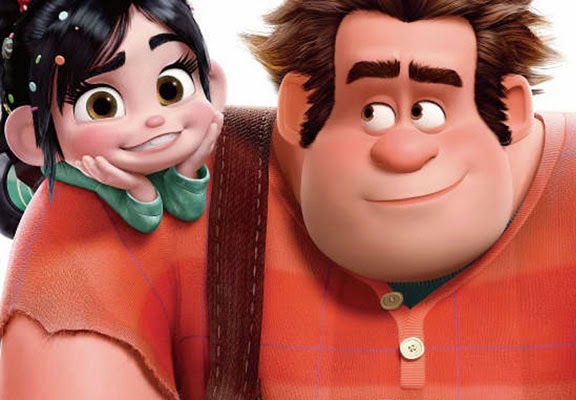
So there he is, clambering his way towards the top of a pixelated high-rise, and his gargantuan fists intend to pummel the façade until it all crumbles under the weight of his massive form. A craftsman armed with a magic hammer is the only one in a crowd of panicked figures capable of undoing that damage; if he matches his adversary’s speed and accuracy long enough to neutralize the smashing, then the building will recover, its citizens will persevere, and the destructive brute will be tossed over the side in an act of cheerful celebration. The formula is a simple pattern of competing wits, but that is all the program requires it to be, really. From those little windows inside powerful game boxes standing at the local arcade, missions present clear challenges to those at the controls: find victory in simple worlds of singular problems, and achieve a high score (or advance to later levels) before the quarters run out. What none of the players realize, however, is that the characters within these game boxes actually have their own lives and identities, and when the systems are shut down for the night, they engage one another within the walls (and wires) of a virtual society. Not since “Toy Story” has an idea for an animated movie been so audacious to assume that lifeless instruments of amusement can possess real emotions, much less the instinct to aspire for things beyond their intended use.

Tuesday, January 7, 2014

Chronicle / **1/2 (2012)
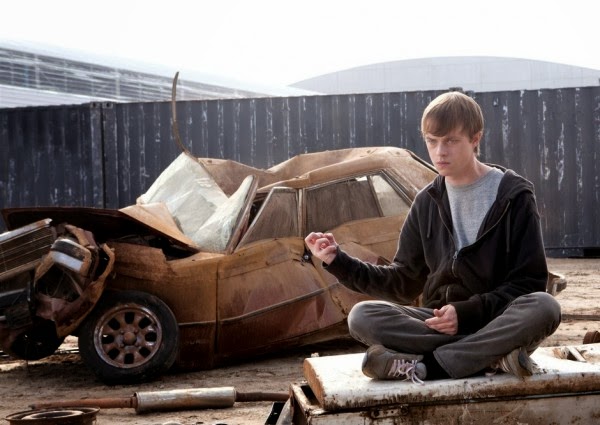
At some point, I suppose, it’s inevitable for all concepts to leap beyond the avenue of plausibility. “Chronicle” opens with a premise that is a stretch even by the standards of the handheld horror film technique: three teenage boys wander into a wooded area just outside of the high school, find a large hole in the dirt that beckons with low rumbles of sound, and discover an alien boulder-ish thing on the inside that permeates a soft neon glow. Their instant wonderment is quickly replaced by fear when their noses start bleeding, and the exposed fluid defies earthly gravity. Shock and anxiety give way to swift movements and chilling screams, and the camera falls dark before the audience can catch any further detail. Perhaps that’s a cop-out, in a way, because by the next scene the three of them are back at home, laughing and tossing around softballs while freezing them in mid-air using some newfound telepathic ability. Explanations, apparently, are no longer a formality even in first person mockumentaries.

Friday, August 23, 2013

Hitchcock / *** (2012)

It all begins with a need, they say. Then comes the discovery, sometimes found in the low rumbles of a source off radar. And then the all-important idea: the single thought and purpose that will lay the groundwork for one’s drive. These are the seeds of inspiration that many movie directors go through in that narrow window of artistic limbo between completion of one project and scoping for another, and sometimes they come together with almost divine purpose. One wonders if this is how the real Alfred Hitchcock felt in that time of uncertainty when he went searching for new material after the success of “North by Northwest,” and found a lurid little novel in his hands that fictionalized the gratuitous crime spree of serial killer Ed Gein in the late 30s. The book was called “Psycho,” and the rest was bloody entertaining history.

Friday, August 16, 2013

Abraham Lincoln: Vampire Hunter / *1/2 (2012)

“Abraham Lincoln: Vampire Hunter” is the first in what will no doubt be a long and exhaustive trek across the cinematic landscape of well-known historical and literary figures coming to blows with the movie monsters made famous in the golden age of Hollywood. Based on a popular book of the same name, it sets an example now widely embraced by fiction readers of this generation, in which characters from famous stories like “Sense and Sensibility” do battle with sea monsters, or the heroine of “Pride and Prejudice” is caught in a world of zombies. In some meandering way, I suppose, this marriage of genres is a clever gimmick on part of skilled writers wanting to lure aspiring bookworms into the practice of developing knowledge of the classics of literature outside of educational curriculums. Such a ploy is shrewd on their part, but effective for an audience of novices that are easily hooked by the supernatural sensibilities of modern art.

Friday, August 9, 2013

Joyful Noise / * (2012)

The title “Joyful Noise” is as much a misnomer as you can find when it comes to descriptive movie names. Noise it is, joyful it is not. Somewhere in some dark and quiet room, potentially with sad music playing softly in the background, the person who opted to fund this ill-conceived comedy is sitting in dead silence with his head in his hands, shamed by the same question that all investors who once faced financial ruin have pondered over time: “where did this all go wrong?” Endorsing the movie to any audience with favorable IQ points would be an insult, but there is a certain morbid fascination I uphold in what viewers with some knowledge of church choirs would think of what they see. My gut tells me their reactions would be even more spiteful than mine, and the enthusiasm in those convictions would no doubt be more energetic than anything the filmmakers have conveyed.

Tuesday, August 6, 2013

Lincoln / ***1/2 (2012)

The opening scenes create a clear distinction: war is not the sole component dividing this society. The man in the tall hat seated in the center of a military encampment stares beyond the piercing rains and sees his supporters trapped in a cycle of building and preparing, mindful of the reality that many will not be left standing alive after the inevitable battles that remain to be fought. Their drive nevertheless is inspiring, and reflects the enthusiasm for the ideals being set forth by the visionary who calls himself the commander-in-chief in these dark and tumultuous times. A young black supporter wanders nearby and reminds the president, somewhat unintentionally, of the importance of the mission: his eyes beaming with a light of hope, he recites the introductory lines of the famous Gettysburg address. For him, and thousands of other slaves who were victimized and persecuted for countless generations before the dawn of the civil war, these words were more than just a call for important change: they were, in essence, the keys to opening the door that had long been shut on a sect of population. The subsistence of these proclamations underscores the greatest desire of all human life, which comes down to, quite simply, freedom and liberty for all.

Thursday, August 1, 2013

Silver Linings Playbook / ***1/2 (2012)

The internal conflict that overwhelms the main character in “Silver Linings Playbook” is obvious even before a word is spoken. His eyes shift to and fro with a sense of unease, and the mannered, almost calculated way he speaks to staff and fellow patients within the psych ward he is soon to be released from suggests a knack for exaggerating the truth, possibly because it makes it that much easier for him to stay within the confines of denial. But all will be okay in the long run, he believes, because “Excelsior,” the Latin word for “ever upward,” is on his lips relentlessly when in the face of his heavy-handed reality. Alone, somewhat detached and clueless as to the damage control that will be required in the world he alienated, Pat is ready to face the future head on with absolute optimism. And that means finding a silver lining in all day-to-day situations even if he has to practically beat it out of himself.

Tuesday, July 30, 2013

Django Unchained / ***1/2 (2012)

There is material in “Django Unchained” that is unconventional even by the standards of the notorious Quentin Tarantino, whose movies over the past twenty years have been celebratory excursions through all things eccentric and inspired. Some new energy, or desire, must have possessed him here. After gleefully rewriting history for the purpose of an audacious payoff in “Inglorious Basterds,” no longer does the cinema’s most blunt self-made director seem content on just unscrewing the wheels on the car in the last lap of a narrative racetrack. Now, the cars veer off the track itself long before the first sequence even plays out, and characters are beckoned into the shadows of ambition that provide no promise of anything other than long stretches of stylish violence and dismay. The obligatory touches of quirk coupled with repeated nods to the vengeful nature of spaghetti westerns still exist, but here is the movie in the director’s ever-evolving catalogue that finally arrives at the center of an exhaustive trek through the corners of lurid cinema, marking a critical tipping point in a creative march that suggests, yes, Tarantino’s education is at last complete.

Wednesday, July 10, 2013

Cloud Atlas / **** (2012)

It is, indeed, the human spirit that causes ripples across eras. Covertly hidden under vessels of flesh that grow and wither far too sudden to keep up with the long meditative vibrations of the universe, our life essence endures across countless unmeasured passages of time, absorbing experiences as they go, and unconsciously echoing them in unbroken cycles. Other souls will collect these lessons as they too pass across the wheel that binds us all, carried with an unspoken desire, or hope, of defusing the tragedies that reverberate. An underlying free will fuels this need, but is the flesh strong enough to realize such purpose? Or is it cursed to the fate of only momentary thought, refuting history and reason for the sake of instant outcomes? There is a profound force of connection ebbing in our collective cognizance, and only some ever look deep enough to feel it weaving through them.

Tuesday, July 2, 2013

Prometheus / **** (2012)

There is an air of ambiguity circling the story of Ridley Scott’s “Prometheus” that by most standards would lose the patience of hardcore science fiction viewers. Consistent with questions but scarce on answers, clouds of uncertainty whirl to and fro as if traps to intensify potential intrigue, forcing us to view most of the movie through eyes of suspicion even when things appear crystal clear. When characters engage in a trade of information about what they discover, is it truly all that they have discovered? Do the glances they exchange carry hidden purpose, or divulge some deeper meaning into the complexity of their situation? And just when you think a key player in the game has revealed his or her hand, is someone standing behind the shadows waiting to reveal something greater than aforementioned? Here lies a story that revels in the enigmatic almost as much as it thrives on a fostered sense of tension, and the outcome has the potential to be derailing to those whose minds are not willing to dedicate added concentration.

Friday, June 21, 2013

The Cabin in the Woods / *** (2012)

It had to come to this eventually. After decades of blood spatters, machetes, screaming teenagers and heavy breathing killers wandering aimlessly through motion picture sets, someone behind the camera was going to inevitably ask, “Why haven’t we turned this formula on its head?” It’s really a wonder it took anyone this long. Horror films have been on a painful, exhausting downward spiral for more years than we care to remember, a slip made more disheartening when coiled by the realization that its origins promise so much more and even occasionally deliver something that is desired. That was certainly true with the “Scream” series – in which all victims watched horror movies and had self-awareness as a weapon – and even the recent “Behind the Mask,” which asked questions few movies of this nature had been willing to ask before, and do so with comical – and yet insightful – clarification. Now comes “Cabin in the Woods,” a horror film that not only has the nerve to upstage the convention, but also contemplates what all of it, past and present, may have meant in the grand bloody scheme of things. What it makes for is some of the most entertaining bloodshed I have seen in a movie of this type in ages. If there is finally a validation to the approach, it’s that these filmmakers dare to suspect their own intentions.