"One day men will look back and say I gave birth to the twentieth century."
-Jack the Ripper
Society has been fascinated over the years with homicidal maniacs considerably less monstrous than that of the ambiguous Jack the Ripper, a serial killer whom, in 1888 London, killed five prostitutes in ritualistic and horrendous ways, and then seemingly vanished into thin air, never to be found or heard from again. Many allude to his existence as that of the first tabloid star, a man whose heinous acts were so widely reported and anticipated by the media, thousands of newspapers were literally born in England because of him. What's most disturbing, perhaps even more then the killings themselves, is that this was likely the whole point behind the Ripper's crimes. He didn't simply know his mayhem would raise him to celebrity status in the eyes of the public, he knew that he would set a standard for future generations to imitate.
Friday, October 19, 2001
Snow White and the Seven Dwarfs / ***1/2 (1937)
Sometimes it takes an earth-shattering event before you are able to truly appreciate something you haven't before, and the recent DVD release of Disney's first animated feature, "Snow White And The Seven Dwarfs," is evidence of that. What the studio has done in restoring their crown jewel of feature animation is one of the most astonishing things we will ever see, a sophisticated and informative remargining of one of cinema's most beloved movie fairy tales that doesn't simply present a restored classic as much as it re-energizes it.
Friday, October 12, 2001
Bandits / ***1/2 (2001)
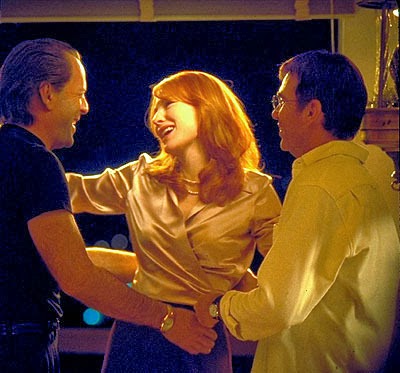
Crime capers are some of the most perplexing types of movies we will ever come in contact with, not simply because they so closely peer into the lives of seemingly untouchable outlaws, but because they tend to treat the situation with a dynamic sense of fanaticism. As crooks wave around weapons and shout out orders to innocent bystanders, suddenly they become celebrities, revered by thousands of onlookers who view their audacious actions not as crimes, but as interventions against government. Such a case is the essential point behind "Bandits," the newest movie under director Barry Levinson's belt, which sees two escaped convicts almost effortlessly rob bank after bank along the US west coast, and develop a devoted fan base as a result.
Zoolander / 1/2* (2001)
"Zoolander" is preceded by a tag line that states "3% body fat, 1% brain activity," of course referring to the title character, a model who (by intention) has a mental capacity so low that you could practically step over it. Anyone who has bothered to sit through the movie, however, will think of it to be also an appropriate description for the film itself, which is by far one of the most frustrating, painful, lackluster and idiotic comedies made in the past year. Featuring Ben Stiller in the lead and a script hell-bent on poking fun at an already self-parodied business, one wonders what the real direct intention of this half-assed job could have been: to kill time in the actor's schedule, to cheat unsuspecting victims of their hard-earned money, or simply to provide several well-known actors the luxury of being able to say, "Hey, I was in a movie with that person!" without ever actually having to put in much effort into the task.
Saturday, September 29, 2001
Blood: The Last Vampire / *** (2001)
The worst possible thing we can do as moviegoers is expect too much from a film that promises so little, but that’s exactly the case with “Blood: The Last Vampire,” the latest in a string of Japanese Anime releases from Manga Video. It’s not that we want the movie to be a better one; just a longer, more productive one. It offers one of the most well-mounted buildups seen in animation of recent memory, taking us through a fascinating story in which the plot twists are so unforeseen that your eyes sparkle with delight after they are carried out. But in the wake of an astounding battle scene that literally sweeps the breath out of its viewers, the end credits begin to roll, and we’re left wondering, “that’s it? Where’s the rest?” A premise is set up, the characters are introduced, the plot thickens, there’s a magnificent battle of forces, and then... nothing. It’s as if the filmmakers created an open wound and felt that audiences didn’t need to see it heal.
Bubble Boy / zero stars (2001)
Comedy has taught us that one man’s laugh is another man’s disgust, and that thought needs no further explanation beyond the background story surrounding “Bubble Boy,” a movie about a 16-year-old teen with immune deficiency who seeks romance, but is unable to live outside of a plastic bubble for fear of coming in contact with germs which, ultimately, could lead to fatality. Even before its release, the movie was challenged by the mother of a now-deceased son that suffered from the same illness, who feared that such an approach to comedy was unsuitable and defamed the memory of her child. An understandable response? Perhaps. However, having not seen the movie, Carol Ann Demaret, the mother of the original “bubble boy,” has jumped to a conclusion simply on the basis of her personal experience, not to mention the fact that her uproar has actually given the movie more publicity than it ever needed.
The Fast and the Furious / *** (2001)
“The Fast And The Furious” can easily be seen as companion piece to last year’s summer hit “Gone In Sixty Seconds,” and understandably so. Both movies deal with man’s love for automobiles, and not just any automobiles, but fast ones that screech when the brakes are used and survive most of the damage dealt to them. A list of similarities could easily go on in a discussion about both films, but one substantial difference here is that the earlier endeavor was weakened by its dreary cast, whereas this picture, at least, is blessed to have Vin Diesel among its credits. Diesel has easily proven he can turn any role into something meaningful and realistic even when seemingly impossible, and though his character in this picture is hardly someone you would walk with in downtown L.A. past midnight, he’s very much observant, and by the time the plot sets itself up, we actually care what happens to him.
Glitter / * (2001)
Ever notice how famous music artists tend to have the most difficult time paving their ways into a successful movie career? The often disastrous transition that everyone is familiar with—from the examples set by Madonna, Whitney Houston and even the late Alliyah—is repeated for a zillionth time in Vondie Curtis-Hall’s “Glitter,” a film that gives pop songstress Mariah Carey 105 long minutes to show us if she is capable of holding the attention of an audience past her very extensive vocal abilities. Not surprisingly, her efforts have led to one of the most pointless and lackluster efforts to hit the big screen this year.
Hardball / *1/2 (2001)
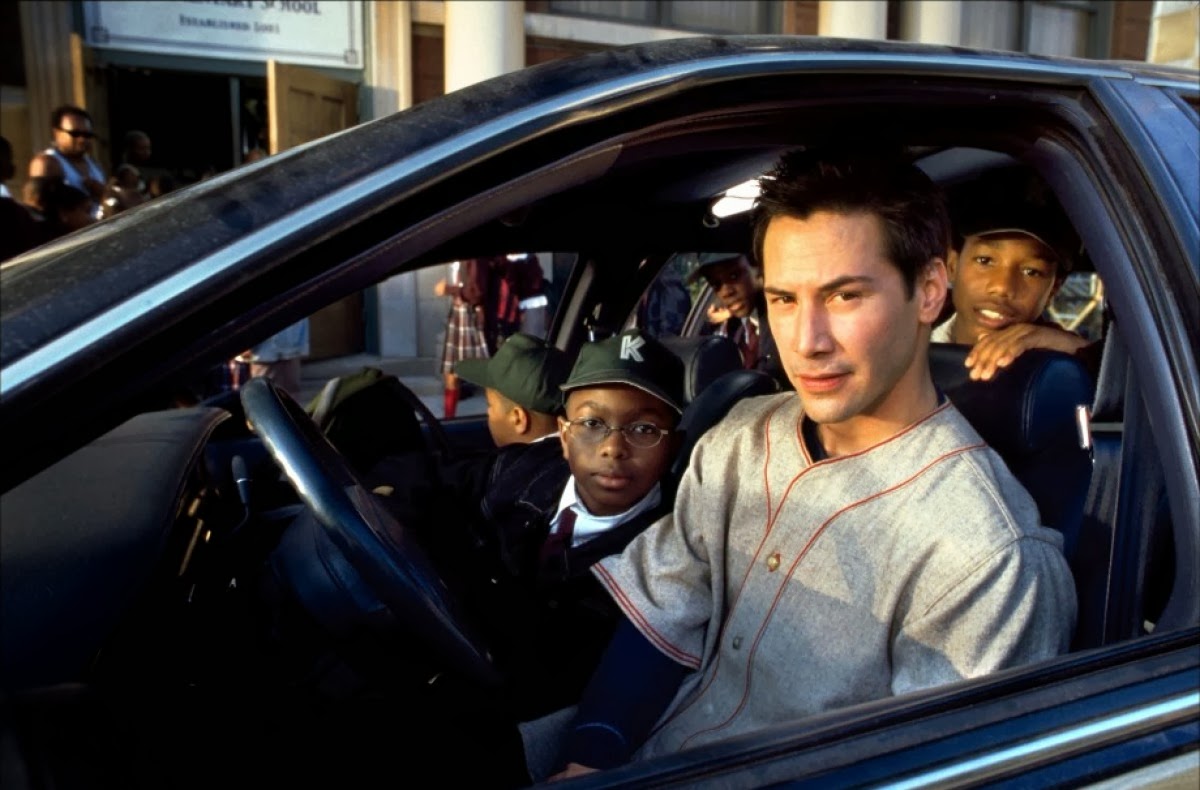
“Hardball” is exactly the kind of idiotic, boring and sluggish endeavor any number of us would come to expect from director Brian Robbins, the man who single-handedly concocted the moron comedy “Ready to Rumble,” the insulting “Varsity Blues” and the pointless dreck known as “Good Burger” all in less than five years. Perhaps we should give him credit for at least trying though; this is probably a better movie than all three of those put together. And yet you can’t help but wonder, with or without answers, if his mind was simply lost in orbit when he even considered taking on this obvious and predictable project, especially since we’ve already seen it played out a good two or three dozen times in the last twenty years alone. At this point, it’s safe to say that this genre has gone into too many extra innings.
Planet of the Apes / *1/2 (2001)
The primate-infested landscape that is implemented in Tim Burton’s remake of “Planet of the Apes” is not the kind that made the original science fiction endeavor an astounding piece of work, but one of clouded judgment and disconnected logic that is driven by intricate visuals, but slowly and painfully slaughtered by a routine and uninteresting plot and characters that, unless under the ape makeup, seem to drift off into cliché-land. The movie is pointless, dimwitted, clumsy and implausible, and if it doesn’t go down as the single worst picture to come out of Burton’s imagination, it will forever be remembered as one of the most unforgivable remakes I’ve ever seen.
Shrek / **** (2001)
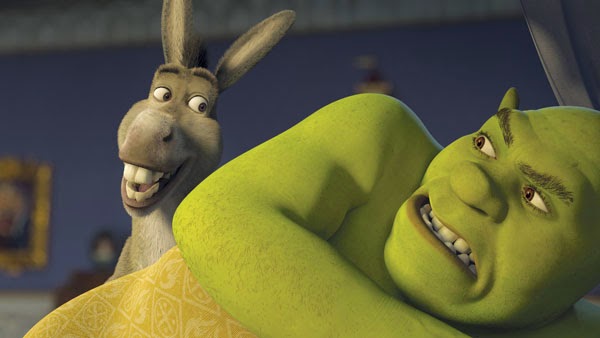
Hollywood’s newfound ability to create movies completely through computers has given birth to one of the most unlikely and diverse movie genres we have ever seen, a form of expression mainly aimed at catching the eye of technology fans, yet also responsible for garnering a young audience for its likeness to standard animation. Whether that resemblance was an intentional move on the parts of studios who first jumped at the technique is something we will never know for sure. For years prior to the evolution of cinematic technology, it had been a heavily-discussed topic regarding the future of the moviemaking process, essentially founded on the notion that the eventual benefits of it would allow studios to create films that seemed so close to standard live action, there would no longer be a need for actors and, thus, large movie budgets. But those claims appear to be founded on naive idealism; the computer is as powerful as we never imagined, and it is still too early to successfully replicate the realism of living, breathing actors. That doesn’t mean it can’t eventually be done, but it leaves many wondering what studios can do in the meantime.
Wednesday, September 26, 2001
Fall 2001: Things to Come
Stepping out of the summer for most vacationers is like leaving behind an endless party, but for many of the moviegoers of the 2001 summer releases, walking away from a train wreck would be a more appropriate comparison. Not that the last three months were a total waste, mind you: the variety of things to see at the local multiplex was extremely diverse, ranging from big special effects extravaganzas (“Pearl Harbor”) to hilarious comedies (“American Pie 2”) to ambitious sequels (“Jurassic Park III”) and even to digitally-rendered epics (“Final Fantasy: The Spirits Within”). Unfortunately, the many selections did not always produce glowing results, and at some points even the most avid moviegoers couldn’t help but scratch their heads in disbelief at what big studios had to offer during the busiest time of the year at the movies. Is this a normal reaction? Sometimes. But even just plain badness can exceed the limits, and unlike recent years, summer 2001 saw its fair share of cinematic garbage.
Tuesday, July 24, 2001
A.I. - Artificial Intelligence / ***1/2 (2001)
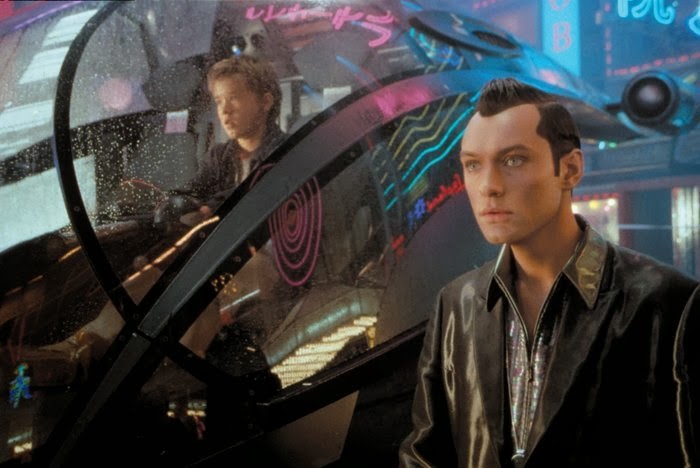
A rare few movies will require repeat viewings to gain the full perspective of things, and Steven Spielberg's "A.I. - Artificial Intelligence" falls into that category without hesitation. As an immediate experience it is an extraordinary visual spectacle, filled with images that defy explanation. But the story dwells somewhere between challenging and conflicted, and added viewings have become a necessary channel to arrive at a well-mounted response. While that outcome will be different depending on the approach you offer, my eyes
find a meaning that is rich in intellectual speculation.
Atlantis: The Lost Empire / *** (2001)
It’s always hard to assume anything when it comes to Disney animation, but the department’s latest feature, “Atlantis: The Lost Empire,” takes such a tremendous departure from the studio’s routine method of storytelling, not even those who knew of its existence could have foreseen it. Stretching the fabric to a rim only reached once before by “The Black Cauldron,” the movie is an intense risk of subject matter, challenging and fresh, with little to no focus on cutesy characters and catchy songs and more of a direct concern with narrative intricacies and human drama. Children could be easily turned off by hearing a description about the Disney film, but this really isn’t solely intended for little tykes, anyway. The elusive “PG” rating attatched to the film, only the second time a Disney cartoon has ever received one, might even turn parents on to an increasingly popular theory: no one, not even the mouse house, can ignore animations’ new-found maturity.
Final Fantasy: The Spirits Within / ***1/2 (2001)
The future of our cinema rides on an endless debate that flesh and blood human actors may one day may not be necessary in filmmaking--that they will be ultimately replaced by the evolution of computers and digital effects, and that movie budgets will be reduced dramatically because CGI thespians don't require the meaty paychecks that real ones do. That argument, however, has left a dry taste in the mouth of many because there has so far been no distinct evidence supporting or denouncing the concept. Technology, after all, may have advanced greatly in the recent past, but not enough to match the natural detail of ordinary human beings.
Subscribe to:
Posts (Atom)