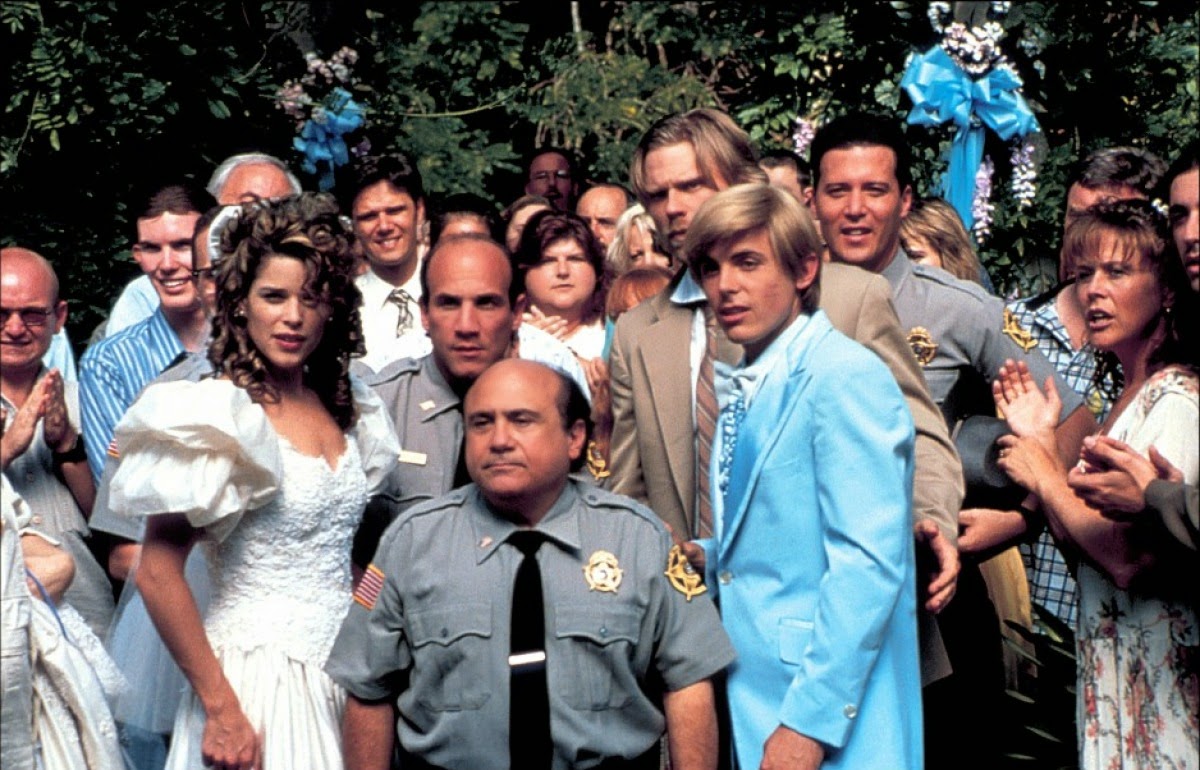
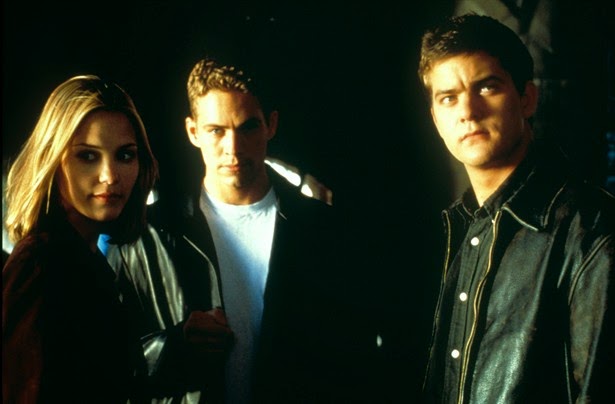
It's no wonder that "The Flintstones" started out as a cartoon; a world in which human beings live in the stone age and use dinosaurs as household appliances is one incapable of surviving a live action production. Many people have enough difficulty in finding it plausible simply by description; it revolves around a town called Bedrock, where families live in houses made of stone, use chisels to write letters, drive cars using their feet as pedals, wear animal skins, and talk with the intellect and tone of an average modern family. Certain details are not that hard to believe, but the combination of them, among others, only makes this concept more pretentious and bloated. In the series, which embodies all of these qualities without a twinge of stability, the least ridiculous element was the fact that the Flintstones eventually went on to meet the Jetsons.
Friday, May 5, 2000
Frequency / *1/2 (2000)
Like fresh toast popping out of the toaster with uncontrollable speed, "Frequency" leaps out of nowhere and slams face-first into a solid wall, crumbling on impact. Such calamity is best illustrated by the stars of the movie, who are signed to participate in a story of thrills and chills, and then are deluded by an oncoming spectacle of illogical plots twists and cheap tear-jerker situations. And that may be unexpected for many, since press blurbs have praised the film high and low, describing it as a combination of "It's A Wonderful Life" and "The Sixth Sense." Then again, what do you get when you mix one good thing with one bad one?
Keeping The Faith / *** (2000)
It seems crazy to believe that anyone could make a movie like "Keeping The Faith" and get away with it. There are certain topics that few people can cross successfully, and the concept of a priest and a Rabbi--this sounds like one of those "walk into a bar" jokes, if you think about it--falling in love with the same woman may seem like a subject of exploitable possibilities. But in this, the directorial debut from Edward Norton, we see two guys who belong to religious orders descend into a frenzy of romance towards a longtime friend, and yet are not at liberty to push aside their religious faith in exchange for passion. This isn't the kind of movie in which men sheltered by their contribution to God question the depth of their faith after falling in love; that would be an approach too obvious and foreseen to succeed. Norton sees something brighter than that: a story that shows men using their faith as tools to help guide them through the intricate rivers of life.
Ready To Rumble / **1/2 (2000)
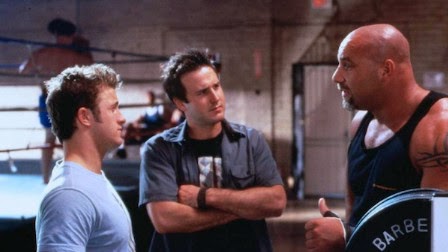
The initial concept of Brian Robbins' "Ready To Rumble" could have easily gotten out of hand without actors like David Arquette and Scott Caan filling the shoes of its dimwitted characters, who seem to believe that wrestling is, in fact, real and undramatized. In a movie that tries to remain doubtful about the authenticity of this sport, a simple miscast could have swayed those intentions because, frankly, certain thespians would take the material too seriously. Men like Arquette and Caan, who are both famous, to some extents, for their idiotic and uncontrollable screen talents (Arquette is seen in those inane "1-800-Collect" commercials, and Caan was seen in last year's juvenile sports trip "Varsity Blues"), are ideal choices here; they seem to relish in the material's theme, which believes, rather understandably, that anyone who believes in such a cheesy display of violence might very well be a few eggs short of a dozen.
Sunday, April 16, 2000
American Psycho / **** (2000)

At the surface level, Patrick Bateman is an archetype for every young boy’s professional aspirations: he has a successful job, lives in an upstate apartment, is showered in riches, has friends in high places and keeps the company of beautiful girls in short skirts. To see him engage with others is to sense what it must be like to endure life under the guise of a role model. But anyone who has even heard of “American Psycho,” either as a film or as a controversial novel, will soon realize that this image of fortune is deceiving. Beneath this appearance lies a madman beyond description: a sadistic and superficial being that feeds on sex, drugs and violence in order to fill a
void created by selfish indulgences.
Friday, April 14, 2000
Final Destination / *** (2000)
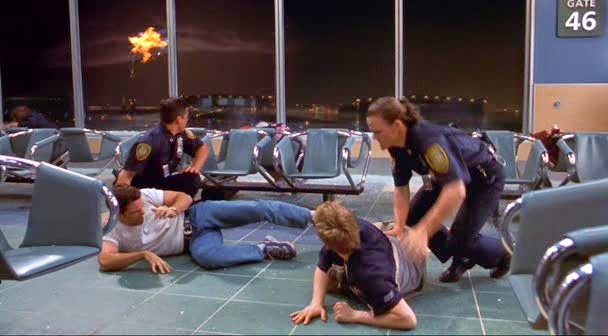
Here is an occasion worth noting: I find myself actually recommending a new teen horror film that hasn’t been directed by Wes Craven. “Final Destination” is the product in question, a surprisingly effective little picture that delivers what so few thrillers have done lately: a well-written script, interesting characters, psychological thrills and unconventional directing. Several will be fooled by the fast-paced trailers and television spots, though, which try to promote the movie as a slasher flick. Hardly the kind of vehicle that uses a Jason Vorhees or a Freddy Krueger as a ruse for bloodthirsty teen moviegoers, “Final Destination” makes a villain out of the one being everyone fears, but no one can confirm the existence of: Death himself.
Drowning Mona / ** (2000)
The early moments of “Drowning Mona” assemble the plot as a whodunit, with the residents of Verplanek, New York, hearing that their most hated resident, Mona Dearly, has plunged her car off of a cliff and into the water, and that the unfortunate accident may have been instigated by one of the many people who knew her. Then it gradually finds itself venturing into new territory, at first trying to be a quirky character study and then later approaching the tone of a farce. It’s easy to see something amusing emerge from this combination: a murder mystery with complex characters and eccentric intentions, after all, holds great potential simply from description. But any potential one might have expected from this flick is dashed even before there is a chance to build up the hope. “Drowning Mona” is a spiritless, flat comedy that tries to accomplish more than it can handle; it scrambles over all sorts of characters and plot twists, but never finds the time, or necessity, to probe things deeper and find stability.
Erin Brockovich / *** (2000)
As an actress, Julia Roberts has gallantly survived one of the most unyielding hardships: a relentless affiliation with romance comedies that, frankly, are stale in substance and scarce in character development. Those who have seen her act in great roles like such as those in “Steel Magnolias” and “Conspiracy Theory” (not a great film, but she was pretty good anyway) should know what she is capable of on screen, and indeed, those who will see her in the new “Erin Brockovich” are going to be amazed at how such an under-appreciated thespian is cast in many second-rate roles, but always manages to return to the spotlight brighter than ever before.
An Extremely Goofy Movie / *** (2000)
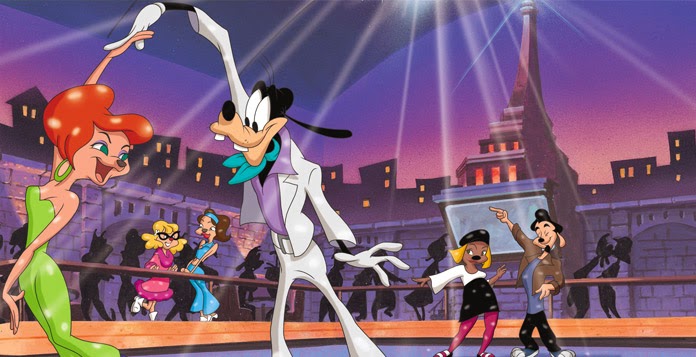
Parents suffer greater pain than one might imagine as they watch their own children grow into adulthood, leading their own lives without the necessity to depend on their creators any longer. The prospect of anyone raising children begins innocently enough; they expect the time between birth and graduation will not go so fast, and therefore not hurt so much when it is time for them to go out on their own. But sooner than they realize, infants crawling around in diapers are going onto school, getting jobs, maintaining responsibilities and then, ultimately, moving away from home. Those who love their children strong enough will feel this way no matter how long childhood years seem to last.
High Fidelity / *** (2000)
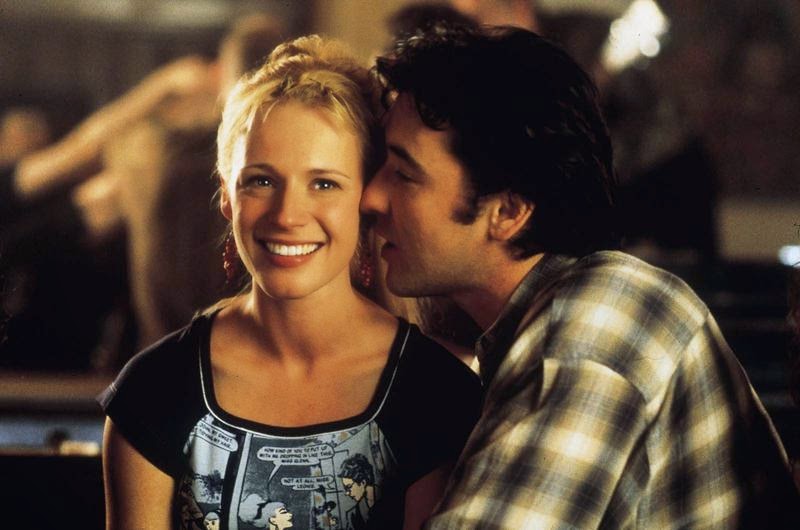
The tagline clipped to Stephen Frears’ “High Fidelity” suggests something short and sweet, announcing the movie as “A comedy about fear of commitment, hating your job, falling in love and other pop favorites.” It is foreseeable that the hordes of moviegoers, in pursuit of something vigorous and kinetic, will turn their backs to this campaign, fearing that the film is simply rehashed ideas and dreary exercises in romance comedy. That would be their great loss, however, since “High Fidelity,” unlike its promotional line, is filled with great energy and spirit. And in a year marauded with comedies in which characters get involved in plots that are completely absurd and fabricated, here is one that revolves around realistic people, and allows the audience to relate with their situations.
The Road To El Dorado / ** (2000)
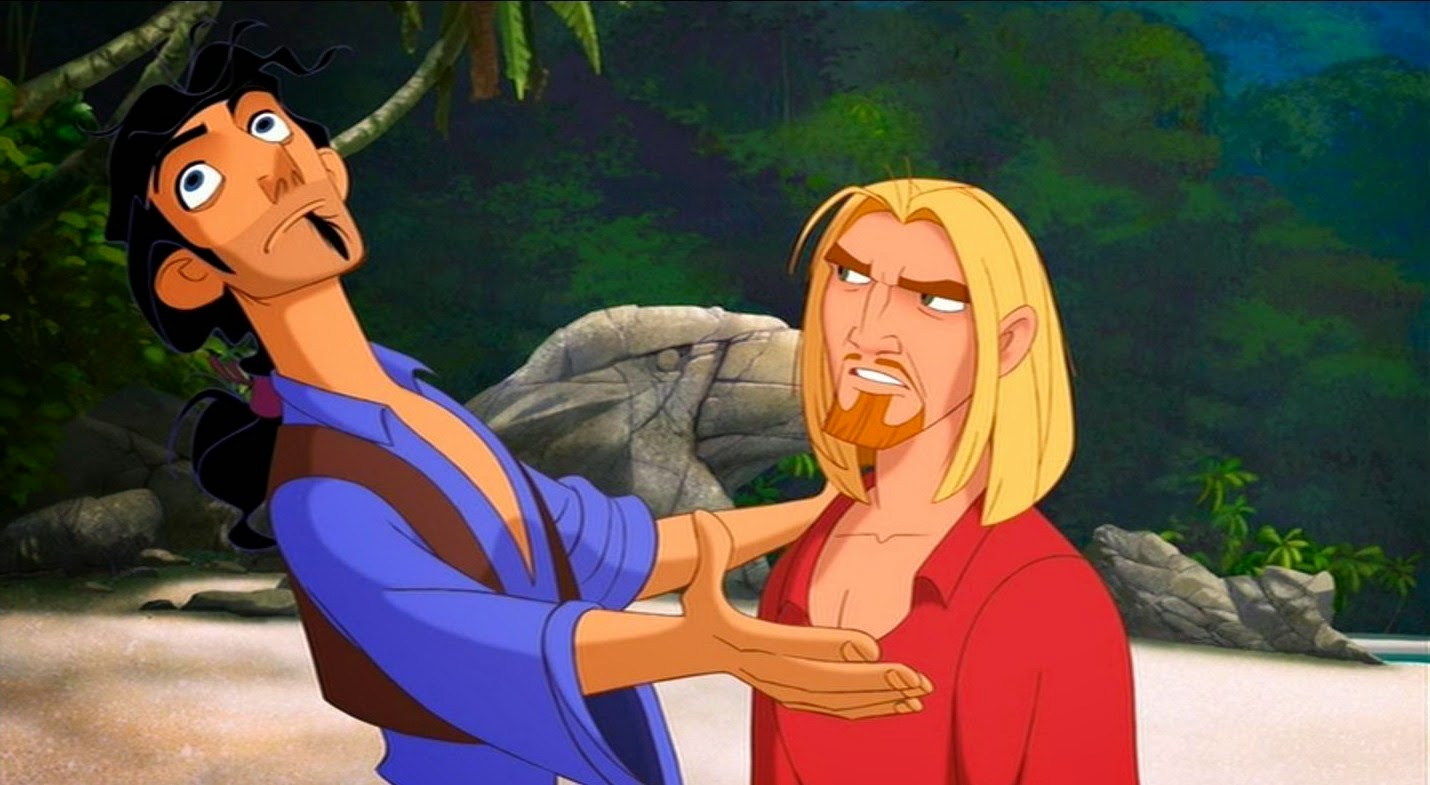
Because of animation’s unlimited contingencies, one might wonder why it has taken so long to make a cartoon feature using one of those big treasure-hunting premises as source material. Surely you know what I’m referring to: the plots of countless live action films, such as “Romancing The Stone” and “The Mummy,” in which characters go in search of legendary artifacts and must dodge hazardous obstacles, take risks and battle villains in order to save their own lives. The feats that certain individuals accomplish on screen (like swinging on vines from one side of a cliff to another while a hot pit of lava is just below) frequently look laughable because—let’s face it—live action has its logical restrictions. Isn’t it apparent, then, that a style as eternal as animation could take these approaches and make all sorts of ludicrous actions look believable? You’d think so, wouldn’t you?
The Skulls / zero stars (2000)
Sitting in the middle of an angered audience at “The Skulls” may have been a blessing in disguise—the only element of the evening that kept me, and several theater patrons, from dozing off in their seats at the sight of a mindless catastrophe crumbling on screen. Supposedly a “thriller,” the film places its focus on a society called (you guessed it!) The Skulls, which are said to be restricted and secret, but for one reason or another have a big logo on their building so the entire University knows where they are. It’s amazing that so many viewers were still seated by the time the end credits began to roll.
Wonder Boys / ***1/2 (2000)
The irony behind every man’s destiny is that the path towards success is usually averted by unforeseeable detours. For most, such a turbulence can be caused by almost any element of everyday life: family, serious relationships, social interference, fallback from the world, employment, or a lack of enthusiasm for their fortes. An artist, for instance, can shift off-course if he or she suddenly arrives at the notion that there is no need to paint or sculpt anymore. A writer, in similar fashion, can be suspended by the inability to organize their thoughts and finish the work they have started. As a result we see such people go through mid-life crisis, retirement, depression, and other similar withdrawals from their work. Sometimes, however, those people will go in search of a muse, hoping that inspiration will break the bars of mind’s prison and, once again, set free their creative energies. Now comes a splendid little movie that finds a man on the verge of collapse with his work, but one who looks to a nearby acquaintance to find the strength, and ability, to carry on successfully.
Friday, March 31, 2000
Oscars 2000: Winner Reactions
Last Sunday night saw a turnout in Hollywood more massive than the one in London when the press found out Madonna was pregnant with her second child.
It was the evening of the Academy Awards, an annual ceremony devoted to honoring the best movies of the year in various categories; and as such, celebrities from every corner of the globe showed up to watch the contenders vie for the top prizes.
Unfortunately, like so many telecasts before it, the 72nd evening of the Oscars was nothing short of a bore—a dreary and predictable experience in which the real Oscar winners were ignored for much more mainstream (and sometimes undeserving) front-runners.
Saturday, March 25, 2000
Oscars 2000: Winner Predictions
The word "surprise" is one of the most frequently used during Oscar night, and when the Academy of Motion Picture Arts and Sciences unveils this year's winners during Sunday's telecast of the 72nd annual awards ceremony, don't be amazed to hear it a few more times.
We've approached an era in which anything is possible at the tear of the envelope, as seen most recently with the surprise win of "Shakespeare In Love," which went up against Spielberg's World War II epic "Saving Private Ryan," just last year. This time around Hollywood is treading on similar territory; Dreamworks Pictures, which owns "Saving Private Ryan," now has "American Beauty" to deal with; meanwhile the brains behind Miramax, whose campaigning of "Shakespeare" left many feeling like they had bought the Best Picture Oscar, are hoping that their much-publicized surprise hit "The Cider House Rules" will make it out on top. It's a battle of clashing forces, as it seems: both films are leaving their other competition ("The Green Mile," "The Insider," and "The Sixth Sense") literally in the dust thanks to heavy publicity. But who will actually win? Now there's a good question!
Subscribe to:
Posts (Atom)