Sunday, May 31, 2015

Mad Max: Fury Road / **** (2015)

The road is a long and unforgiving stretch of desert, linking barbaric societies that harvest the fundamental resources of a man’s ideal paradise: weapons, fuel and agriculture. Collectively they speak zealously of an afterlife that seems to beckon them with increased severity, and their ruthless leaders are idolized from a place of fanatical devotion. Above all certainties, their reality is made so though the loss of mainstream deceptions, which kept humans in order through the checks and balances of more civilized government bodies; all that remains now in their broken world are the bare instincts of survivors striving to endure, who do so by recognizing that their nature has always been to kill and enslave. When one is so deep into this reality, however, what hope is there left of a basic good deed? To resist obligatory cycles is to invite a decisive fate, and the more one fights, the more severe the punishment is dealt.

Wednesday, May 27, 2015

The White Ribbon / **** (2009)

It is the season preceding the outbreak of war across Europe, and a small community in the heart of the German countryside grapples with the fallout of a series of very strange events.  During a horse riding accident, the village doctor is seriously injured and whisked away without warning. A barn is set ablaze, with no indication of who is responsible. A lone woman working the sawmill falls through rotting floorboards and perishes. The young son of the Baron is strung up and beaten. And then in a moment where the inexplicable bad luck seems to have exhausted all present parties, another boy – one who is mentally handicapped – is brutally tortured and nearly left for dead by unseen faces. What causes such despicable deeds, unfortunately, is less important to the power heads than the obligatory response to them, which must always result in self-loathing, castigation and pleading for forgiveness at a God who refuses to reveal his wisdom. And at the nucleus of those responses is an even graver reality: the realization that all punishment must eventually cascade to children, who are tormented with silent liability all while being branded as unruly sorts who bring about such consequences by, basically, just being present while it all occurs around them.

Tuesday, May 26, 2015

Poltergeist II: The Other Side / ** (1986)

The family at the heart of the original “Poltergeist” lost more than their sense of security in the wake of their encounters with vengeful spirits – they also misplaced a few brain cells along the way. There is a scene in the sequel that demonstrates such prospects with disheartening clarity; in it, the young son Robbie (Oliver Robins) is attacked by unseen forces in an upstairs bathroom, and  the metal from his braces expands in a violent attempt to cocoon him. Audiences immediately recognize this ambush as a decoy, replicating the sensibilities of an earlier attack by an evil tree in the front yard of the first movie: it occurs not because the poltergeist is after him specifically, but because it needs to distract the parents in order to get closer to Carol Anne (Heather O’Rourke), who is their primary target. The virtue is that a Native American named Taylor (Will Sampson), assigned to watch over the family, is there to hold onto her while the others flee to the aid of their endangered son. But in the wake of his rescue, there is an angry outburst from the father (played with over-the-top gusto by Craig T. Nelson) in which he accuses Taylor of refusing to help in a critical moment. Did he forget that his frightened young daughter was snatched away the last time she was left alone, and probably needed the protection more? At the height of fear, one of our most easily lost qualities is the ability to perceive what might keep us safe. For the Freeling parents, one wonders if their experiences have simply rendered them mentally incapacitated.

Sunday, May 24, 2015

Avengers: Age of Ultron / *** (2015)

Two prominent thoughts are all that come to fruition during the course of “Avengers: Age of Ultron”: 1) a villain wants to destroy the world in a very ambitious way, and 2) a gathering of colorful superheroes attempt to thwart those plans by destroying a few human populaces in the process. That has been one of the most amusing ironies of action pictures in recent years, especially when it comes to comic book adaptations; no matter how hard one tries to circumvent the delusions of an overbearing villain, inevitably it’s going to cost the human race a few precious lives and billions of dollars of structural damage. Not so content to just fill the screen with wall-to-wall destruction, of course, here is a movie that intercuts most of it with sarcastic dialogue, too. Consider an elaborate sequence in the second act, for instance, when the character of the Hulk is corrupted by a mind control gimmick that sends him into the city on a violent path of chaos, and the movie sends in the Iron Man as a defense in order to stop his physical tirade. Buildings are flattened, streets are littered by the shells of destroyed vehicles, highways are toppled and innocent bystanders run screeching through the scene like scattered insects. Yet it never escapes good old Tony Stark’s notice that an astute one-liner is the best antidote to catastrophe, which certainly has an interesting effect over the loud explosions of a metropolis in ruin.

Saturday, May 23, 2015

Poltergeist / *1/2 (2015)

Every suburban household, they say, shelters a conflict threatening to unravel the strength of the family unit. The characters in “Poltergeist” have their fair share of such dilemmas, but nearly all of them are upstaged by a presence they cannot see: a ghostly entity that erupts in violent fits whenever it attempts to make contact with someone on their side of reality. The earliest scenes of this obligatory remake set that point in motion with almost textbook precision; on a trek through a neighborhood searching for a new home to purchase (ironically enough while both parents are unemployed, no less), five family members -- two parents and three children – wander into the lap of a conventional two-story home, and their daughter Madison (Kennedi Clements) starts carrying on a conversation with something on the other side of the closet door in an upstairs bedroom. Is it an imaginary friend, perhaps? Her ambivalent parents do not wonder too much until later in the setup, when a similar occurrence occurs in front of a television set and is instantly followed by some kind of electrical current pulsating violently through the rest of the house. Inevitably, one such strange event inspires a domino effect. Electronic devices become fried. Static shock awaits each of them on every surface. Furniture moves by itself. And the youngest son, already walking through life with cautious eyes because of an even earlier trauma, rightly fears the sight of the old tree on the property, which looms over his attic bedroom window like a shadowy hand waiting to snatch him away.

Sunday, May 17, 2015

No Country for Old Men / ***1/2 (2007)

Sherriff Ed Tom Bell’s sad, prophetic opening monologue in “No Country for Old Men” is a framing device amplified by events that are the stuff of rousing local legends, and the circumstances surrounding them are driven to deep intensity by a presence that looms like an avalanche of terror.  To consider them from a distance would simply inspire obligatory discomfort, but as we absorb them in the context of a grizzly series of murderous impulses playing out on screen, any notions of skepticism are replaced by the same forlorn considerations that have worn down their tireless witnesses. As the movie lumbers on, it becomes more apparent that a man like Ed does not arrive at his conclusions because he is simply sensitive or grieving for lost traditions, either. The world has always been full of dangers, but seldom have they fallen into hands that seem pulled directly from the abyss, or eyes that have evolved from a sense of chaos that crushes all points of hope. For the weary law enforcer who must follow them in the dogged hope of bringing it all to some sort of an end, his country of enforcement and neighborly courtesy has been caught in the trenches of “the dismal tide,” and anxiously awaits a tearful eulogy.

Saturday, May 9, 2015

Moon / **** (2009)

A lone man, isolated in the quiet embrace of space, longs for the day he will return home to his wife and daughter. After three years as the proprietor of a mission on the moon in which minerals are harvested for clean energy, two weeks is all that remains of his lengthy stay, and nearly every waking moment indicates a dreary existence filled with tiresome wonder and impatience. He exercises, observes as drones grind the moon’s surface into usable particles, and watches old episodes of “Bewitched” on a nearby television monitor. When video feeds of his family arrive over the computer mainframe, they are the only source of inspiration in a routine that has otherwise moderated any remaining enthusiasm. Unwilling to unravel from the solitude, however, he passes the days by exchanging indifferent banter with a computer named Gerty, who watches over the base with little regard to the stability of its lone host. Does it have a reason to be concerned? In most movies, the deafening silence would expose an already fractured psyche; in Duncan Jones’ “Moon,” the point reveals itself through a series of discoveries that arrive as a result of curious prodding, and in a pinnacle moment when the stillness of the routine is so piercing that it seems to supply its own sense of tension. Inside every loner is a rebel aching to be liberated, even if he isn’t ready to deal with the realities that await him on the other side.

Wednesday, May 6, 2015

Chaos / zero stars (2005)
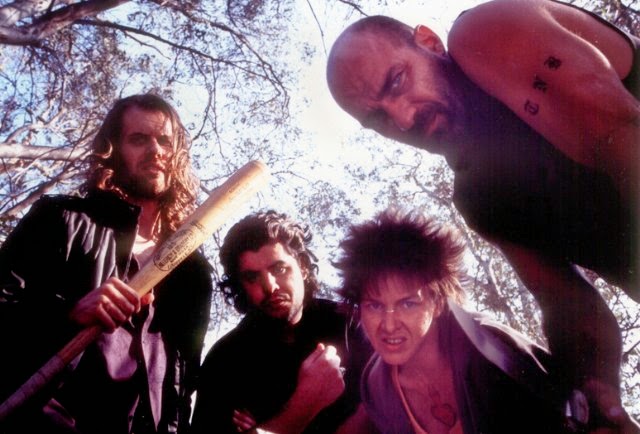
David DeFalco’s “Chaos” is an unholy assault on human decency, a worthless and hateful celebration of evil that not only delves into excessive cruelty, but has the insolence to frame it all within the perspective of a pretentious moral obligation. At the opening of the picture, a title card informs us that the ensuing material is purposely extreme for the sake of “education,” although any initial claims of the sort are usually shields in these sorts of pictures. From what, you dare to ask? It usually comes down to the inevitable reality that all subsequent events are glorified to a point of perversion, which often necessitates a disclaimer for damage control. But any sensible person who will be unfortunate enough to witness any two minutes of this shameful and mean-spirited disaster will easily protest such prospects, because what they will be seeing is 74 minutes of senseless torture and sadism lacking all notions of context. By the end, the only certainty is that we are united in our wonder of more underlying concerns: namely, how the people who made this ever thought it could be palpable to audiences with some semblance of ethical integrity.

Thursday, April 30, 2015

Willow Creek / **1/2 (2013)

There is one unbroken shot in the last hour of “Willow Creek” that is reason enough to applaud the chutzpah of filmmaker who finds inspiration among formula. Directed by Bobcat Goldthwait (yes, that guy!), the scene features two single figures sitting inside of a tent at night while the light from the camera fills the space with an ominous point of focus. They are awake because they hear noises – many of them slight and non-threatening, but so patterned that they begin to suggest the presence of some unseen threat tiptoeing beyond the shadows. What is the source? The lack of an answer has become a well-known cliché in this genre of found footage horror excursions, but that isn’t the point; it all comes down to the fact that any notions of excitement (or skepticism) are replaced by fear of uncertainty, and while most films would lose sight of the human faces in a nonsensical display of camera jumbles and swift chases in the dark, the frame remains on them for gradual reactions, and finds ones that would be effective in almost any context. Seeing them in yet another one of those genre excursions reveals an intention that one hopes could be utilized in something much grander in scope for future endeavors.

Monday, April 27, 2015

Foxcatcher / ***1/2 (2014)

A single question in the early moments of “Foxcatcher” serves to frame the impending experience of characters: “what do you hope to achieve?” For three men brought together by love of a competitive sport, their initiatives are stirred from emotional currents. Mark (Channing Tatum) is an Olympic gold medalist whose prestige from one of the “lesser” competitive events has not done much to curb his sense of isolation. His older brother, the more family-oriented David (Mark Ruffalo), keeps watchful eyes on his loner of a sibling all while observing his success with some sense of humility. In between them stands John du Pont (Steve Carell), heir to the du Pont fortune, whose love and dedication to the sport of wrestling has made him somewhat of a radical enthusiast – to what end, one wonders with cautious curiosity. Is it simply the love of it all (or the rigorous training that comes with it) that makes him such an avid champion of competitive training? And how much of that comes from an upbringing that reduced him to a background distraction on part of a mother who adored her riding horses more than doting on her own son? Each of these individuals is out to prove something to someone – to others, themselves, or to family members – and in almost all of those examples their obsessions only mask an insecurity that has the capacity to bring them to dangerous epilogues.

Monday, April 20, 2015

I Saw the Devil / ***1/2 (2010)

Many a motion picture has been made about the warped psychology of serial killers, and more often than not they are conceived within the safety of a framework that must accept them from a distance in order to avoid identifying with the subjects or their unfathomable deeds, however cogent. “I Saw the Devil,” one of the most graphic films ever made on the subject, removes that one decisive barrier with unrelenting vengeance. At its heart the movie is built on the principles of a certain morbid curiosity – as most are when it comes to this subject matter – but as a living and breathing piece of cinema it inhabits its beast in a manner that is arresting on the mind, and almost cringe-inducing to the eyes. As I sat there and watched it, I felt abused beyond mercy. This does not contradict the motives of its filmmaker Kim Jee-Woon, but the very idea that all of his assaulting visions come from a place of methodical precision (and technical craftsmanship) nearly blurs the line into something of a puzzle. A good student of film will reject visual repugnance if it stands outside of context and reveals senseless intentions, but can any film go this far and keep it all in some sort of perspective?

Sunday, April 12, 2015

Undocumented Executive / *** (2013)

“Undocumented Executive” is about an illegal immigrant from Mexico who wanders north of the border to visit his feisty sister, gets a job interview, is mistaken for an accounting applicant and winds up with a cushy job in one of the most convoluted idiot plots of recent memory. You know of the sort I refer to: the sort of premise in which all mysteries and misunderstandings can be corrected with simple explanations, if not for the fact that one key person in the mix is a complete boob. For a story like this, the instigator usually comes in the form of a supporting distraction – in this case, a secretary named Marlene (Candace Mabry), who spots a well-dressed Latin man in a hallway and somehow never picks up on any of the obvious cues. Does the suit provide her with a generic assumption that contradicts all other reservations? Does she not easily sense his limited English skills? What exactly would give her the idea that he is there to interview for an accounting job, especially after she is unable to find his resume or cover letter in the ensuing encounter? In more serious movies, intelligent characters would discuss her in long, sad monologues.

Tuesday, April 7, 2015

The Imitation Game / ***1/2 (2014)
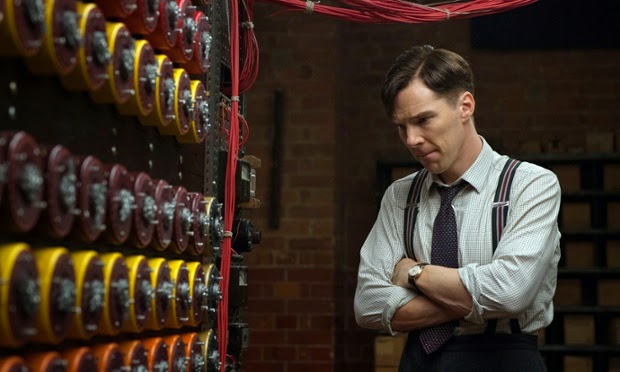
“Sometimes it is the people who no one imagines anything of who do the things that no one can imagine.”

When Alan Turing demands in an early voice-over that we “pay attention” to what we are about to see, it is less a plea to notate intricate details and more a statement on the behavior we come to witness. This is not a man marching to the beat of any traditional drummer. Much of that is clear from a key interaction with one of the first human faces he engages with; during a closed-door interview with a military commander seeking cryptologists for a classified mission, dialogue contrasts personalities working from two opposing engines. It is not as obvious to Denniston (Charles Dance) that Alan is communicating from within altering mental patterns, but of course it isn’t: human psychology seemed like a fantasy to the populace of the 1930s, and poor Mr. Turning’s brilliant mind could hardly conceal him from the baffling dismissals of more socially mainstream observers. But most significant history hardly rests on the laurels of the common either, because if it did there would be scarcely a reason to contemplate our own place in a world built on the successes of outcasts.

Saturday, April 4, 2015

Conspiracy / *** (2001)

A mere 90 minutes is all it took for a room full of Nazi officials to reach a decision that would obliterate an entire race of people, and even less of that time was spent contemplating the moral repercussions of their dubious impulse. Those are just two of the undisputable facts of the Wannsee Conference of January 20, 1942, a moment so vast in its evil ramifications that nearly all those involved did everything possible to wipe away knowledge of its existence. Unfortunately for them, one written account of that notorious day did in fact survive, and after the end of World War II it fell into the hands of those who would see its disturbing secrets shared with the world. Without it, the architects of the Nazi’s “Final Solution” might have even eluded the crosshairs of authority; several who were present during those minutes were not well-known or high ranking in the Reich to begin with, and their presence at the conference was, in some cases, the only contributions they would make on the history radar. But what does it matter now, especially considering how prevalent the images of millions of slaughtered civilians are in our scarred vision? The root of rejecting evil begins with understanding it, which is almost harder to do when you get right down to the source.

Thursday, April 2, 2015

Earth to Echo / **1/2 (2014)
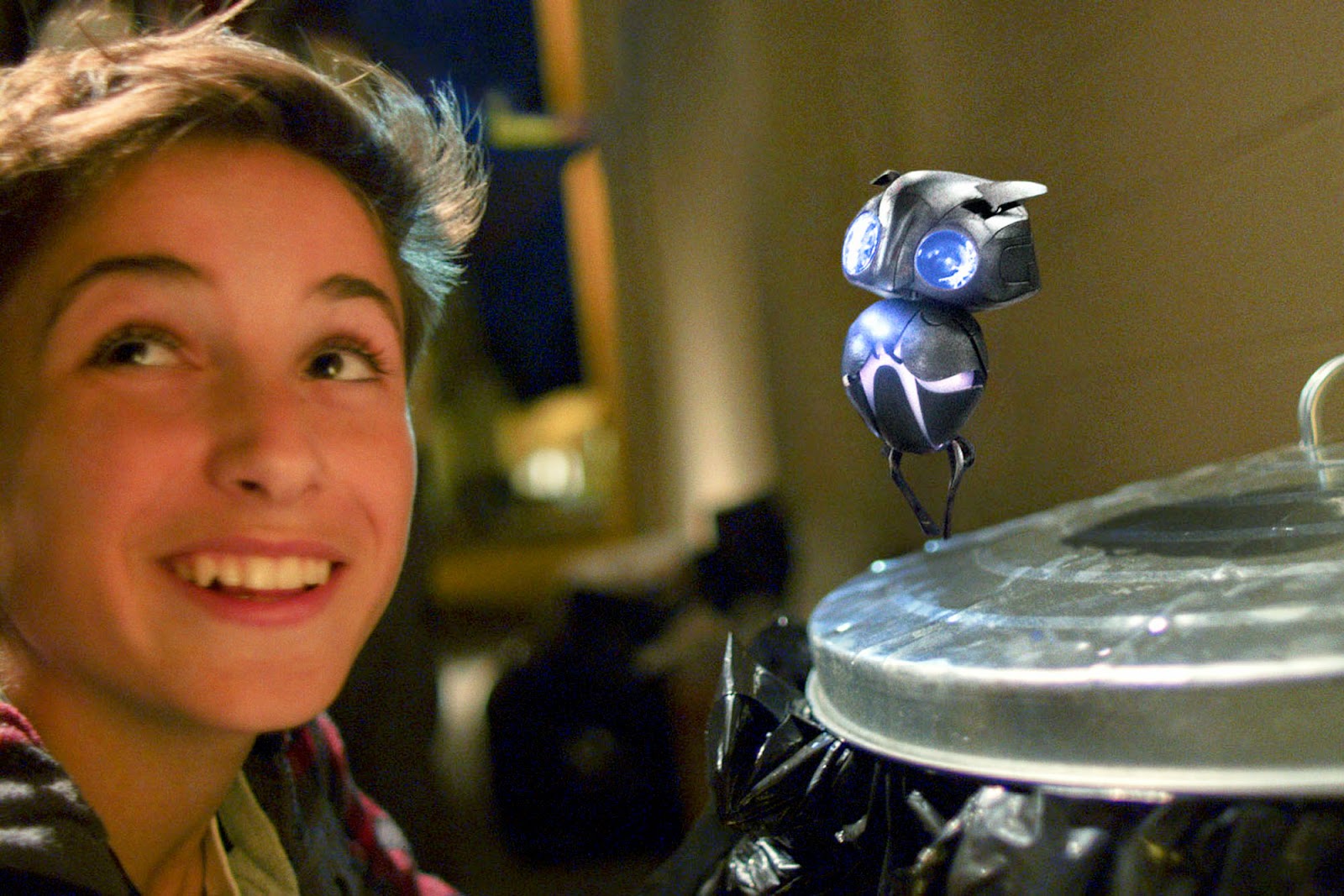
When three friends wander away from home after receiving cryptic clues of some unknown disturbance in the desert, they invite us into one of the oldest known premises in the movie handbook: the dangerous suburban adventure that alters the lives of youngsters in a world of menacing adults. If a handful of endeavors scattered across the recent past don’t serve as reminders on how popular the concept remains in the scheme of moviemaking, the consider the base implications; a young mind is often starved for a story in which they can affect the outcome of something ambitious and forbidden, especially in the presence of aged superiors that seem to exist for the sake of squandering their passions. Generally speaking, that thought process has yielded some of the unforgettable fantasies of our time – including Steven Spielberg’s “E.T” and Richard Donner’s “The Goonies” – and now, with the advent of new technologies at the disposal of those sorts of unlikely heroes, the potential to expand on the sentiment continues to persevere in the presence of our modern awareness. It’s just too bad that the ambition is seldom matched with stories equally as compelling.